A small apartment kitchen renter under $200 makeover is the most fun budget renovation you can do, because the starting bar is so low. The standard rental kitchen has builder-grade oak cabinets from 2003, a stained almond countertop, a faux-marble vinyl floor with peeling corners, and a fluorescent ceiling light that flickers. You cannot replace the cabinets. You cannot replace the floor. You cannot rip out the counter. What you can do is layer eight or nine cosmetic fixes on top of all of it that together cost less than $200, take a weekend, and read as an entirely different kitchen by Monday.
This guide is for the renter with a 70 square foot galley kitchen, no permission to paint, a Saturday free, and $200 to spend. Every fix below is reversible at move-out, can be done with a screwdriver and a tape measure, and survives the resale of the building.
Renter-friendly kitchen makeover for under $200: where the money actually goes
Before you buy anything, allocate the $200 across the changes that move the visual needle the most. The breakdown that consistently produces the best result: $50 on peel and stick backsplash, $25 on new cabinet hardware, $20 on under-cabinet lighting, $30 on a small countertop appliance reset (an espresso pot, a stoneware crock, a wood cutting board), $25 on a sink basket and dish drying mat, $20 on a runner rug, and $30 on open-shelf styling pieces. Total: $200. Add or subtract a $25 plant if you have room.
The two changes that do the heaviest lifting are the backsplash and the hardware. Together they pull about 70 percent of the visual transformation. Everything else is layering. If you only have $80 instead of $200, do those two things and skip the rest. If you have the full $200, do all of them and the kitchen reads as a different room.
One rule before you start: take a “before” photo from the doorway in daylight. You will forget how bad the kitchen actually was, and the side-by-side at the end is what makes the project feel worth a Saturday.
Start with a peel and stick backsplash because it changes the room more than anything else
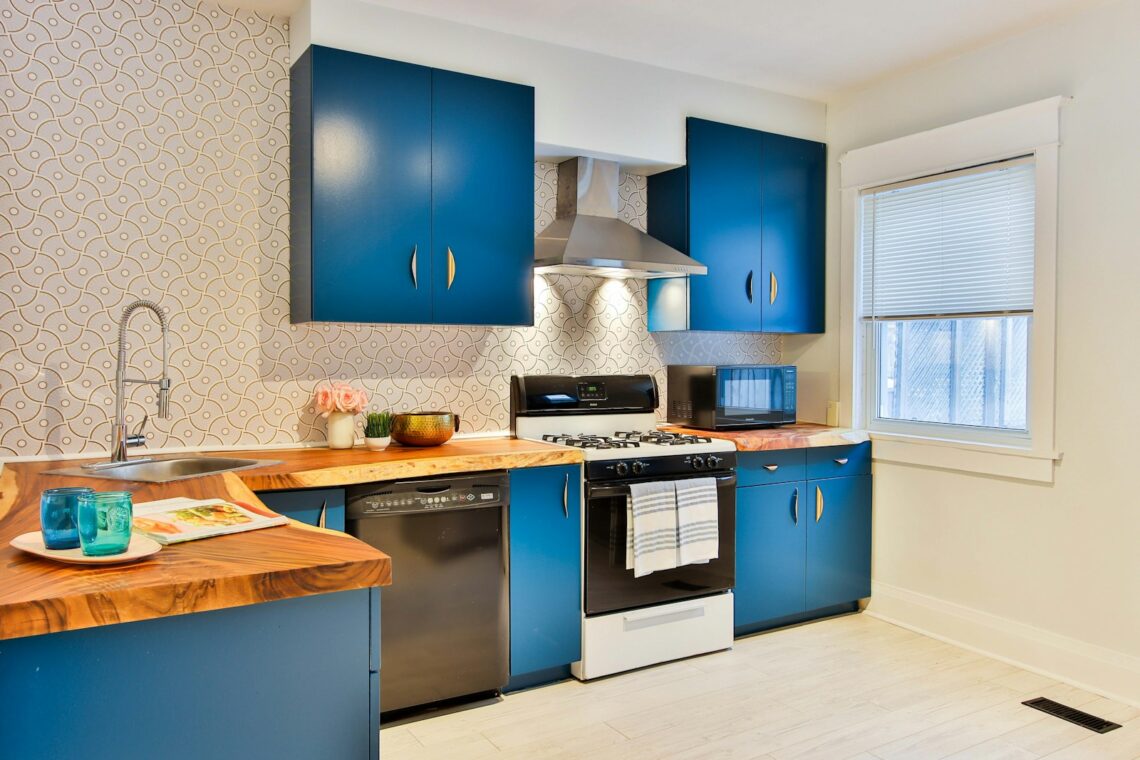
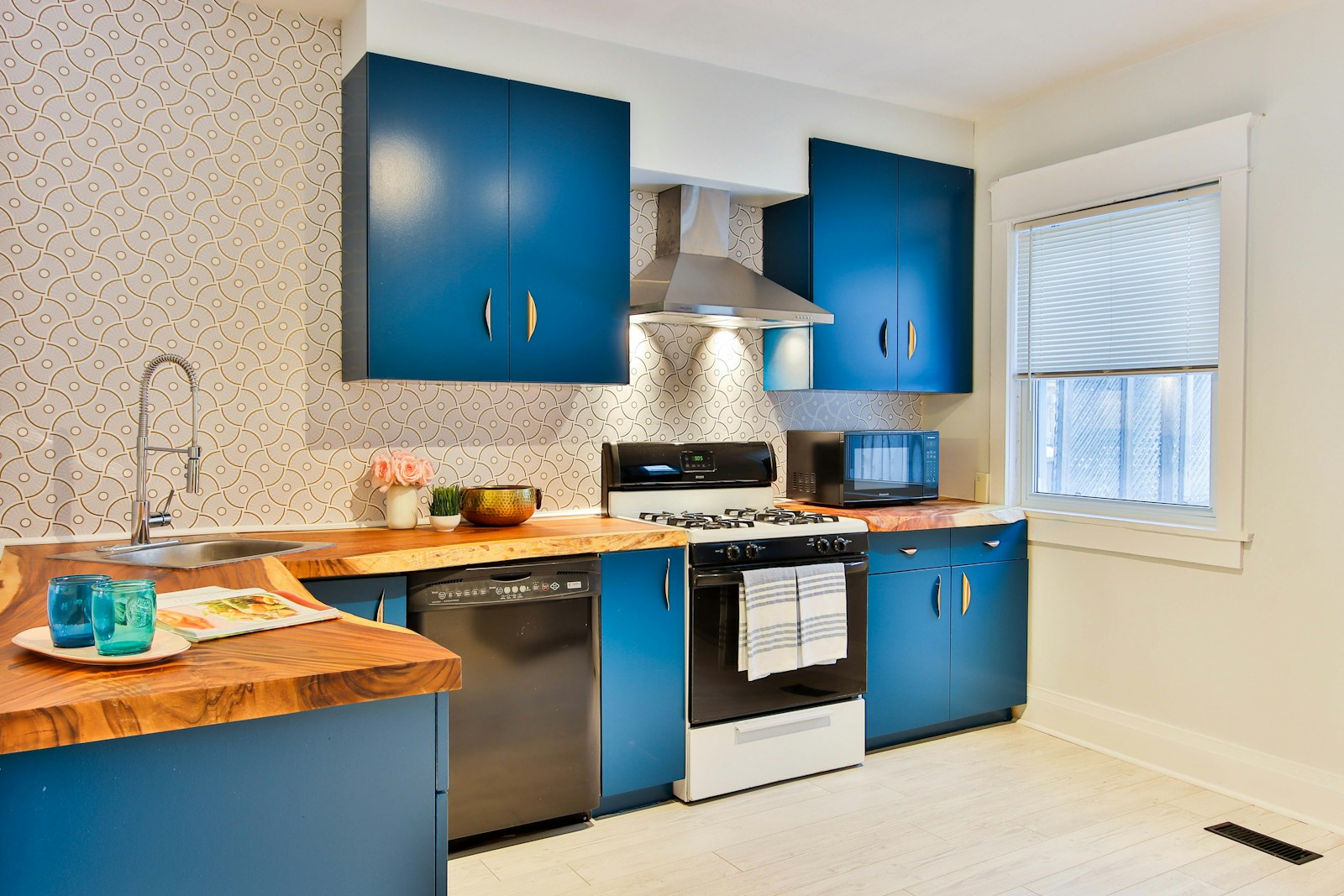
A peel and stick backsplash is the single highest-leverage move in a small apartment kitchen renter under $200 project. The strip of wall between the counter and the upper cabinets is the most visible 6 square feet in the kitchen, and replacing it with a pattern costs between $30 and $60 from Amazon or Target.
The reliable products: Smart Tiles peel and stick mosaic (about $10 per square foot, easy to align), the Funlife marble peel and stick from Amazon ($30 for a 4 foot by 12 inch roll), or the d-c-fix self-adhesive vinyl in zellige or terrazzo patterns ($25 per roll). All three remove cleanly at move-out with a hair dryer and patience.
The installation pitfall most renters hit: do not skip the cleaning step. Wipe the wall behind the counter with a degreasing cleaner, then rubbing alcohol, then let it dry fully. Backsplashes that fall down in three months are almost always grease-related, not adhesive-related. Five minutes of prep doubles the life of the install.
Replace every cabinet handle and drawer pull for under $25
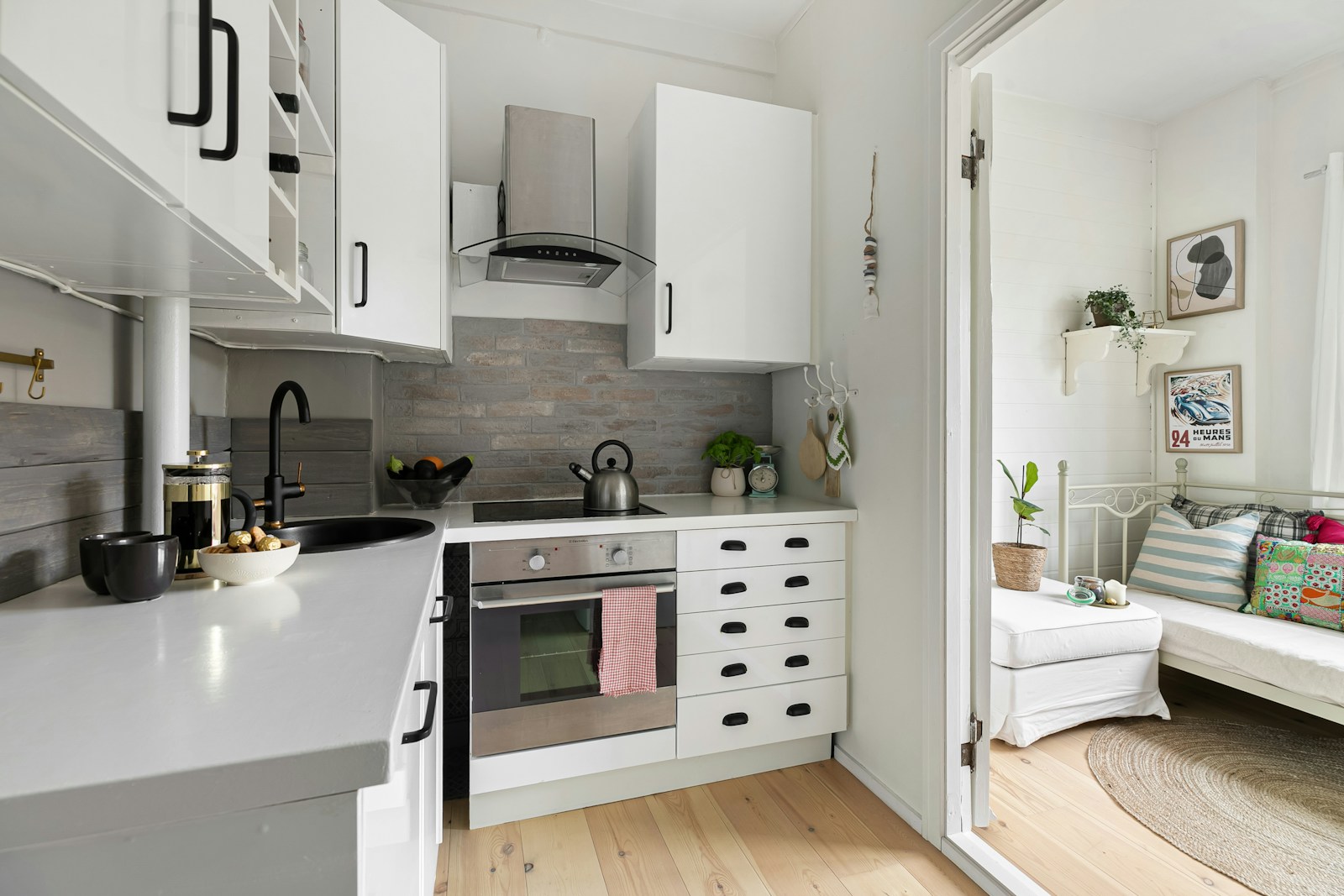
The second highest-leverage change in any rental kitchen is swapping the hardware. Builder cabinets come with oil-rubbed bronze or brushed nickel pulls from the early 2000s, and they read as dated immediately. New pulls in matte black, unlacquered brass, or warm wood instantly modernize the cabinets without touching the doors themselves.
For a typical 70 square foot apartment kitchen with six upper doors, four lower doors, and four drawers, you need 14 pieces of hardware. A 12-pack from Amazon Basics or Hickory Hardware runs $18 to $25. Match the new pulls to the size and screw spacing of the originals (3 inch centers is standard) so you do not have to drill new holes.
Box the original pulls and screws in a labeled ziploc, store them in the back of one cabinet, and reinstall them on the day you move out. The whole swap takes 30 minutes with a Phillips screwdriver and is the most visible $20 you will spend in this entire project.
Add under-cabinet lighting that turns the counter into a usable workspace
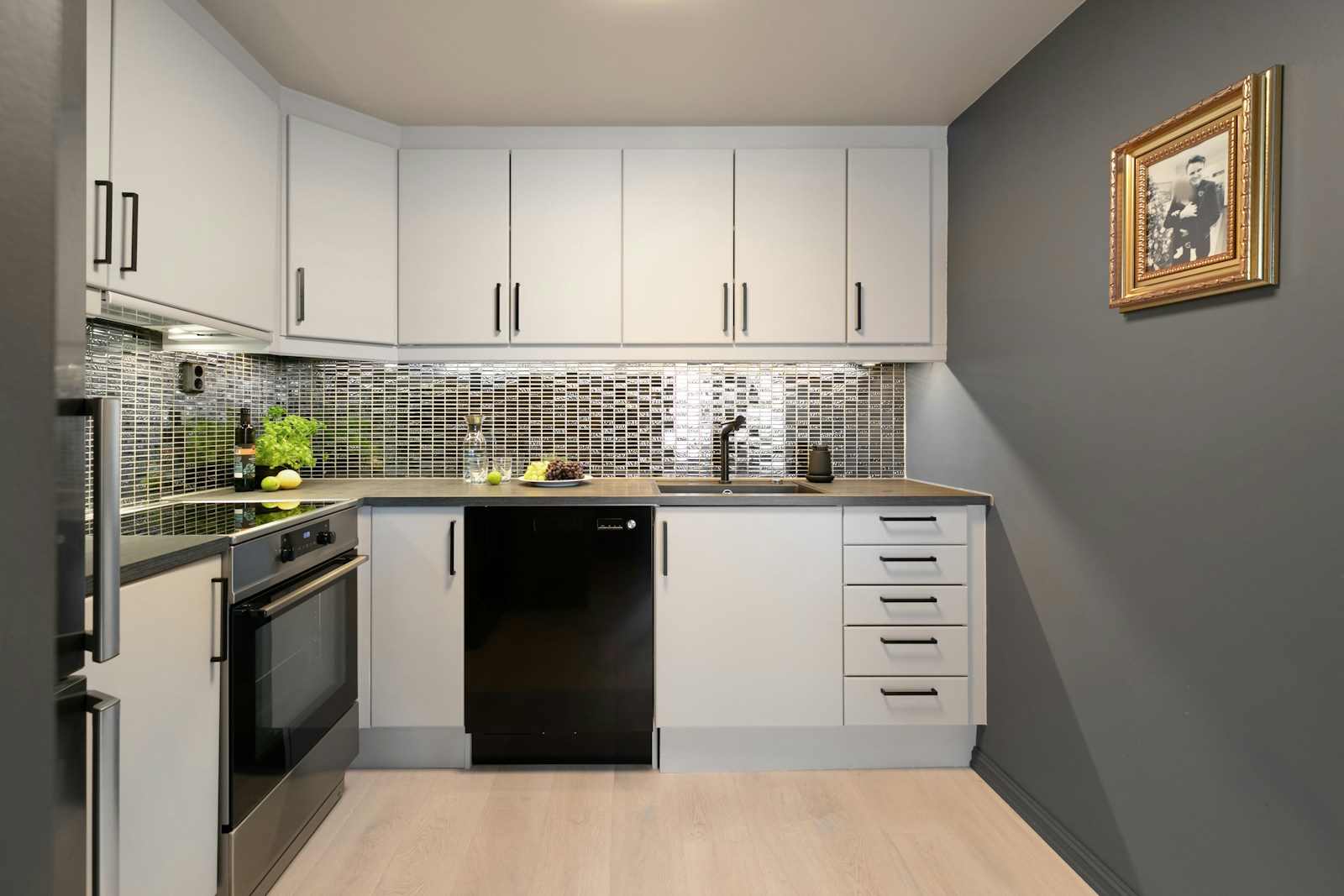
Rental kitchens are almost always under-lit. A single ceiling fixture lights the floor and the top of your head but leaves the counter in shadow. The fix is rechargeable or plug-in under-cabinet LED strips ($15 to $25 for a 6 foot run on Amazon), which clip to the underside of the upper cabinets and light the counter directly.
For renters who do not want to deal with a plug, motion-activated battery puck lights ($12 for a 6-pack) stick under the cabinets with adhesive pads and trigger when you walk in. The light is not as even as a real LED strip, but the install is two minutes and the effect on a 9 PM apartment kitchen is dramatic.
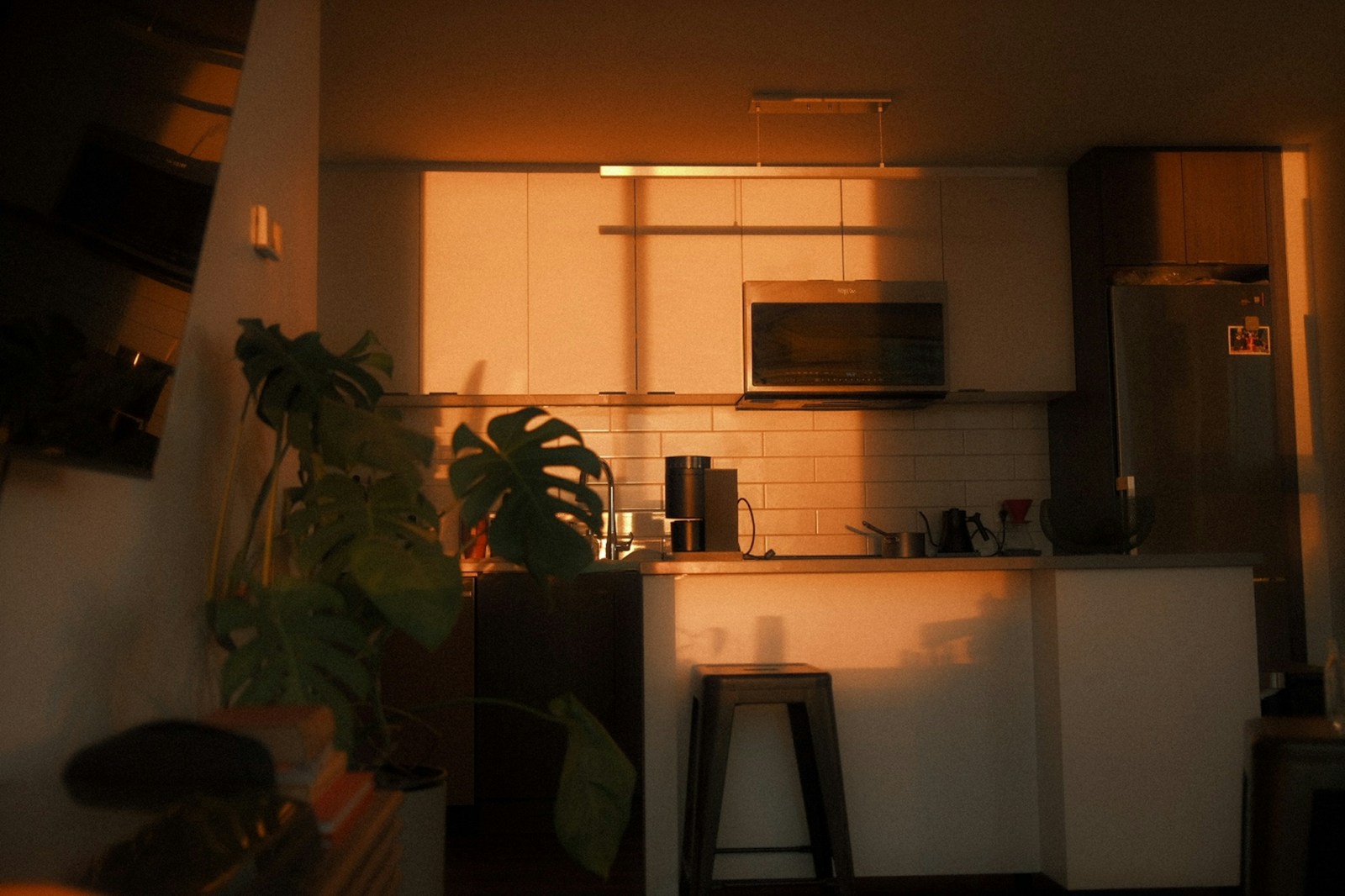
Pair the under-cabinet light with a 2700K warm-white bulb in the ceiling fixture (if you can swap it) and the whole kitchen shifts from rental fluorescent to apartment cozy. Total spend: under $30. Effect: a kitchen you actually want to cook in after dark.
Style the counter like a coffee bar instead of a junk drawer
The single thing that makes a rental kitchen read “messy” versus “intentional” is what is sitting on the counter. Most renter kitchens have a microwave, a coffee maker, a knife block, a paper towel holder, a fruit bowl with two bananas in it, and the mail. The visual chaos reads as clutter even when nothing is dirty.
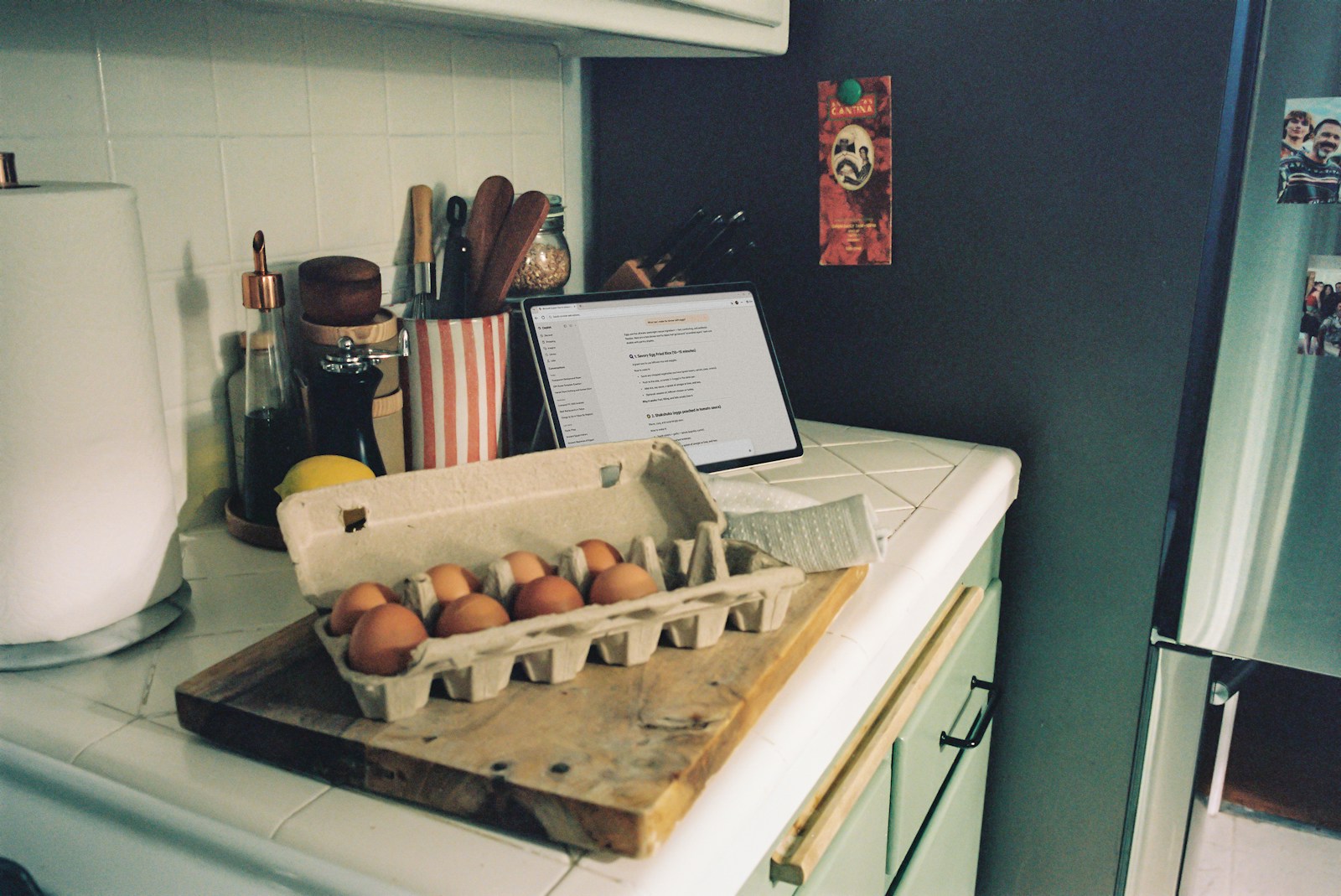
Reset the counter as if it were a small coffee bar: one styled appliance (a moka pot, a chemex on a wood board, a sculptural electric kettle from Amazon at $35), one cutting board leaned against the backsplash, one small ceramic crock holding wooden utensils, one plant or fresh herb in a stoneware pot, and that is the whole counter. Everything else (toaster, microwave, paper towels, mail) goes inside cabinets or on a separate pantry shelf.
The hard part is not the new objects. It is removing the eight things that were on the counter before. Most renters cannot bring themselves to put the microwave inside a cabinet. Try it for a week. The counter looks better, the cooking surface is bigger, and you discover you actually used the microwave less than you thought.
Add a runner rug to hide the floor and warm the room
The rental kitchen floor is usually vinyl plank, fake tile, or peel-and-stick from a previous tenant. There is nothing you can do about the floor itself within $200. What you can do is cover the worst 60 percent of it with a 2 by 6 foot runner.
Look for a flat-weave or washable runner under $40: the Ruggable washable kitchen runners ($79 if you stretch the budget, but worth it because you can throw the cover in the wash), the Amazon Lahome distressed kitchen runners at $25 to $35, or a vintage kilim runner from Facebook Marketplace at $30 to $60. Stay away from high pile rugs that catch crumbs and fluffy bath mats that look out of place.
The runner does two things. First, it visually covers the floor, which usually means hiding the seam between two different flooring types or the discolored vinyl in front of the sink. Second, it warms the room aesthetically, especially in kitchens with cool laminate counters. Five minutes to roll out, immediate effect.
Open one cabinet and turn it into a styled open shelf
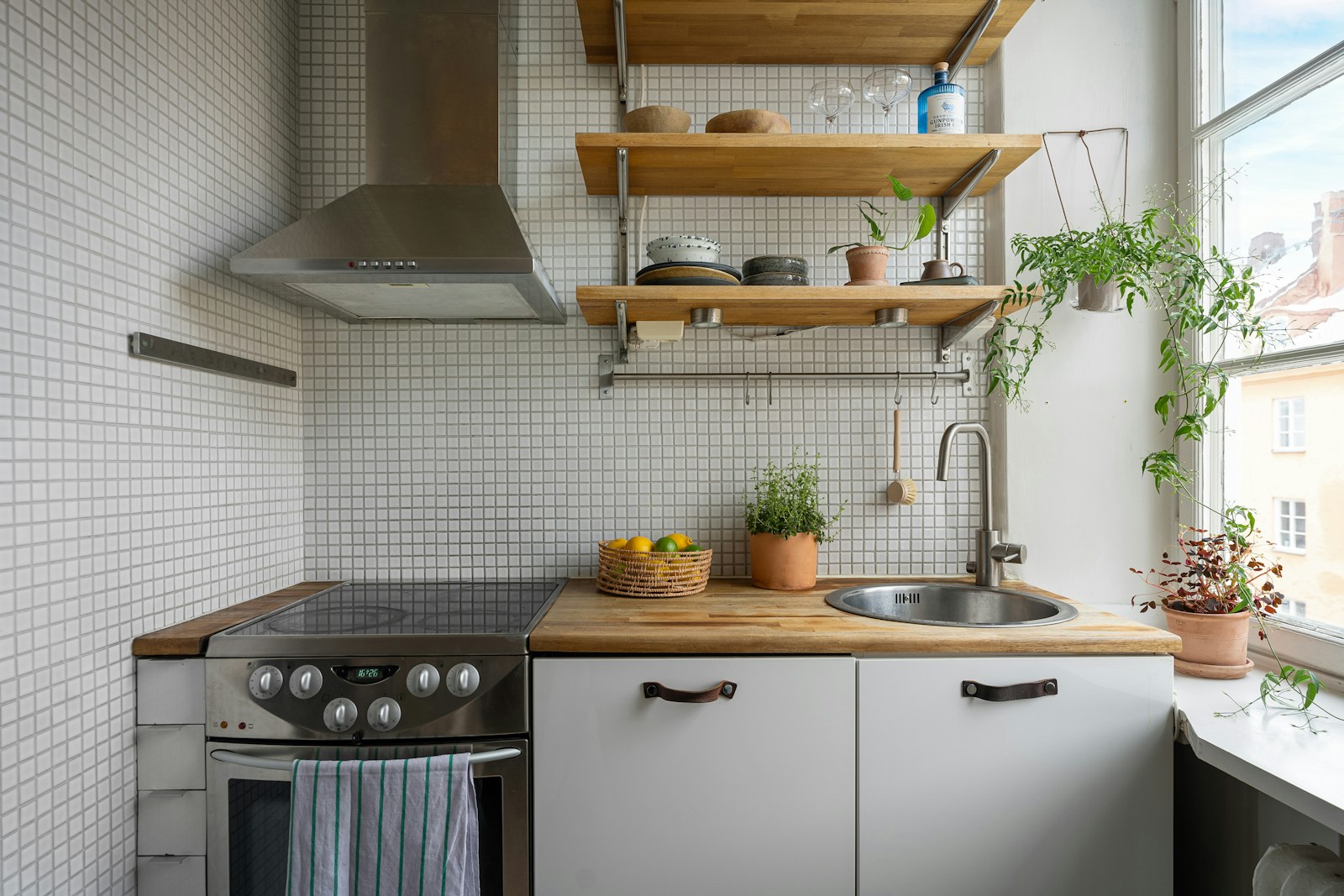
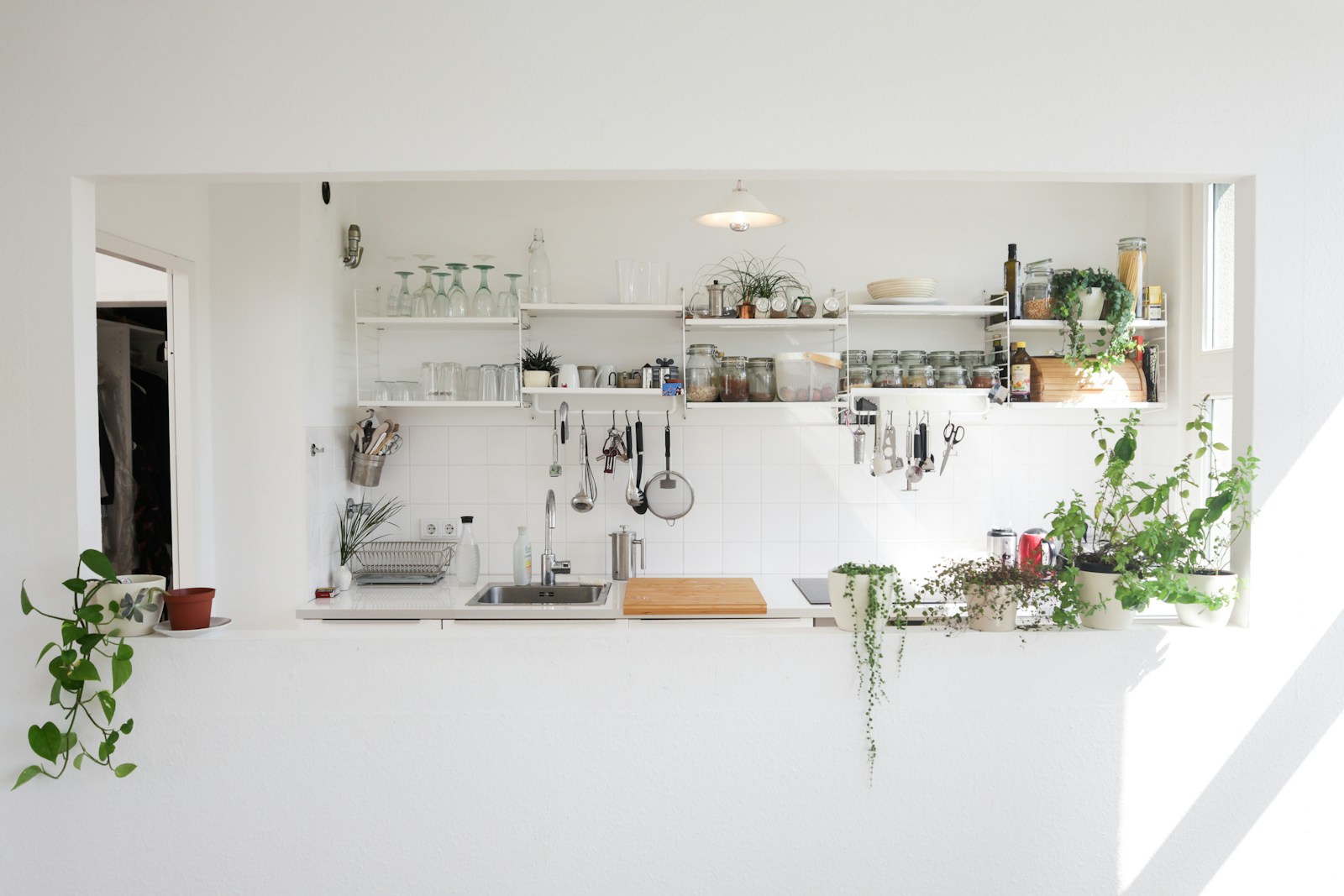
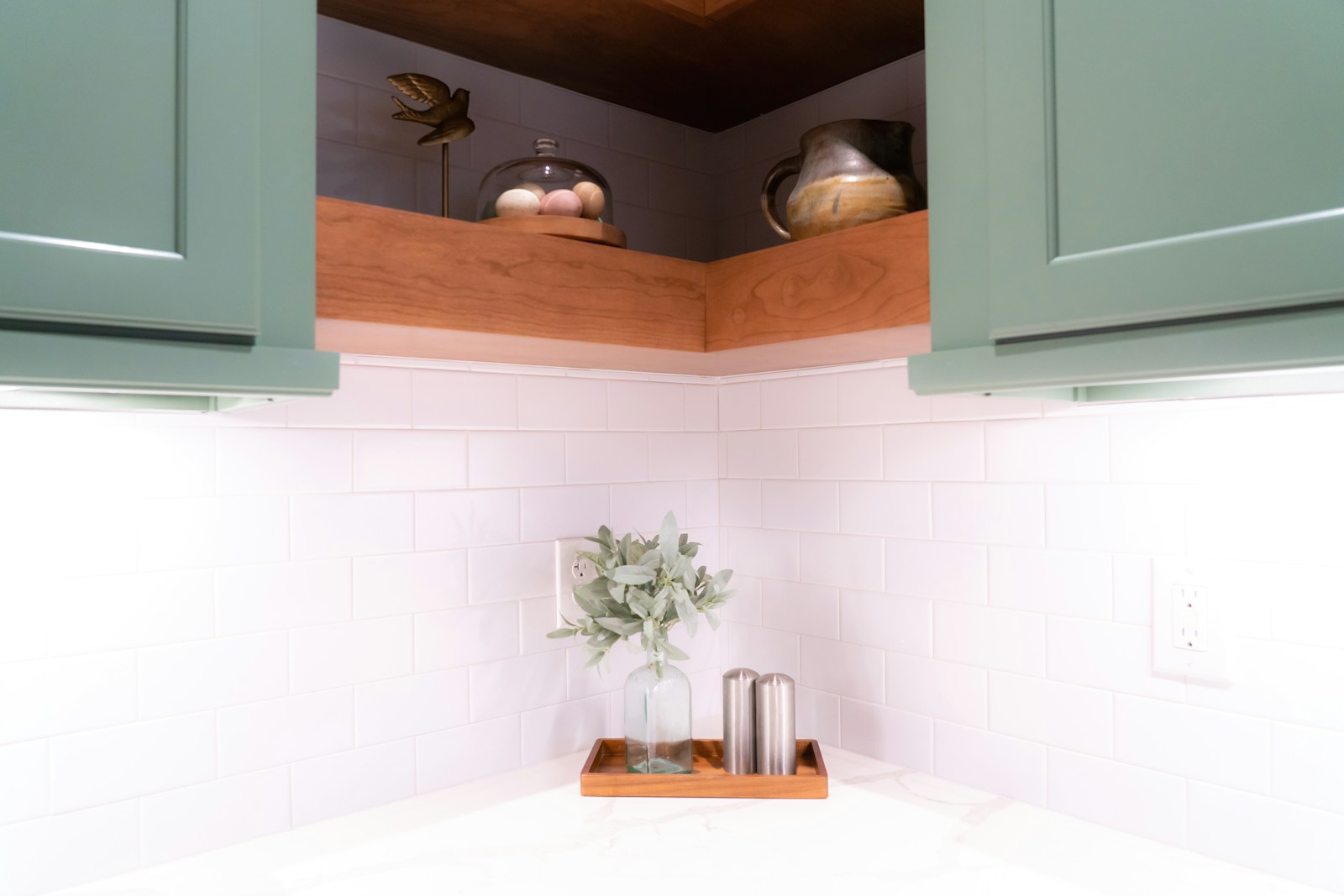
If your upper cabinets have removable doors (most rentals do, the hinges unscrew without leaving holes), take the doors off one cabinet only and turn it into open shelving. The contents change to styled stuff: matching white plates, three or four clear glasses, two ceramic bowls, a small plant. Everything mismatched gets moved to the still-closed cabinets.
This single change is the move that separates rental kitchens from apartment kitchens that read as designed. The eye sees a styled open shelf instead of a wall of closed builder-grade doors, and the rest of the cabinets recede into the background.
For renters who cannot remove cabinet doors at all (some leases are strict), the floating shelf alternative works almost as well: a single 24 to 36 inch shelf above the stove or next to the window using two no-drill brackets (3M Command picture hangers rated for 5 pounds, or Adhesive shelves like the ones from Umbra). Style it the same way.
Hide the sink situation with a wood bath caddy and matching dish mat
The single ugliest 18 inches in a rental kitchen is the area around the sink. Soap dispensers that do not match the faucet, a sponge in a saucer, dish gloves draped over the divider, and a plastic dish drainer doing the work of a small lifeboat. Reset all of it.
The replacement set, for about $25: a single ceramic or stoneware soap dispenser pumped with both hand soap and dish soap ($12 from Target or Amazon), a small wood caddy or tray to corral the sponge and dish brush ($8), and a microfiber dish drying mat that rolls up when not in use ($10) instead of a plastic drainer. The whole zone reads as styled.
Bonus: if your kitchen has a deep sink, an over-the-sink wood cutting board ($30 for a quality one) acts as both extra prep surface and a way to hide the sink during a video call or a dinner party. Slide it on, the sink disappears, the counter doubles in size.
Replace the ceiling light bulb and add one statement pendant if you can
Every rental kitchen has a ceiling fixture you can do something about. At minimum, swap the bulb to a 2700K warm white LED for $4. If your fixture is removable (a flush mount held on by two screws or a turn-clip), replace it with a budget pendant or simple flush mount in matte black or brass for $40 to $60. The IKEA Nymane flush mount at $40 or any Amazon basic globe pendant under $50 transforms the ceiling.
Store the original fixture in a closet and reinstall at move-out. The fixture swap is allowed in nearly every standard lease as long as you keep the original.
If you cannot touch the fixture at all, hang a single rattan or fabric pendant cover (the IKEA Vate at $25 just clips around an existing bulb) to soften the fluorescent globe overhead. Five minutes, $25, the ceiling stops screaming “rental.”
Add the one houseplant the rental kitchen can actually keep alive
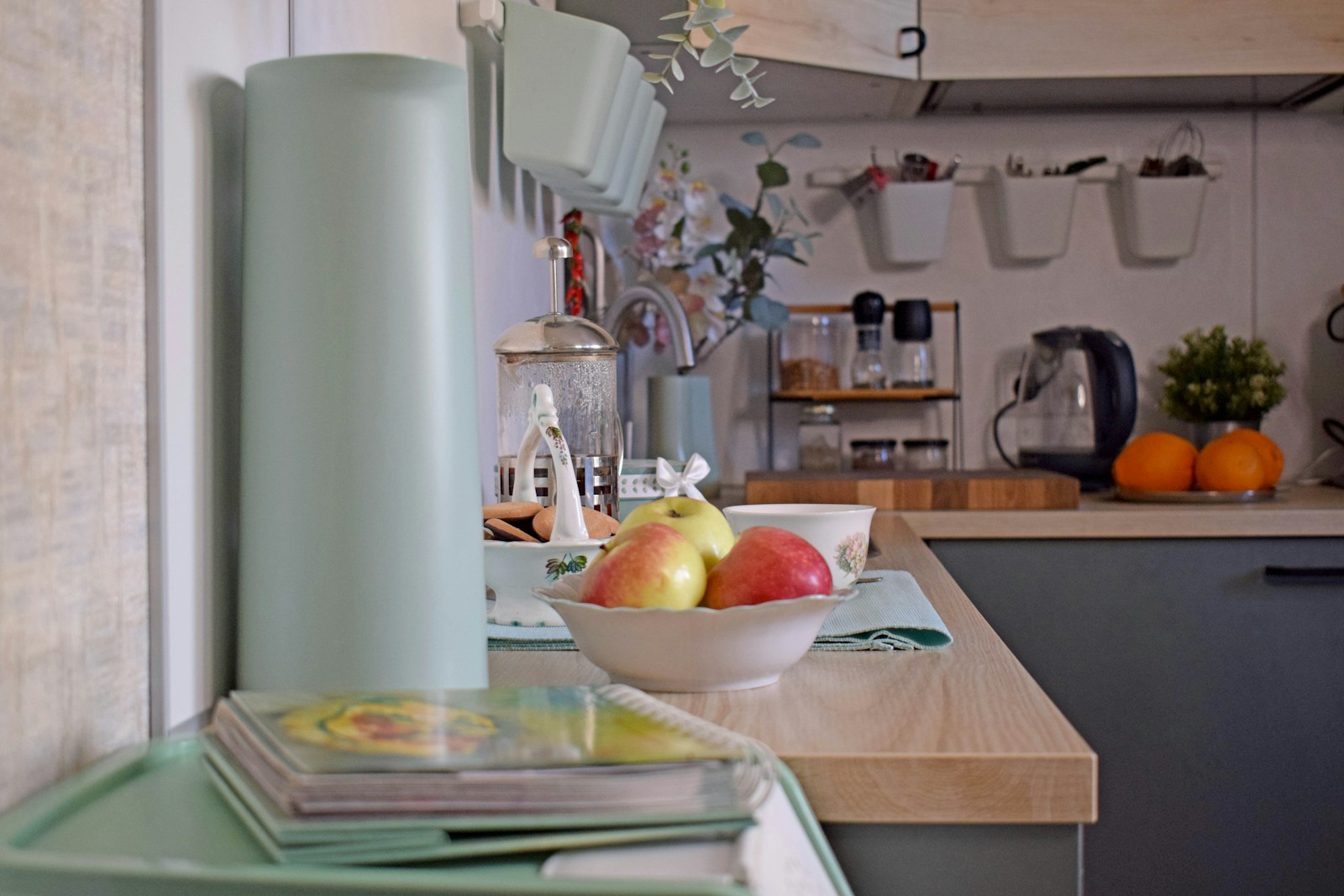
A small plant on the kitchen counter or in the windowsill does the same softening work in a small apartment kitchen renter under $200 project that a styled bookshelf does in a living room. It reads as lived-in, intentional, and warm. Two species work in most rental kitchens regardless of light: a pothos in a hanging or wall-mounted planter (tolerates anything, propagates from cuttings, costs $10 at any nursery), or a small herb pot (basil, rosemary, mint) on a windowsill where you actually use the leaves.
If your kitchen has zero natural light, a fake plant in a real ceramic pot is acceptable here in a way it is not in a living room. From three feet away no one can tell, and the kitchen is the room where everyone is moving too fast to inspect anyway.
Spend $10 on the plant and $15 on a ceramic stoneware pot from West Elm Outlet or any thrift store with a housewares section. The pot matters more than the plant. A great pot makes any plant read as expensive, and a $4 plant from the supermarket in a $20 pot reads better than a $30 fiddle leaf in a plastic nursery container.
Finish with the inside-cabinet upgrades the eye does not see
The last $30 of the budget goes into the cabinets, which sounds anti-climactic but pays off every single time you open a door. Three small upgrades: a roll of patterned shelf liner ($15 from Amazon, Smart Design or Con-Tact brand) for the cabinet bottoms, a single under-shelf wire basket for spices or mugs ($8), and one tension rod inside the cabinet under the sink ($5) for hanging spray bottles and freeing up floor space.
None of these change how the kitchen looks from across the room. All of them change how it feels to use the kitchen for the next two years of the lease. A renter-friendly kitchen makeover that ignores the inside of the cabinets is a kitchen that still feels rented every time you open a door.
For a final touch, add a single dish towel in a real linen or waffle weave ($10 for two) draped through the oven handle. The visible textile reads warmer than the towel from a previous tenant’s bargain pack, and it is the last detail people notice when they walk into your kitchen.
A renter-friendly kitchen makeover under $200 is not pretending you renovated the kitchen. It is admitting you cannot, then doing nine small reversible changes that together rewire what the room looks like. Peel and stick backsplash, new hardware, under-cabinet lights, a styled counter, a runner, one open shelf, a sink reset, a fixture swap, and a plant. Total: about $195 if you buy carefully. Time: a Saturday. Effect: a kitchen that no longer reads as the worst room in the apartment, and that you can fully reverse on move-out day in two hours.
For more renter-friendly small apartment fixes, see our guides to the full renter-friendly decor playbook, 21 small bedroom ideas under $200, and the 35 small apartment storage hacks for stretching every inch of a rental.