12 Privacy Solutions for a Small Apartment Balcony
Your balcony opens onto a wall of apartment windows and the moment you step outside, six neighbors can see exactly what you are doing. If your small apartment balcony offers zero privacy, you are not alone. Renters in dense urban buildings deal with this daily, and most privacy solutions designed for yards simply will not fit a 40-square-foot concrete slab. These 12 renter-friendly fixes work in the tightest footprints, cost as little as $20, and none require drilling into your landlord’s structure.
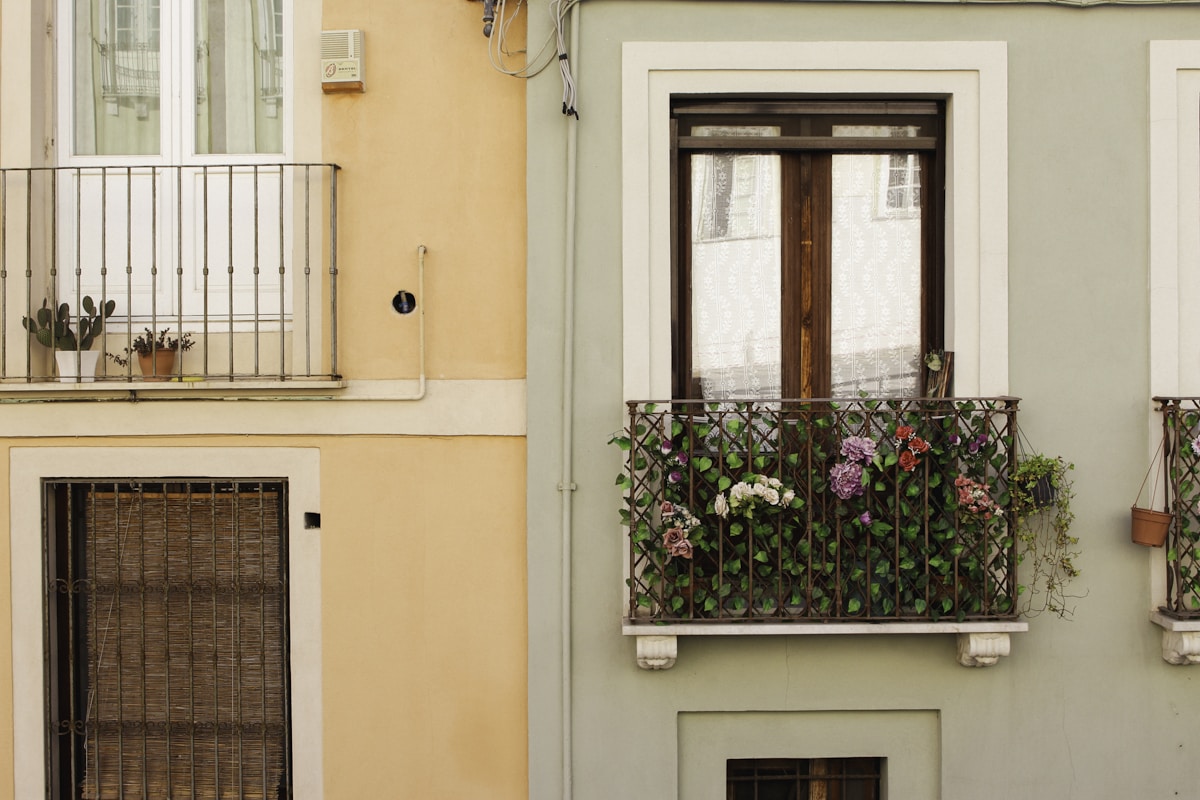
Why Your Balcony Feels Like a Fishbowl
Most apartment balconies are designed for air and light, not privacy. They face other balconies at eye level, look directly into neighbor windows, or sit above a parking lot with full visibility from below. Renters are stuck in a frustrating position: you want privacy but you cannot install permanent structures, drill into concrete, or attach hardware that will damage the railing finish.
The good news is that the best small apartment balcony privacy solutions do not need anchors. They use weight, tension, zip ties on existing railings, and hooks over hardware that is already there. Most are fully reversible when you move out. When you layer two or three solutions together, you can create a genuinely enclosed outdoor room even on the smallest slab.
Before you buy anything, map your specific visibility problem. Are neighbors looking in from the side? Straight on from across the alley? From above on higher floors? From the parking lot below? Each answer points to a different solution. Blocking a sight line that does not actually bother you is money and weight spent for nothing.
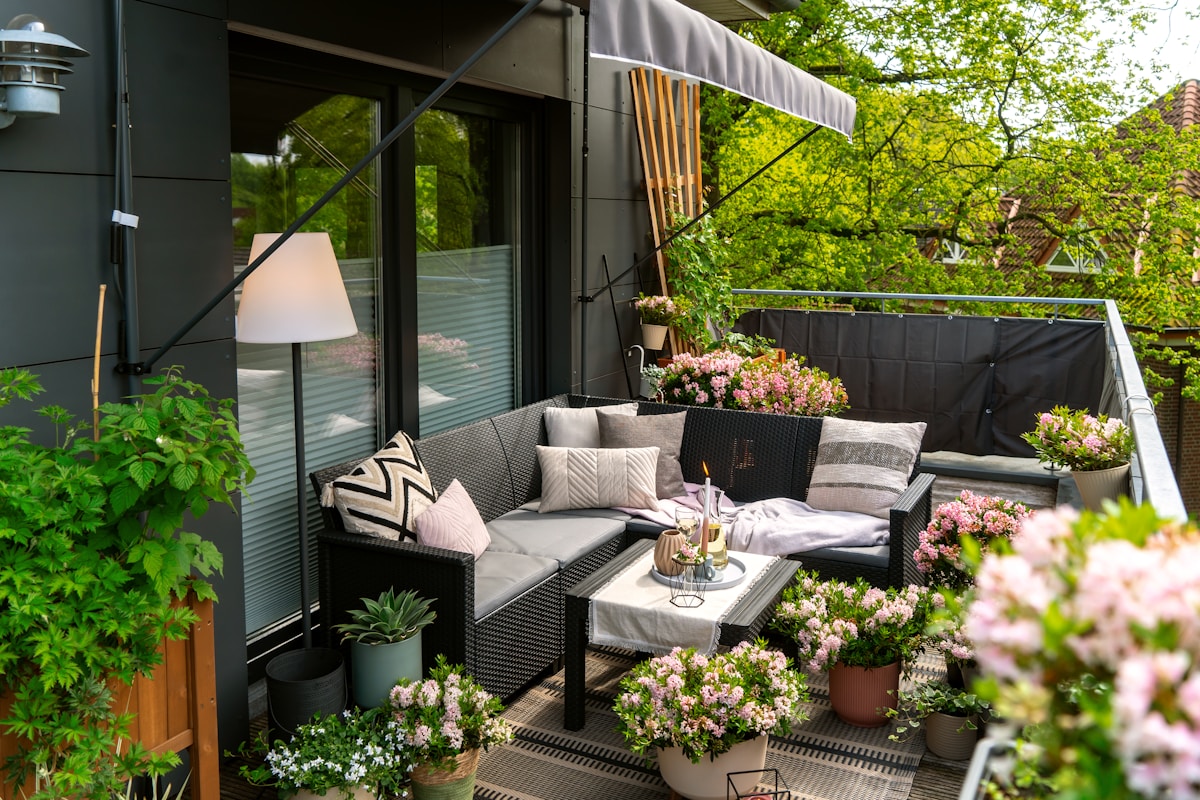
Bamboo and Reed Roll Screens (Solutions 1 and 2)
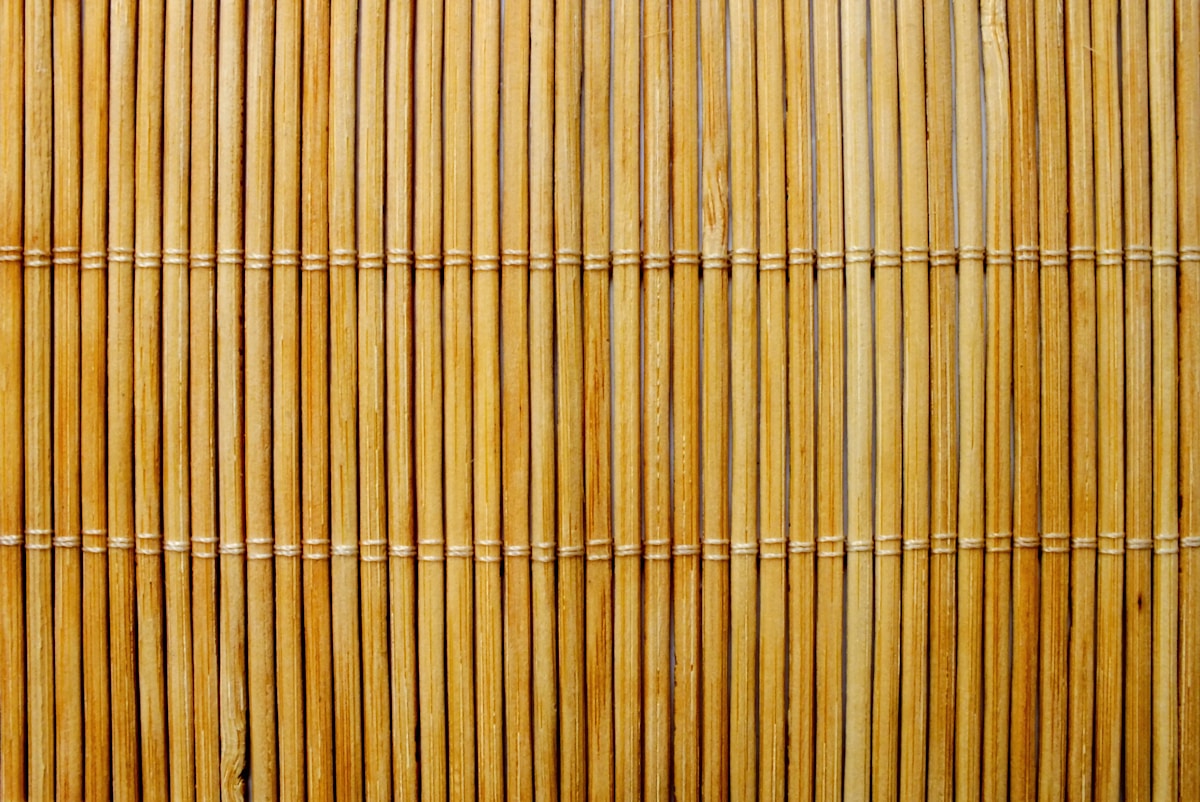
Reed and bamboo roll screens are the most popular balcony privacy fix for good reason. You buy a roll, zip-tie it to your railing, and you are done in 20 minutes. They block horizontal sight lines completely, weigh almost nothing, and roll up when you move out.
Solution 1: Reed roll screen tied to the railing. A standard 6-by-6-foot natural reed screen costs $20 to $40 on Amazon or at Home Depot starting in April. Attach it with heavy-duty zip ties every 8 to 10 inches along the top and bottom rails. The gaps between the reeds let air through while blocking direct eye contact. Look for rolls labeled “reed fencing” or “bamboo roll fence.” Willow hurdles are a slightly more expensive version ($50 to $80) that look more polished and last several years outdoors.
Solution 2: Freestanding bamboo panel system. For renters who cannot attach anything to the railing, freestanding bamboo panels on weighted feet offer a no-contact option. Brands like VOUNOT and Greenbelt sell pre-built panels in 6-by-4-foot sections for $60 to $90. Stack them side by side to cover the full width of your balcony edge. They are heavy enough to stand without wind issues on most floors, but add a sandbag base or a heavy planter at the foot on any upper floor with significant wind exposure.
Both options weather to a silver-gray patina over time. Apply one coat of outdoor wood sealer when you install them if you want to preserve the warm golden tone.
Outdoor Curtains for Small Apartment Balcony Privacy (Solutions 3 and 4)
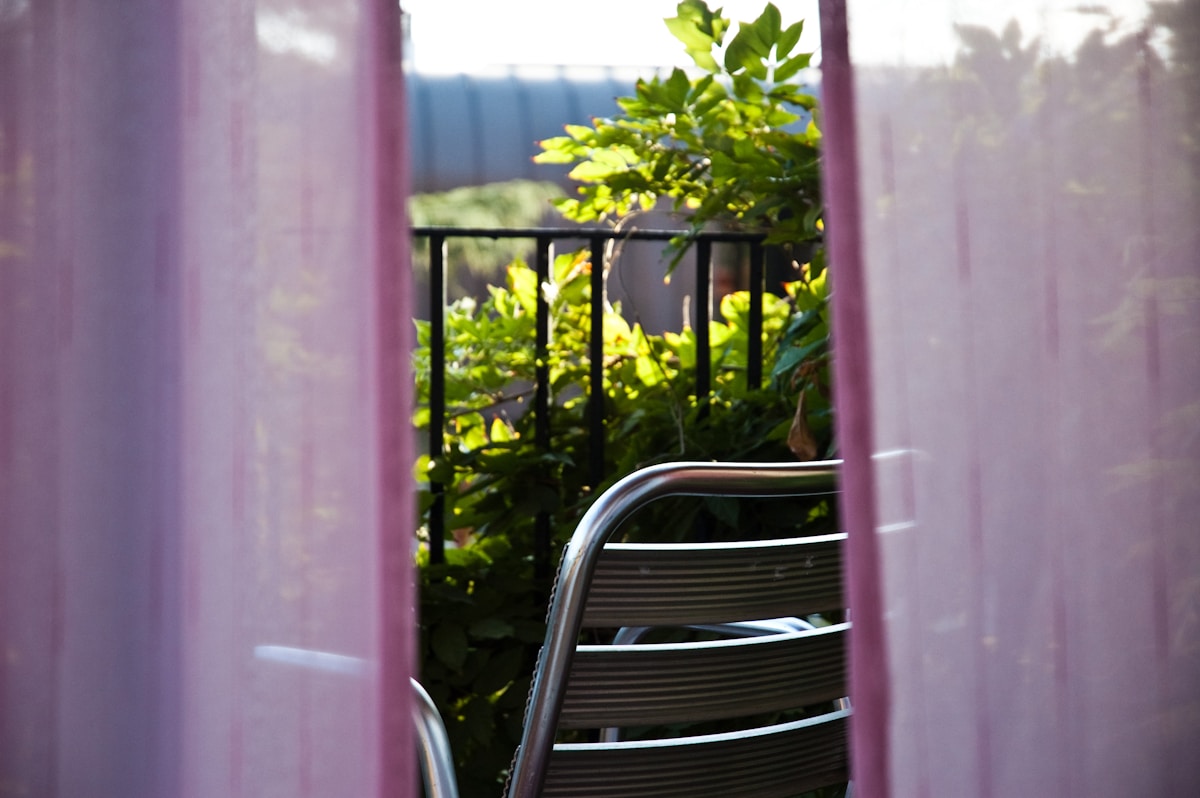
Outdoor curtains turn a concrete box into something that feels like an actual room. They are also one of the most effective ways to create small apartment balcony privacy without touching the walls.
Solution 3: Tension rod with outdoor curtain panels. A heavy-duty outdoor tension rod (rated for 5 to 6 feet spans) fits inside most balcony doorframe openings or between two adjacent wall surfaces. Hang two semi-sheer outdoor panels on clip rings. Pull them closed when you want privacy, push them aside when you want the open view. Target’s Threshold outdoor curtain panels run $25 to $45 each and resist fading. Look for solution-dyed acrylic or UV-rated polyester fabric, which handles outdoor moisture and sun far better than standard cotton or linen.
Solution 4: Curtain wire cable system. For balconies without a good tension rod anchor point, a stainless steel curtain wire system works well. Thread two hooks over the existing railing posts and run a steel cable side to side. Curtain panels clip on with rings. No drilling required. IKEA’s DIGNITET curtain wire kit runs $20 and accepts any standard panel with clip rings. Use two cables at different heights for a more stable setup on long runs over 6 feet.
On windy balconies, weight the curtain hem with small curtain weights or fold a short length of chain into the bottom hem seam. This keeps panels from blowing horizontal in a gust. For more no-attachment ideas that work in rental apartments, see our guide to no-drill wall decor for renters.
Railing Planter Boxes and Flower Towers (Solutions 5 and 6)
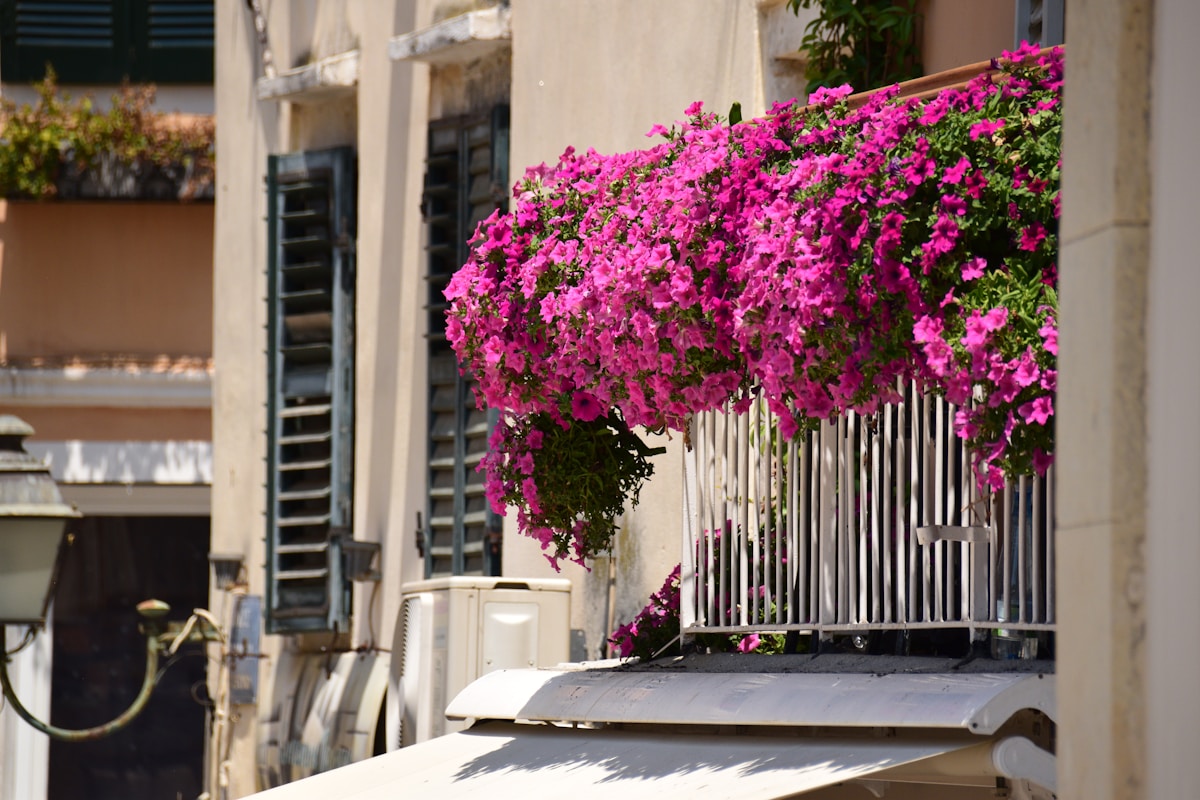
Planter boxes mounted on the railing do double duty: they add life and color while creating a soft natural screen at exactly the right height to block seated eye-level views from the street or neighboring balconies.
Solution 5: Railing planter boxes with tall plants. Standard railing planter boxes clip or hook onto most metal and wood railings without tools. Worth Garden, Lechuza, and Umbra make solid options in the $15 to $40 range per box. The plant choice determines how much privacy you actually get. Ornamental grasses like feather reed grass or blue oat grass grow 18 to 36 inches above the box and fill in quickly. Dense trailing sweet potato vine or English ivy also works for a cascading green curtain that softens the railing visually from both inside and outside.
Solution 6: Tiered railing tower planters. Some railing systems stack two or three planter tiers vertically on a single railing bracket, giving you 4 to 5 feet of foliage height from a single point of contact. This is particularly effective for blocking views from slightly higher floors. Dense herbs like tall rosemary or lavender serve dual purpose here: privacy screen and fragrant outdoor feature.
Check your lease before loading up the railing. Most buildings have weight limits for balcony railings, typically 50 to 75 pounds total. A 12-inch planter box loaded with wet soil and a mature plant can weigh 20 to 30 pounds, so account for the combined weight of all boxes before installing.
Lattice Panels and Vertical Trellis Screens (Solutions 7 and 8)
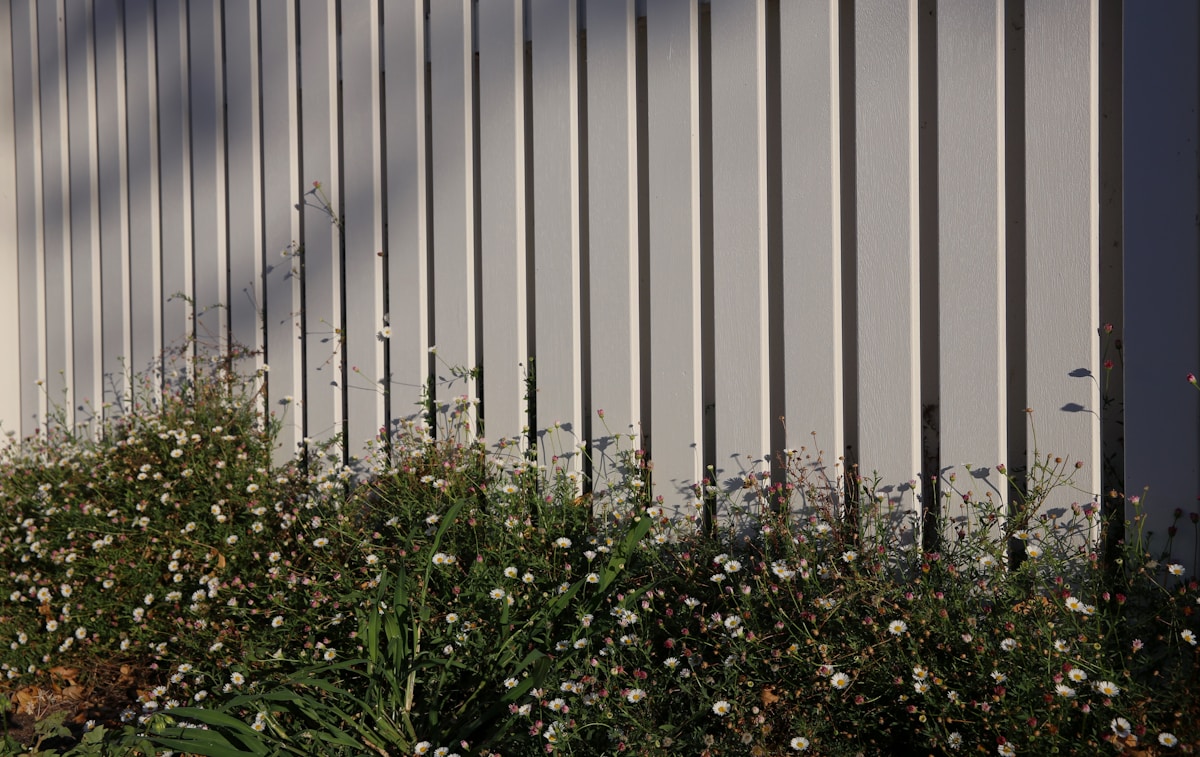
A lattice panel is the closest thing to a solid wall you can add to a balcony without structural work. It also gives climbing plants something to grow on, turning into a living screen over one growing season.
Solution 7: Freestanding lattice panel on weighted feet. A 4-by-6-foot vinyl or wood lattice panel on weighted feet stands independently without any attachment to the railing or building. Place it at the side of the balcony where visibility is worst. Vinyl lattice panels from Home Depot cost $25 to $50 and resist weathering far better than untreated wood on an urban balcony exposed to rain and grime. Weight the base with a paving stone or a large planter set against the foot.
Solution 8: Railing-mounted lattice with hook attachments. For front-of-balcony coverage, a lattice panel mounted across the outer railing gives more coverage than a reed screen because the gaps are smaller and more irregular. Hang it from the railing’s top rail using large S-hooks, no drilling needed. Add a fast-climbing plant like clematis, mandevilla, or black-eyed Susan vine in a pot at the base. Within one season it will thread itself through the lattice and you will have a genuine living privacy wall.
The combination of a lattice panel and one large planter at its base is one of the highest-value privacy setups you can create on a small balcony: solid immediate coverage that gets denser and more beautiful every year at no additional cost.
Shade Sails and Retractable Awnings (Solution 9)
Most balcony privacy solutions handle horizontal sight lines, but neighbors on higher floors can look directly down onto your balcony. Shade sails and awnings address the overhead problem that vertical screens completely miss.
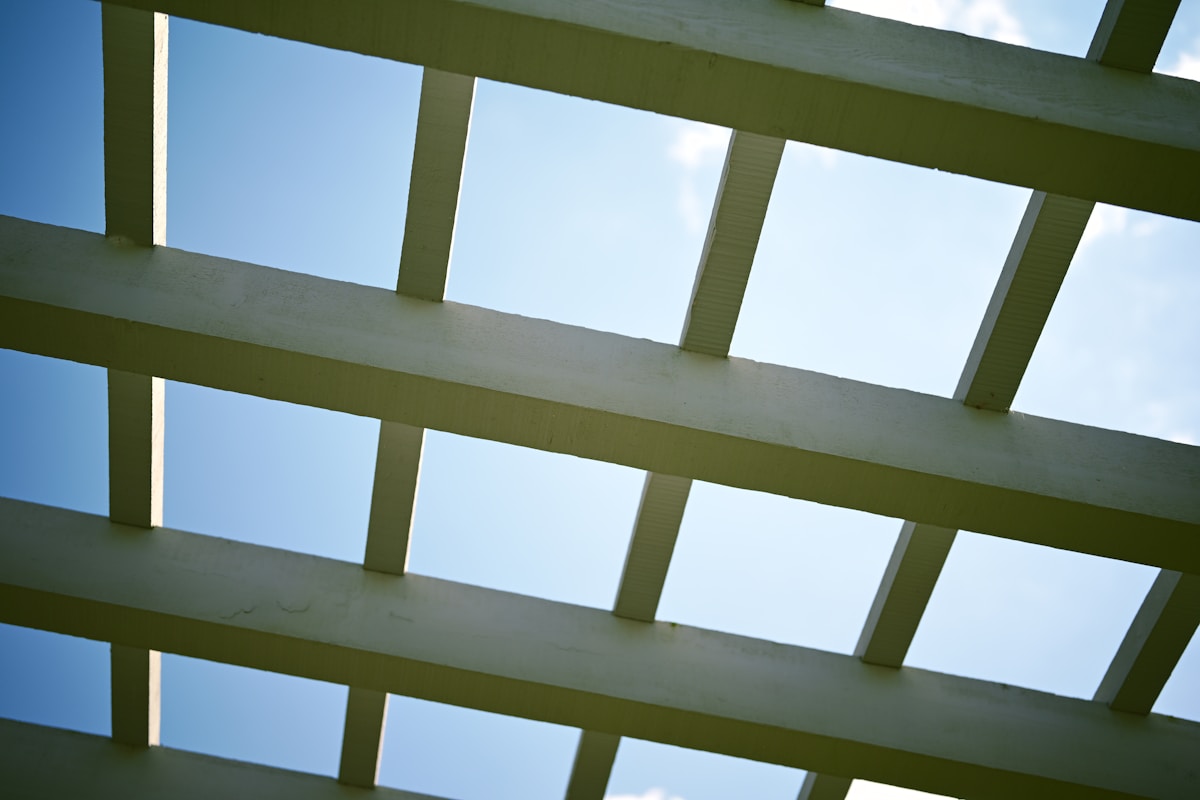
Solution 9: Triangle or square shade sail. A shade sail is a triangle or rectangle of UV-resistant fabric strung between anchor points above head height. On a small apartment balcony, you typically attach one corner to the building wall with an adhesive hook or an eye bolt (check with your landlord first, as most allow shade sail hooks), and run the remaining corners to the tops of freestanding poles set in heavy planters or tied to railing post tops using tensioner lines.
A 10-by-10-foot shade sail costs $25 to $80 depending on material: HDPE mesh lets some light through while blocking overhead views, and solid polyester blocks both. For a small apartment balcony, a triangle sail in the 6-by-8-foot range is usually the right size and far easier to rig cleanly than a large square. The bonus is significant shade during afternoon sun, which can cut balcony surface temperatures by 15 to 20 degrees in summer.
If your landlord approves a retractable awning, that is the premium overhead solution. Manual retractable awnings start around $150 and cover the full balcony width. They require two bracket screws into the building fascia, which most landlords allow since awnings add actual value to the unit and protect the building’s exterior finish from water damage.
String Lights with a Privacy Canopy Frame (Solution 10)
String lights alone are decoration. String lights on a simple pole frame with sheer fabric stretched between them create a visual screen that works surprisingly well after dark while making the balcony feel warm and finished every single evening.
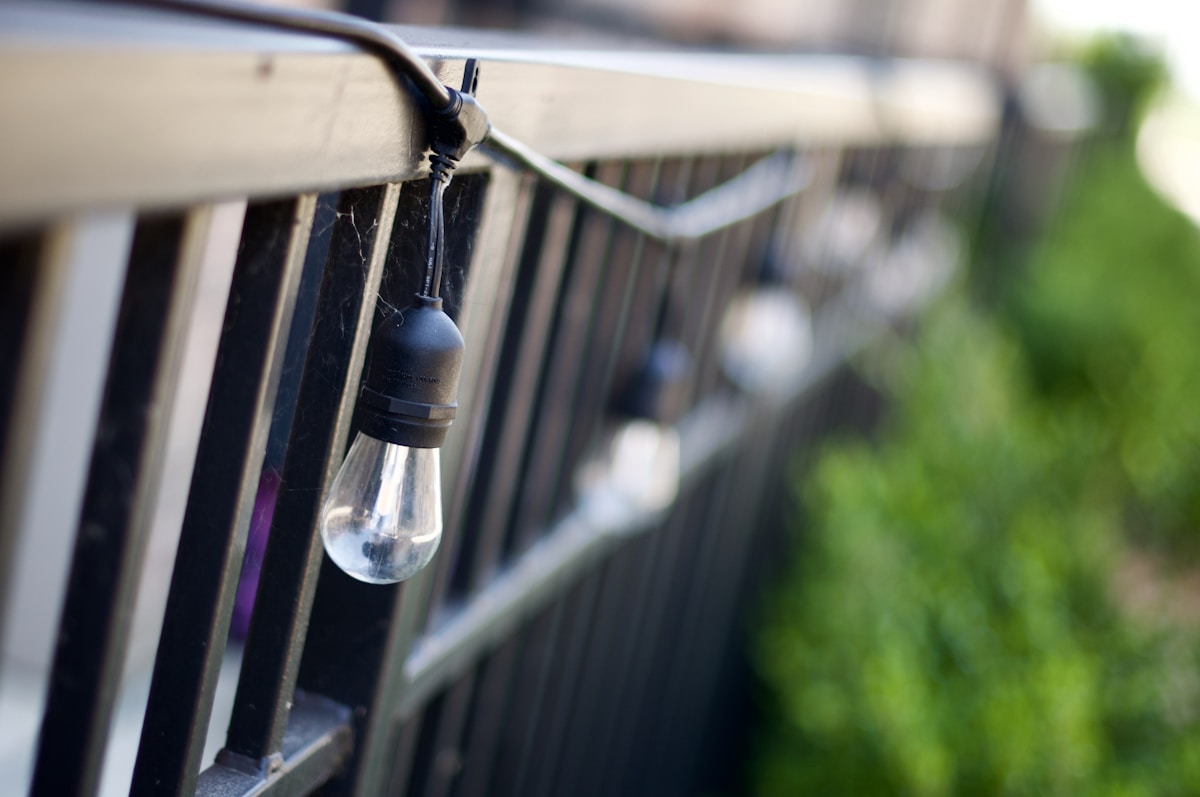
Solution 10: Light and fabric canopy frame. Build a simple overhead frame using two freestanding bamboo or metal shepherd’s hook poles (5 to 6 feet tall, anchored in large planters with soil and rocks) on opposite sides of the balcony. Run strings of outdoor Edison-style lights between the poles and across to the building wall using small S-hooks over the railing. Drape a sheer outdoor fabric over the lines to create a soft canopy overhead.
At night, the lit canopy creates a warm enclosed glow that makes the balcony feel intimate and naturally cuts the line of sight from neighbor windows across the gap. You can see out easily, but looking into a lit canopy from outside is much harder. Addlon and Brightech both make outdoor-rated string lights for $25 to $50 per 48-foot strand, which covers a typical small balcony twice over. Choose warm white (2700K to 3000K) for the most inviting feel.
Pair this canopy with bamboo screens on the side rails and you have a fully enclosed outdoor room that costs under $150 total. If you share your balcony with pets, keep poles stable and out of reach of curious cats. For plant choices that work safely alongside pets on balconies, see our guide to pet-safe indoor plants for small apartments.
Dense Potted Plants as Natural Small Apartment Balcony Privacy Screens (Solutions 11 and 12)
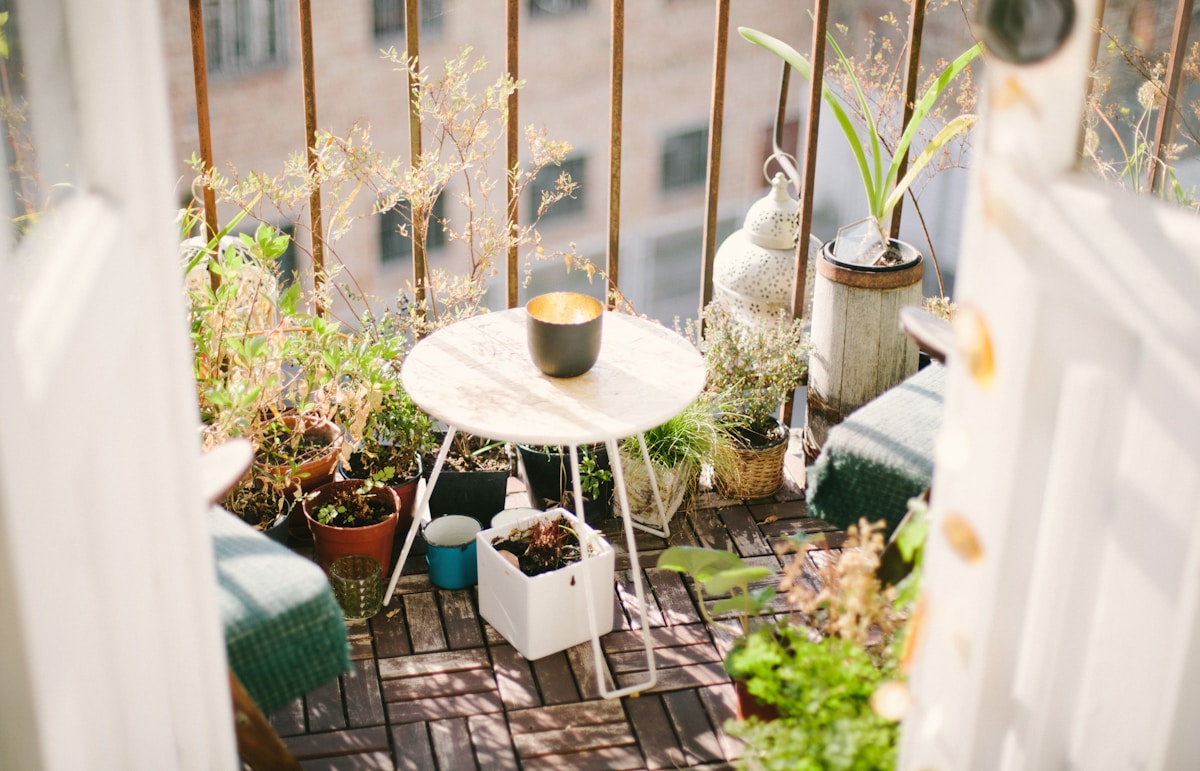
A row of tall, dense potted plants can screen a balcony as effectively as any manufactured panel, with the additional benefit that it looks completely natural and gets better looking every year with minimal investment.
Solution 11: Tall ornamental grasses in containers. Ornamental grasses grow fast, tolerate significant neglect, and create a feathery moving screen that reacts to breezes in a way solid panels cannot. Feather reed grass (Calamagrostis x acutiflora ‘Karl Foerster’) grows to 5 feet in a large container and stays reliably upright through wind and rain. Japanese forest grass (Hakonechloa) works on shadier north-facing balconies. A 1-gallon starter plant runs $15 to $25 at any garden center and fills out to a full screen width in one season.
Solution 12: Portable privacy hedge in large planters. Clumping bamboo in a 14-inch or larger container creates an instant dense screen that grows taller each year. Unlike running bamboo, clumping varieties like Bambusa multiplex ‘Alphonse Karr’ or Fargesia robusta stay contained in the pot and do not spread aggressively. Start with a 3-gallon plant at $40 to $70 and within two seasons you will have a 6-foot-tall privacy screen. Dwarf arborvitae (‘Emerald Green’ variety) in pots is another option for year-round coverage that holds its shape through winter.
Line up three or four large pots in a row for full-width coverage, or alternate tall and medium heights for a layered effect that creates depth. Use a high-quality potting mix with added perlite for drainage, since balcony pots must handle full rain exposure without becoming waterlogged. For renter-friendly ways to style your whole apartment with the same low-commitment approach, see our guide to renter-friendly accent wall ideas.
The Takeaway
You do not need a yard or a house to have a private outdoor space. The 12 solutions here range from a $20 reed roll you can install in 15 minutes to a $150 retractable awning that transforms your balcony for years. Most require no drilling and leave no trace when you move out.
Start with the side of your balcony that gets the most unwanted visibility. A single bamboo screen or outdoor curtain panel there makes a bigger difference than spreading five partial solutions across the whole perimeter. Once the main sight line is handled, add plants and lighting to fill in the rest and create a space that actually feels good to use.
A small apartment balcony privacy setup that works is not about spending the most money. It is about identifying which neighbor angle bothers you most and blocking it first. Everything else is layering and refinement from there.