Tiny Balcony Garden Ideas for Apartment Renters
You can grow a real garden on a balcony the size of a parking space. No yard, no tools, no homeowner permission needed. For apartment renters, a small apartment balcony plant garden is one of the fastest lifestyle upgrades you can make. You go from dead square footage to a living, breathing space where you actually want to spend time. This guide covers 12 practical ideas, what to buy first, and how to keep it all alive without a green thumb.

Why a Small Apartment Balcony Plant Garden Changes Everything
Most apartment renters treat the balcony like a storage unit. A bike, a broken chair, boxes waiting for a trip to the donation center. That is a waste of the only outdoor space you have.
A well-planted balcony does three things at once. It gives you a private outdoor room without leaving your building. It adds genuine visual appeal that makes the entire apartment feel more intentional. And if you grow herbs, it pays for itself in grocery savings within one season.
The good news for renters specifically: every idea in this guide is 100 percent renter-friendly. No drilling. No permanent fixtures. Nothing that will cost you your security deposit. Containers, hooks, and removable hardware do all the work.
Budget reality check: a solid starter balcony garden runs $50 to $150 total. You can go much further with $200 to $300. Compare that to a weekend brunch habit and the math is easy.
Choose the Right Containers Before You Buy a Single Plant
The container decision matters more than the plant decision. Get the containers wrong and you will fight drainage problems and weight issues all season. Get them right and plants almost take care of themselves.
Key rules for balcony containers:
- Weight: Most apartment balconies have a load limit of 40 to 60 pounds per square foot. Wet soil is heavy. Use lightweight plastic, fabric grow bags, or fiberglass pots. Avoid large ceramic or concrete containers unless you are placing them directly against a load-bearing wall.
- Drainage holes: Every pot needs at least one hole in the bottom. Without drainage, roots rot within weeks. Use a saucer underneath to protect the balcony floor.
- Size: Bigger is almost always better for plant health. A 10-inch pot dries out twice as fast as a 16-inch pot in summer heat. Go larger than you think you need.
- Material: Self-watering containers are worth every extra dollar if you travel or work long hours. They hold a water reservoir at the bottom that wicks moisture up as the soil dries.
Fabric grow bags from Amazon cost $10 to $20 for a set of five and are an excellent starter choice. They are breathable, lightweight, and fold flat when the season ends.
Window Boxes and Railing Planters for Maximum Color

Railing planters are the signature look of a great balcony garden. They sit on the railing without any drilling and hold enough soil for annual flowers or trailing plants. A single railing box runs $15 to $35 at any home improvement or garden center.
Best plants for railing planters:
- Petunias: The classic choice. They spill beautifully over the edge, bloom from spring through fall, and tolerate heat well. A single pack of four costs about $8 at the garden center.
- Million bells (Calibrachoa): Like tiny petunias. Very prolific, low maintenance, comes in dozens of colors.
- Sweet potato vine: Not grown for eating. Chartreuse or dark purple foliage that trails 2 to 3 feet. Pairs beautifully with flowers.
- Nasturtiums: Edible flowers that are also visually striking. Grow from seed for under $3 a packet.
A formula that works every time: one upright plant (like a spike or small ornamental grass), one mounding plant (like petunias), and one trailing plant (like sweet potato vine). This is called the “thriller, filler, spiller” combo and produces a full, layered look quickly.
Important: check that the railing clamp style matches your railing. Most planters say they fit round or square rails but measure your railing width before buying.
For more ideas on making your balcony feel private and intentional, see our guide to privacy solutions for small apartment balconies.
Hanging Planters That Use Vertical Space You Are Already Wasting

The ceiling or soffit of your balcony is almost certainly empty. A single adhesive or pressure-fit hook rated for 15 to 20 pounds holds a hanging planter without any drilling. Command brand outdoor hooks work well and remove cleanly.
What to hang:
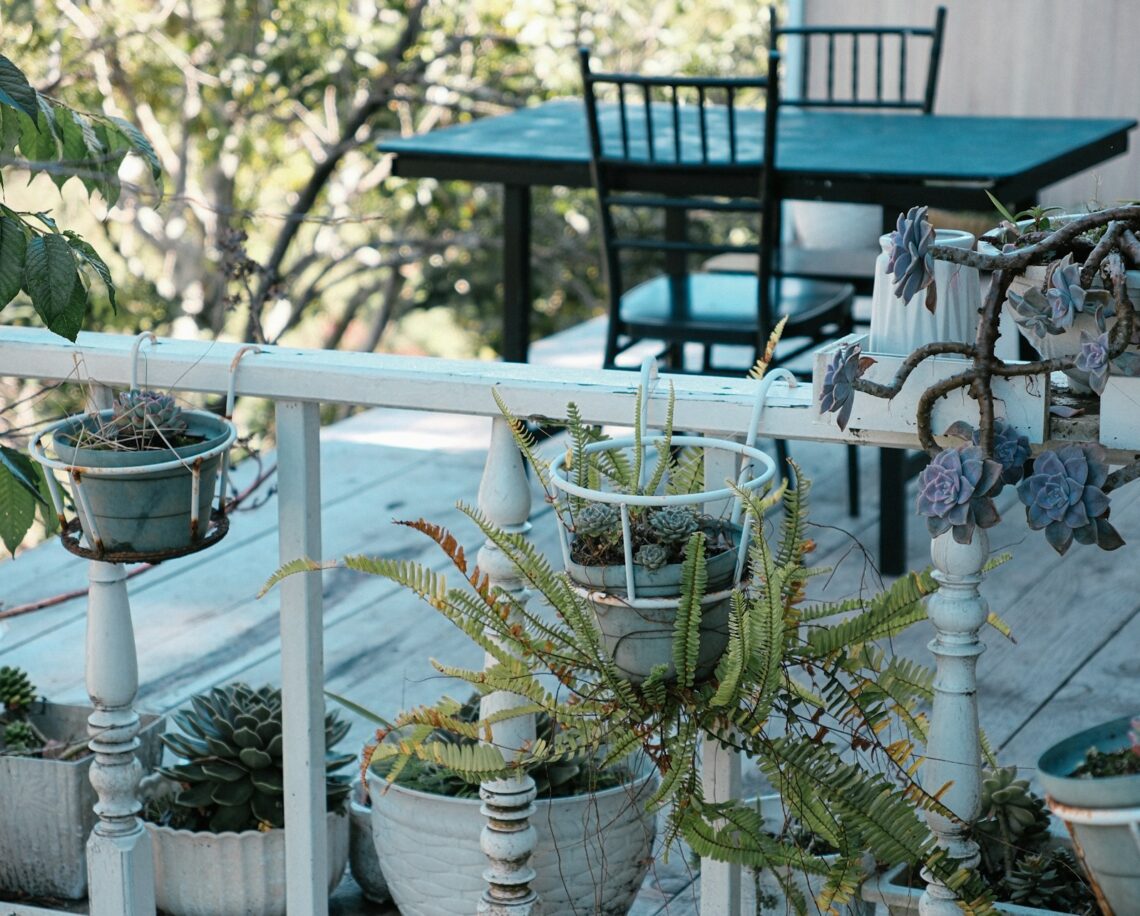
- Trailing plants: String of pearls, burro’s tail, ivy, and spider plants all look spectacular when hanging. They spill naturally and get dramatic within one growing season.
- Strawberries: A hanging basket of strawberries is both ornamental and edible. The fruit hangs below the leaves in a way that is visually striking and easy to harvest.
- Ferns: Boston ferns handle part shade well and create a lush, tropical look. They need more water than most hanging plants so check them daily in summer heat.

Macrame plant hangers are having a moment and for good reason. They add texture that plain plastic baskets never will. You can find handmade ones on Etsy for $15 to $30, or buy a three-pack at IKEA for around $12. Pair them with a simple terracotta pot for a look that photographs extremely well.
If your balcony ceiling has nowhere to hang from, use a free-standing plant stand with an overhead hook arm. These fold flat for winter storage and run $25 to $40.
Grow Your Own Herbs: The Best Small Apartment Balcony Plant Garden Project

A balcony herb garden is the single most practical thing you can grow in a small apartment. Fresh herbs cost $3 to $5 per small bunch at the grocery store. A potted herb plant at the garden center costs $3 to $4 and gives you months of cuttings.
The easiest herbs for apartment balconies:
- Basil: Needs full sun (at least 6 hours). Harvest regularly by pinching off the top leaves. One 4-inch pot of basil easily replaces 10 grocery store bunches over a summer.
- Mint: Grows aggressively. Keep it in its own container because it will crowd out everything else. Great for mojitos, tea, and water.
- Chives: Almost impossible to kill. Grows back after cutting, tolerates some shade, and produces edible purple flowers in spring.
- Rosemary: Drought tolerant once established. Needs excellent drainage. A single plant lasts for years if you bring it inside for winter.
- Parsley: Tolerates partial shade better than most herbs. Slow to germinate from seed, so buy plants rather than seeds your first year.
Group herbs that have similar water needs together. Basil and parsley both like consistent moisture. Rosemary, thyme, and oregano prefer to dry out between waterings. Keeping them separate makes watering much simpler.
If you want to round out your apartment with plants beyond the balcony, our guide to pet-safe indoor plants covers the best options for every room.
Low-Maintenance Succulents and Drought-Tolerant Plants

If you travel frequently, work irregular hours, or have a history of killing plants, succulents are your answer. They store water in their leaves and tolerate neglect that would kill most other plants within days.
Best succulents for outdoor balconies:
- Sempervivum (hen and chicks): Hardy outdoors year-round in most climates. Spreads slowly, produces offsets, and comes in dozens of colors. Costs $2 to $4 per plant.
- Sedum: Most varieties are fully hardy outdoors and handle both heat and cold well. Sedum “Autumn Joy” puts on a fall color show that rivals any flowering annual.
- Aloe vera: Requires temperatures above 50 degrees so bring it inside for winter in most areas. The gel inside is useful for minor burns and skin irritation.
- Echeveria: The rosette-shaped succulent you see everywhere. Best in partial shade on balconies since direct summer sun can scorch the leaves.
Plant succulents in a gritty, fast-draining mix. Standard potting soil holds too much moisture. Buy a cactus mix or add one part coarse sand or perlite to two parts regular potting mix.
A single mixed succulent planter makes an excellent focal point and requires watering only once or twice a week in summer, less in spring and fall.
Create a Seating Nook That Combines Plants and Comfort

A balcony with only plants is a garden. A balcony with plants and a seat is an outdoor room. The goal is to design something that invites you to actually sit there in the morning with coffee or in the evening after work.
Space-saving seating options for small balconies:
- Folding bistro chair: The most versatile option. Two chairs fold flat and lean against the wall when not in use. Café-style metal bistro sets run $80 to $150 and last for years outdoors.
- Hanging egg chair: If your ceiling can take the weight (verify with your landlord), a hanging chair takes up almost no floor space and creates an unmistakably cozy vibe. Budget options start around $150.
- Floor cushions: For the smallest balconies (under 30 square feet), skip furniture entirely. A large outdoor floor cushion or two gives you seating that stores inside easily.
- Foldable stool as plant stand: During parties or when you need more seating, the same stool you use as a plant stand doubles as extra guest seating.
Design tip: place your tallest plants or a trellis at the back edge of the seating area to create a sense of enclosure. This makes a small balcony feel like a private garden rather than a narrow ledge. For more renter-friendly ways to transform a small space on a tight budget, check out our small apartment makeover under $500 guide.
Light Up Your Balcony Garden After Dark

The right lighting makes a balcony garden usable after dark and transforms the entire aesthetic. The best option for renters is solar-powered string lights because they require no outlet access and no wiring changes.
Lighting ideas that work for rental balconies:
- Solar string lights: Clip or wrap them along the railing and let the solar panel charge during the day. A 33-foot strand costs $15 to $25. Look for warm white bulbs (2700K to 3000K) for the most flattering glow.
- Solar lanterns: Hang them from a hook or set them on a ledge. They provide a softer, more ambient light than string lights and look beautiful surrounded by plants.
- Battery-powered spotlights: Point one upward into a large plant for dramatic uplighting. This works especially well on a taller plant like a tall grass, a small ornamental tree, or a large fern.
- Candles: Citronella candles in glass containers do double duty as lighting and mosquito deterrent. Cluster three different-sized candles together for a layered effect.
Avoid very bright white LED lights. They make a balcony feel like a parking lot rather than a garden. Warm, low-intensity light that lets the plant shapes cast shadows is the goal.
First Plantings: How to Start Without Overwhelming Yourself

The biggest mistake first-time balcony gardeners make is buying too many plants on the first trip to the garden center. You go in for two pots of herbs and come back with twelve different plants and no coherent plan. Then half of them die because you did not have the right conditions or enough containers ready.
A better approach for your first season:
- Start with three containers: One for herbs, one for a trailing flower, one for a low-maintenance foliage plant. Master these before adding more.
- Buy transplants, not seeds: Nursery transplants give you visible results within two to three weeks. Seeds require more attention, more time, and more controlled conditions. Save seeds for year two when you know what works on your specific balcony.
- Use quality potting mix: Garden center potting mix ($10 to $15 for a large bag) is worth every dollar compared to reusing old soil or buying the cheapest bag. It drains correctly, holds moisture at the right level, and contains starter fertilizer.
- Feed every two weeks: Container plants need more fertilizer than garden plants because watering flushes nutrients out of the pot. A balanced liquid fertilizer diluted to half strength works for almost everything. Tomato fertilizer works especially well for flowering plants.
- Water in the morning: Morning watering gives leaves time to dry before evening, which reduces disease. Check the soil with your finger before watering. If the top inch is still moist, wait one more day.
Expect to lose a plant or two your first season. That is not failure. That is information about what your specific balcony conditions (sun hours, wind exposure, humidity) actually support. Adjust and plant again.
The Takeaway
A tiny rental balcony can absolutely support a real garden. The key is working with containers and vertical space instead of fighting the limitations of the space. Start with a few railing planters and a hanging basket. Add a seating option. Grow herbs that you will actually use. Add lighting so you use the space at night. Within one growing season, what was dead square footage becomes the best spot in your apartment.
Total investment for a well-planted beginner setup: $75 to $150. Total time to set it up: one weekend morning. The payoff in daily enjoyment, fresh food, and apartment atmosphere is immediate.