A small apartment dark no light situation is the worst rental hand to play, and the most common one. It is the garden-level studio with two slit windows facing a brick airshaft. It is the railroad apartment where every interior bedroom got built behind the next. It is the converted Victorian one-bedroom whose only window opens onto an alley three feet from another building. You signed the lease because it was eight hundred dollars under market, and now you live in a cave.
This guide is for that exact apartment. Not a tasteful pied a terre with one dim morning hour of light, but the unit where you flick the overhead on at noon and it still feels like five in the afternoon. Every fix below works for renters, costs less than $300 per room, and reads as cozy instead of sad once you finish.
How to decorate a dark apartment with no windows: start with the lighting plan
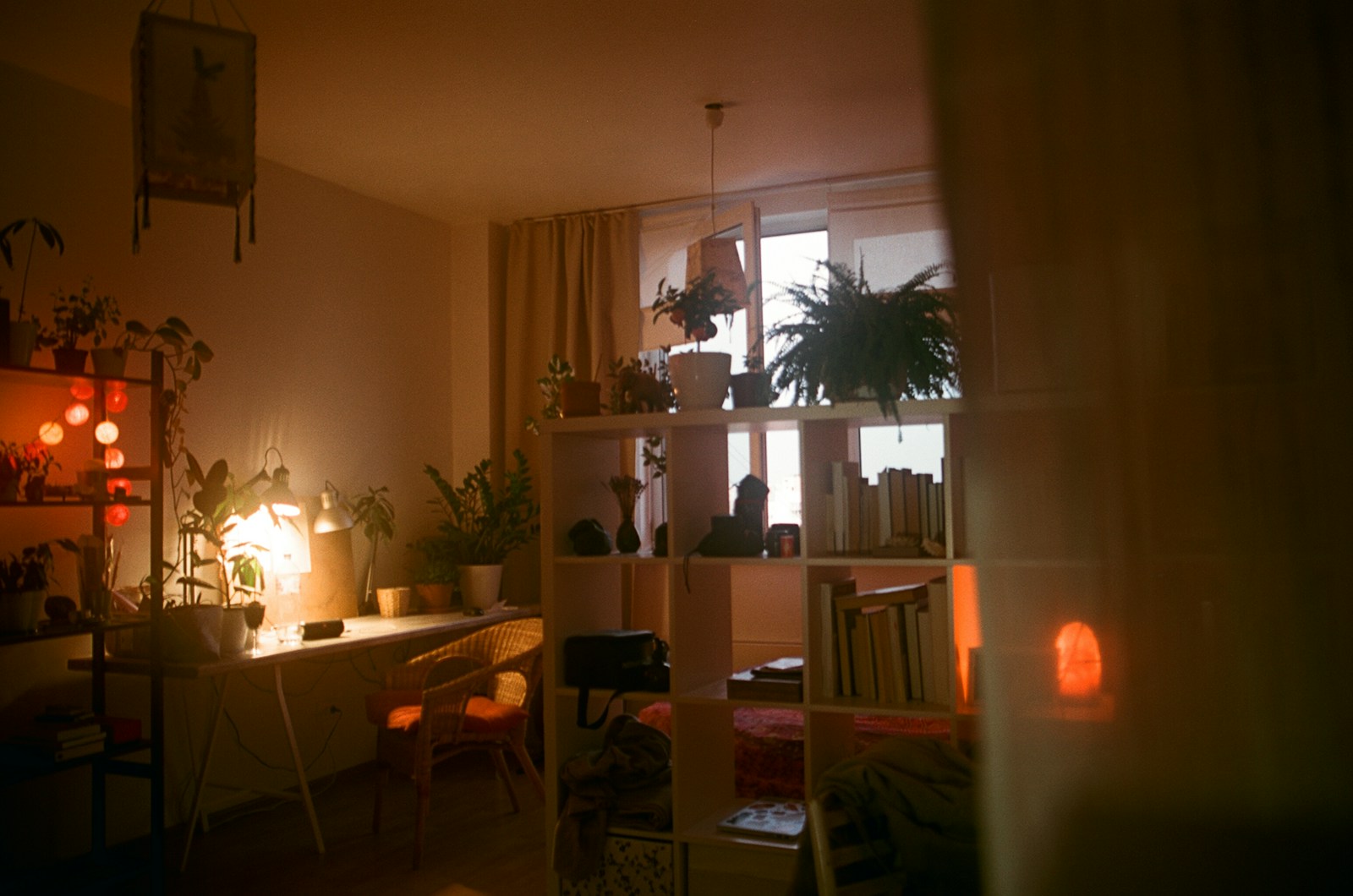
Renters reach for white paint first, then realize the apartment looks worse. Bright white in a windowless room reads cold and clinical because the only light is artificial, and white walls bounce that artificial light back at you in flat, fluorescent-looking sheets. The fix is not a brighter bulb. It is a lighting plan with at least three sources at different heights, all 2700K or warmer, none of them coming from the ceiling box alone.
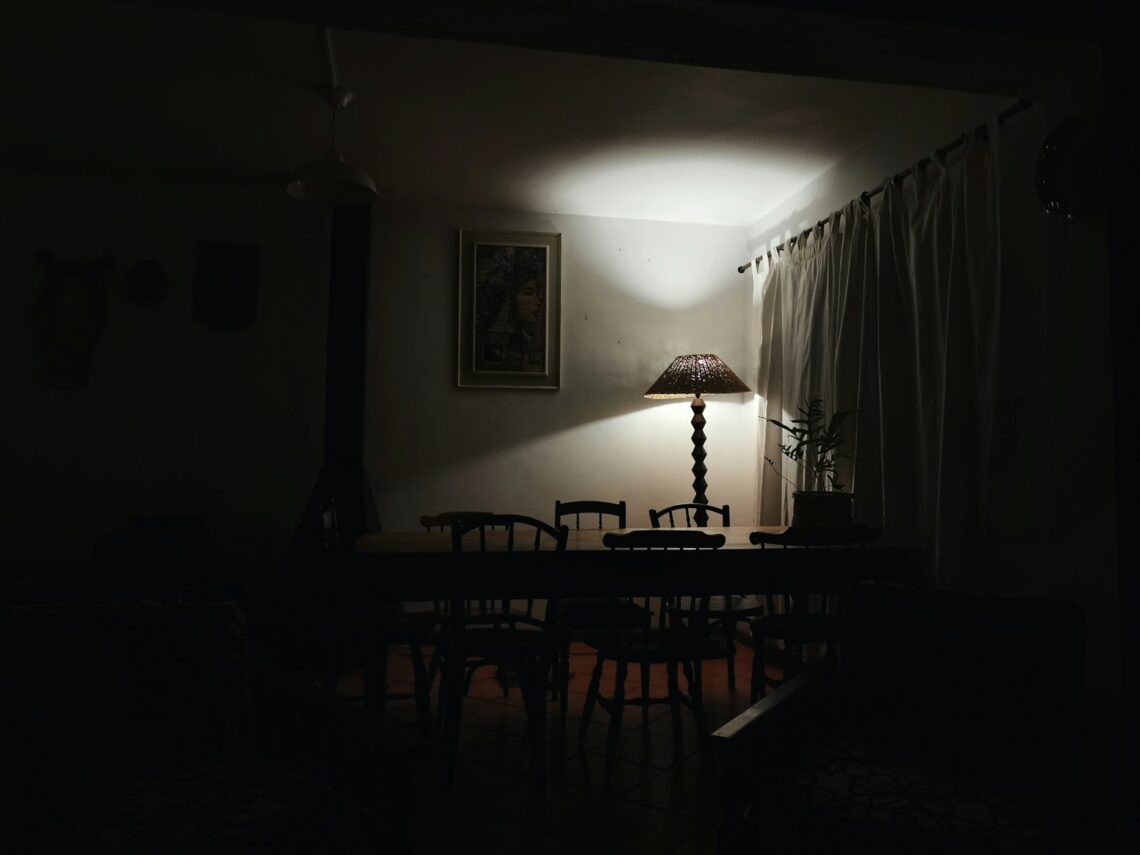
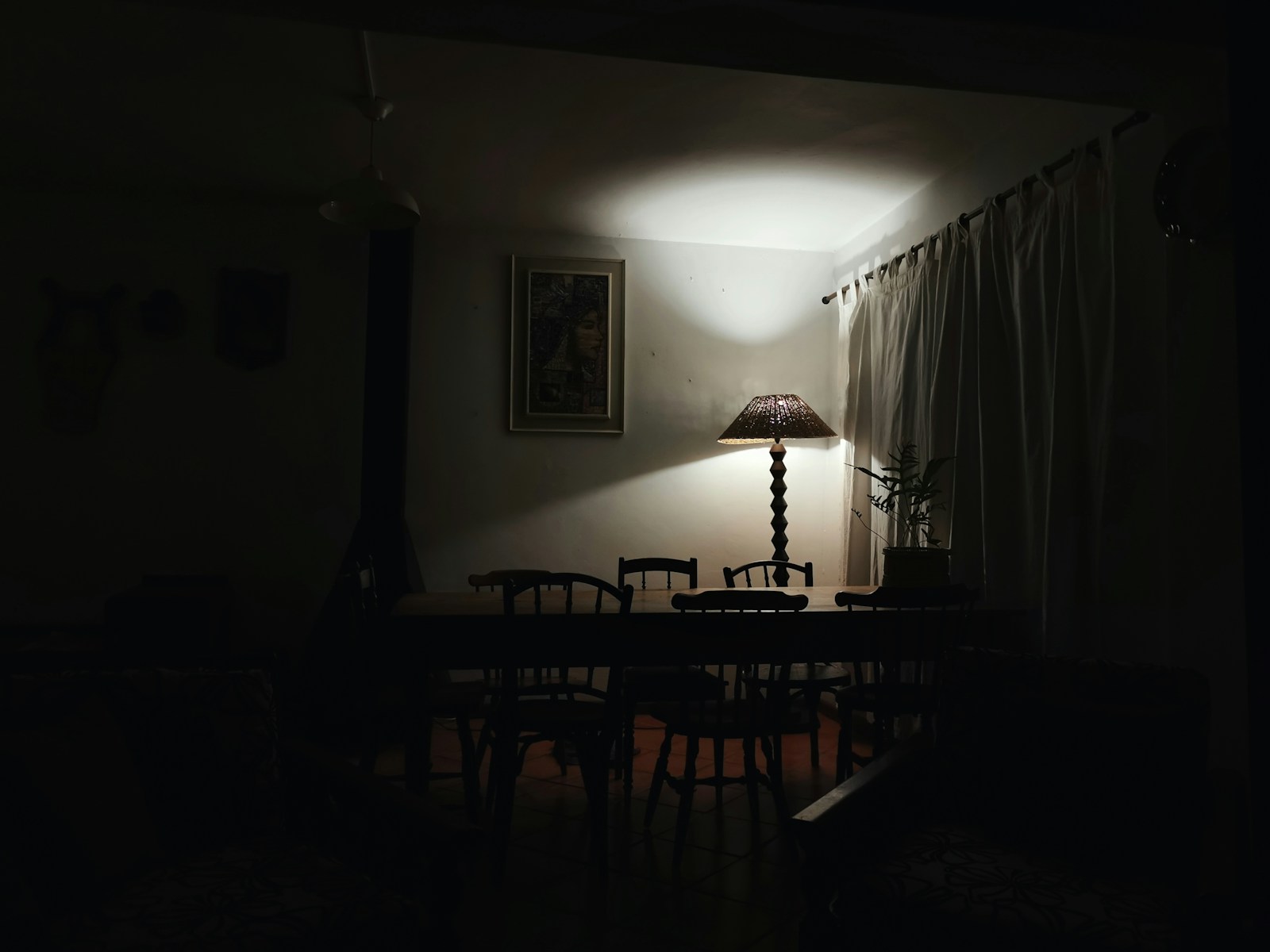
Before you buy anything, walk into the room at the worst time of day (usually 2 PM in winter) and stand in each corner. Notice which corners disappear into darkness. Those four or five dead zones are where your lamps go. You are not lighting the whole room. You are lighting five small pools, and the contrast between them is what makes a dark apartment read as moody instead of dim.
The single highest-leverage change costs $35 at most. Buy a 10-pack of warm 2700K LED bulbs, walk into every fixture, and swap out whatever the landlord left. Builder-grade rentals almost always have 4000K or 5000K bulbs in them. That blue-white light is what makes a small apartment with no windows feel like an interrogation room. For overhead fixtures use 800 lumen bulbs. For table and floor lamps use 450 lumens. For sconces and string lights use 250 to 350 lumens. The variation matters. Every bulb at the same brightness creates the same flat washed-out look you are trying to escape.
Add at least three lamps before anything else
In a typical dark studio or one-bedroom, the single most effective $150 you can spend is on three lamps. One floor lamp for the corner farthest from the door. One table lamp on a nightstand, console, or desk. One small accent lamp on a low surface (a shelf, the floor next to a chair, a kitchen counter). All three on warm bulbs, all three on smart plugs so they come on automatically at sunset.
Cheap source list: IKEA Hektar floor lamp at $60, IKEA Arstid table lamp at $30, IKEA Lersta clip lamp at $15. If you want to spend more, the Anthropologie Hetfield at $200 or a vintage brass lamp from Facebook Marketplace for $40 reads as intentional rather than budget. The brand does not matter. The placement and the bulb temperature do.
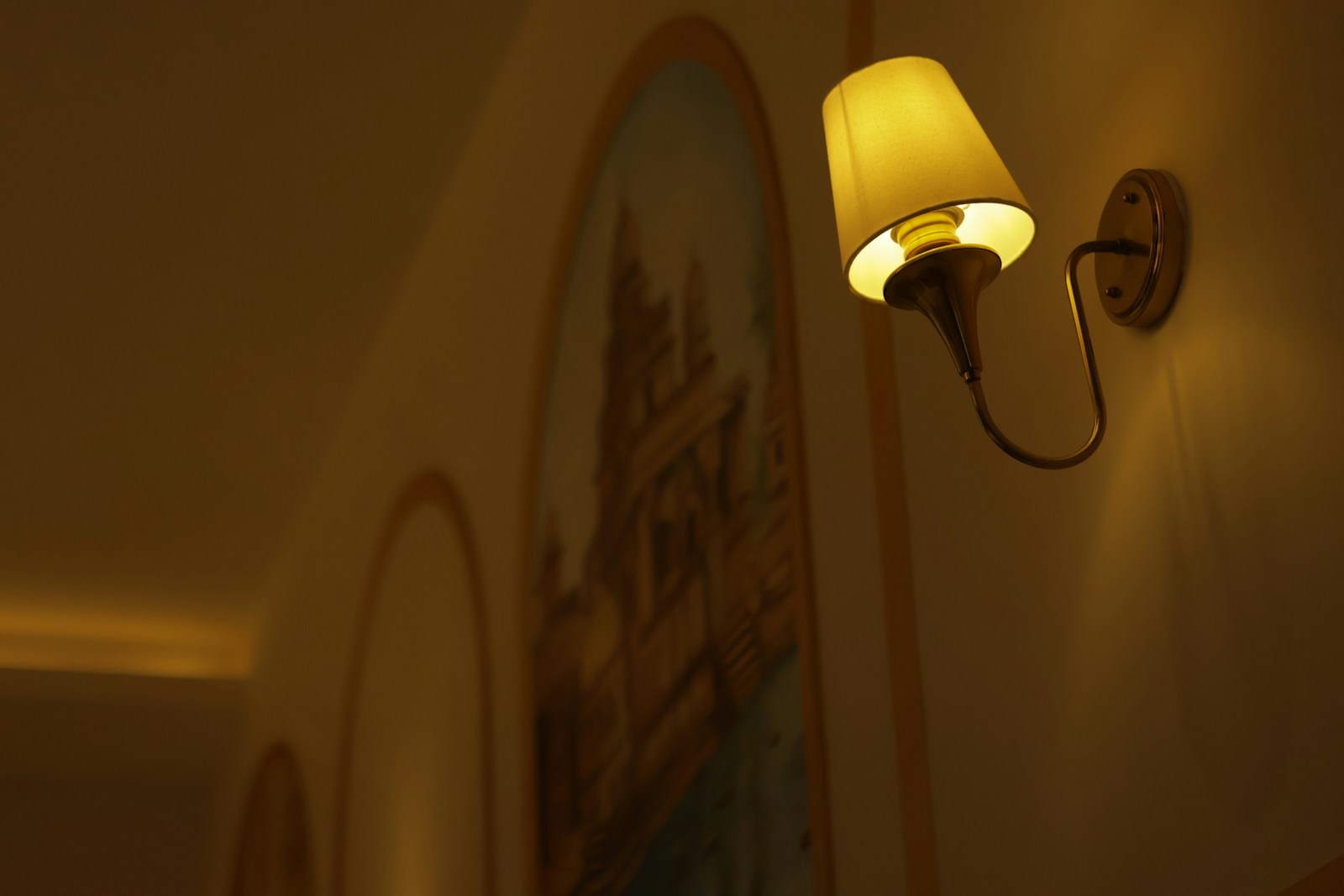
The detail that separates apartments that look professionally lit from those that look rented is multiple light sources at different heights. You probably have one overhead and one or two outlets. That is not enough. The fix renters never use is the plug-in wall sconce. The Hay Apex sconce ($120), the IKEA Tradfri plug-in sconce ($40), or any plug-in sconce from Amazon ($25 to $60) gives you wall-mounted light at eye level using only a Command strip and a regular outlet. Place one above each side of the bed instead of nightstand lamps. Place one above the sofa where you would put a sconce in a more polished apartment. The room instantly reads as designed rather than dorm.
Use mirrors to multiply the artificial light you do have
The classic decorating advice (hang a mirror across from a window to double the natural light) does not apply here, because you do not have a window. The version that works in a small apartment with dark no light is hanging a mirror across from your brightest lamp instead. The mirror bounces that pool of warm light back into the room and doubles its visual reach.
Two mirror placements pay off immediately. First: a large floor mirror leaned against the wall behind your sofa, opposite a tall floor lamp. The lamp light catches the mirror and the sofa zone reads twice as bright. Second: a small round mirror above a console table with a table lamp under it. The lamp light kicks up onto the ceiling via the mirror and the room reads taller.
Add a second floor mirror in the bedroom or hallway facing a sconce, and a third small mirror inside a dark kitchen reflecting the under-cabinet light, and the whole apartment gains the equivalent of one extra light source per room without adding a single bulb.
Lean into the dark with a warm moody color palette
This is the move most renters resist for two weeks then capitulate to. A dark apartment with no windows will never read as bright and airy no matter how much white you paint. It will read as either cold and depressing or warm and intentional. Pick warm and intentional.
The palette that consistently works: warm off-white walls (Benjamin Moore White Dove, Farrow and Ball Strong White, or just whatever the landlord painted), one terracotta or rust accent, one olive or forest green, one warm wood tone, and brass or aged bronze hardware. Stay away from cool grays, navy as a primary, and pure white. Your apartment is not going to be a daylight space.
For renters who cannot paint, layer the palette through textiles instead. A terracotta rug, a forest green throw on the sofa, a brass-base lamp, a cane or rattan basket. Five swaps and the whole room shifts warm without a single drop of paint. If your landlord allows even a single coat, do not waste it on the walls. Paint the ceiling. A warm off-white ceiling (something like Benjamin Moore Cloud White or Pale Oak) bounces lamp light around the room far more efficiently than a builder flat white.
Layer fairy lights, candles, and texture aggressively
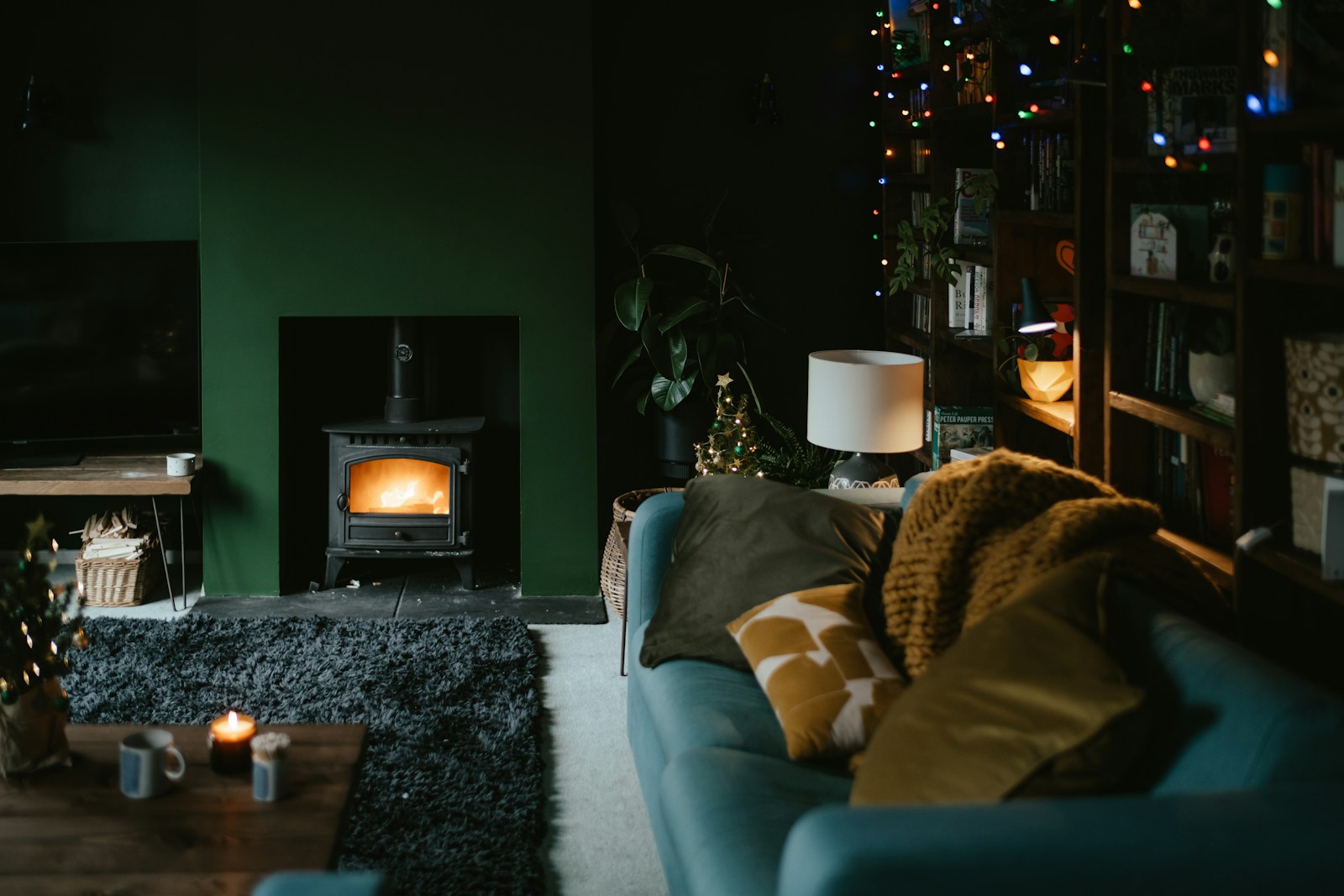
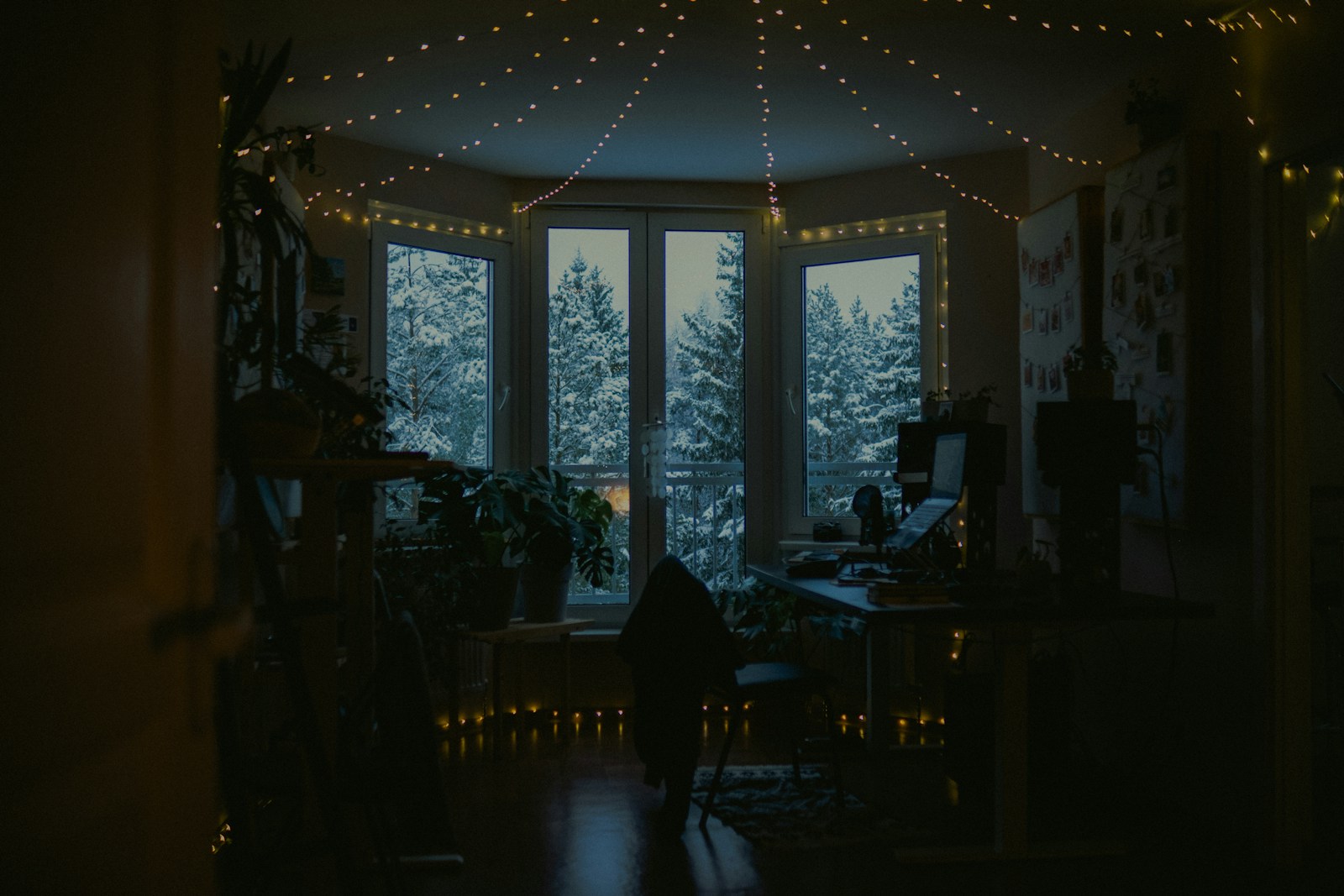
The reason fairy lights got a bad reputation is teenagers tacking up cool-white blinking strands with the battery pack visible. Used correctly, they are one of the cheapest ways to add the low-level ambient glow that a small apartment dark no light room needs. Only buy warm white LED strings (2700K or warmer). Run them behind something (a curtain rod, the underside of a floating shelf, the top of a tall bookshelf, the perimeter of a headboard) so you see the glow but not the bulbs. Plug them into a smart plug on a sunset schedule. A 30 foot string traced along the top of crown molding in a dark living room adds the equivalent of one extra ambient lamp and costs $15.
A single tea light at table height changes the entire visual temperature of a 200 square foot room. The flicker breaks up the flat artificial light, the warm color makes the rest of the warm bulbs read more cohesive, and the height drops the visual center of gravity in a way that makes a ceiling-lit room finally feel grounded. For renters who do not want open flame, flicker LED candles from Amazon ($15 for a set of 9) do the same job.
In a bright apartment, sunlight changes throughout the day and creates natural variety. In a dark apartment, the light is identical at 10 AM and 10 PM. The fix is texture: a chunky knit throw on the sofa, a high-pile or Moroccan-style area rug, a rattan or cane piece, a textured stoneware lamp base, a velvet pillow on top of a linen pillow on top of a leather chair. Pile six different textures into a 10 by 12 foot room and it reads layered rather than flat.
Bring in plants that survive low light, and fake the ones that do not
Most “low light plants” lists oversell what survives in a basement studio with one airshaft window. The three that actually grow in apartments with effectively zero natural light are the ZZ plant, the pothos in a north-facing room with a grow bulb in the overhead fixture, and the snake plant. That is the list. Skip fiddle leaf figs, monsteras, and anything with variegated leaves. They will yellow and die in three months.
Where you can fake it: invest the budget you would have spent on plants on really good planters and use silk versions from Afloral or Amazon ($40 for a decent silk monstera). The room reads as “lush apartment with plants” and the renter does not have to deal with a plant slowly dying every season.
One real plant in a beautiful planter beats five real plants in nursery pots. Pick one ZZ plant, put it in a $40 stoneware pot, and call the rest of the green silk.
Hang a sheer linen curtain across a blank wall
This is the trick that bridges the gap between “dark apartment with no windows” and “small intentional pied a terre.” Hang sheer linen curtains across blank walls as if there were a window behind them. It sounds absurd. It looks correct.
The brain reads a floor-to-ceiling vertical line of soft fabric as a window even when the wall behind it is solid. Pair the curtain with a wall sconce on either side and a console table underneath and the wall reads as a window wall. The trick fails only if you push the rod too short or hang the panels too high; mount the rod 4 inches below the ceiling and let the curtain puddle on the floor.
Linen panels from Amazon run $25 each. A no-drill tension rod (rated 40 pounds) is $20. For under $75 you have invented a window where the landlord did not put one, and the wall that used to feel claustrophobic now reads as the bright corner of the room.
Get a bedside lamp that actually throws light
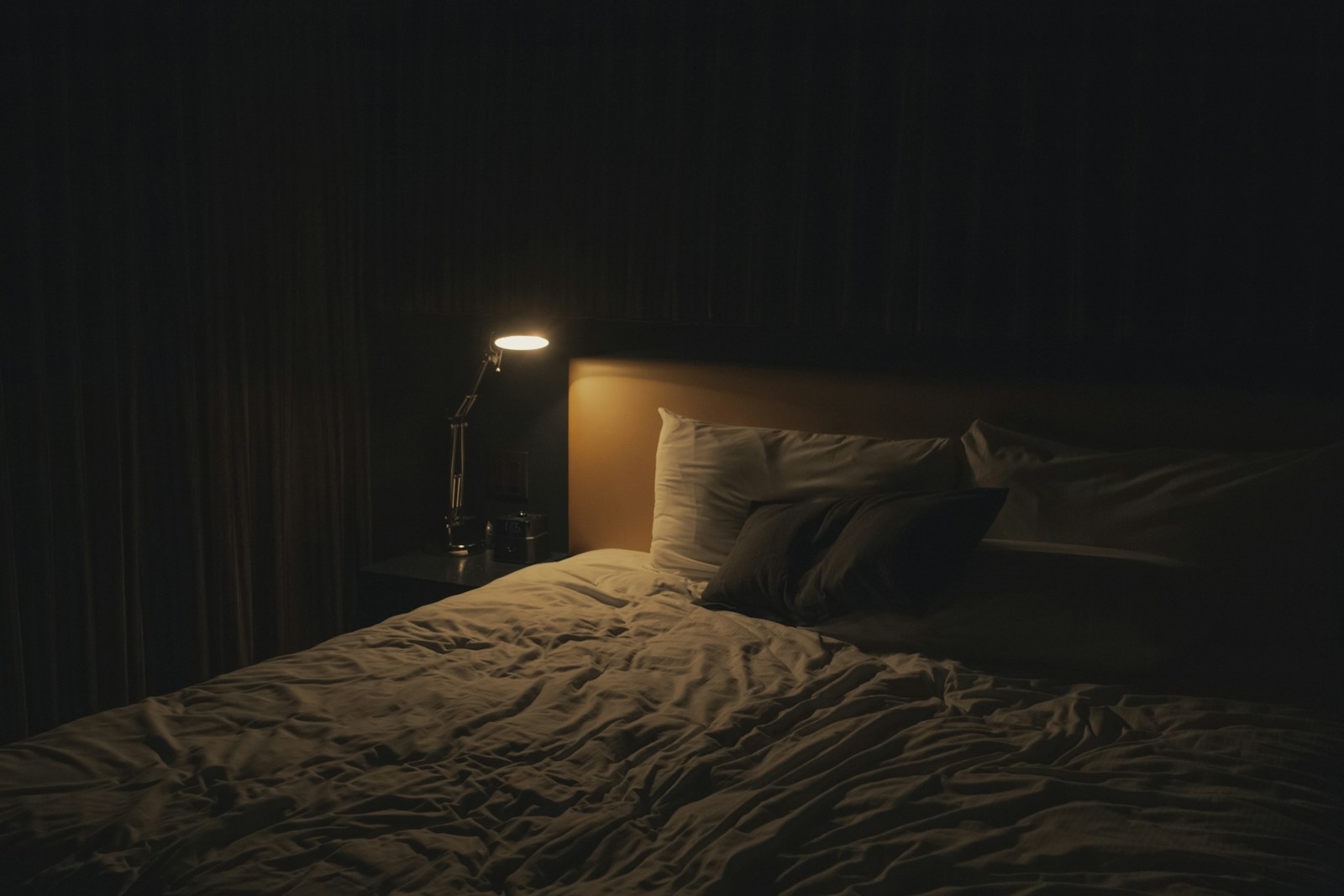
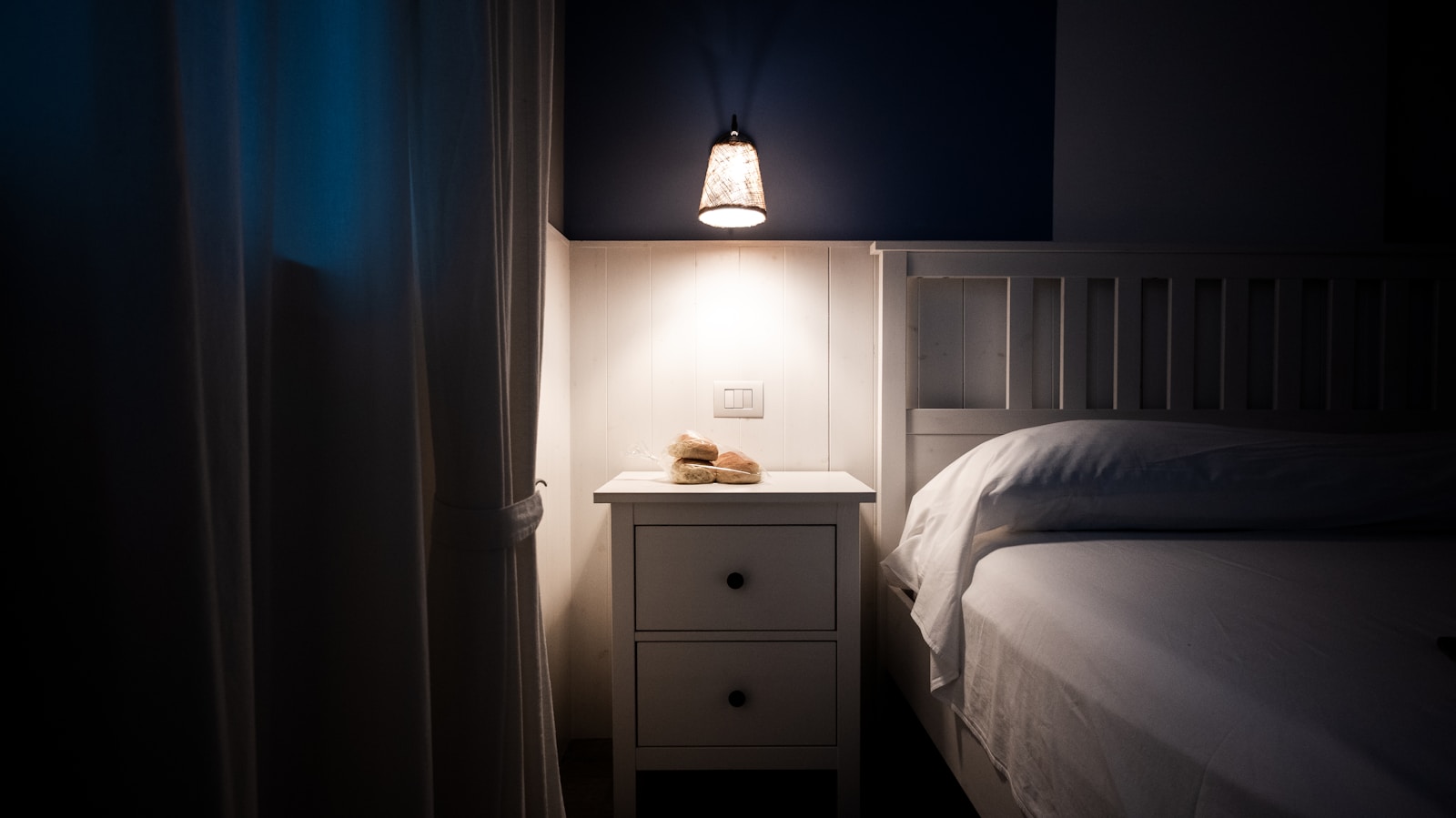
A bedside lamp in a windowless bedroom is doing the work of two pieces of furniture: it is reading light and it is the main mood source after dark. A short ceramic table lamp with a tiny shade does neither. Get a tall (24 to 28 inch) lamp with a wide drum shade and an 800 lumen warm bulb. It will make the corner of the bed feel like a room within the room.
For one-bedroom apartments where the bedroom feels especially cave-like, add a wall-mounted reading sconce above one shoulder of the bed in addition to the table lamp. The two-source bedside is what hotel rooms use and the effect translates immediately to a small dark apartment bedroom.
Replace the boob light and add one big warm-toned piece of art
The single ugliest fixture in most rental apartments is the builder-grade “boob light” (a round opaque dome) screwed into the ceiling box. It throws flat downward light, no ambient, no diffusion, no warmth. Replacing it is allowed in almost every standard lease as long as you keep the original and reinstall it at move-out. Decent renter-friendly swaps under $100: the IKEA Nymane at $40, or any Amazon flush mount with a frosted glass or rattan shade for $60. Wire it yourself in 20 minutes and the room looks fundamentally different overhead.
A windowless apartment cannot afford visual clutter. The eye has no exterior reference (no view, no changing light) and a gallery wall of ten small prints becomes overwhelming fast. Replace it with one large piece of warm-toned art (sunset oil painting, abstract terracotta print, large sepia photograph) above the sofa or the bed. The single large piece reads as the focal point and gives the eye somewhere to rest. Source options: a thrift store oil painting ($30 to $80), an Etsy print at 24 by 36 ($60), or a Society6 large canvas ($150).
Automate everything on a sunset schedule and walk the dead zones
The detail that separates a styled small apartment dark no light setup from a styled but constantly forgotten one is automation. Plug every lamp into a smart plug (Kasa 4-packs run $25 to $30) and set them to a single group called “evening” that turns on at sunset, dims at 10 PM, and shuts off at midnight. The whole apartment now lights itself before you get home, dims for sleep, and you never come back to a black box.
The morning version is equally important. Schedule the same group to come on for 30 minutes at your wake time, then off until evening. In a windowless bedroom this is the closest thing to a sunrise alarm and noticeably reduces winter sluggishness for anyone living below ground.
Once everything else is in place, do one final walk-through after sunset. Turn on the apartment as you have it set up. Stand in the entry door of each room and look at the floor and the ceiling. If any corner is still black, that is a missing light. Add a clip lamp, a candle, a small accent fixture, or a string of fairy lights in that corner. Repeat until no single corner is fully dark.
A small apartment with no windows is never going to read as a sunlit loft, but a well-lit one stops reading as dark at all. It reads as warm, layered, intentional. The moves above (warm bulbs, three lamps, mirrors, plug-in sconces, fairy lights, candles, texture, plants, fake-window curtains, bedside lamp, ceiling paint, large art, smart plugs, ceiling fixture swap) together cost about $400 to $600 depending on what you already own, and they apply to any rental from a garden studio in Brooklyn to a basement one-bedroom in Glasgow. The cave is the cave. What you put inside it is up to you.
For more renter-friendly fixes that work in awkward apartments, see our guide to no drill wall decor ideas for renters, the deeper renter friendly decor guide, and the room by room studio decorating playbook for layout-first thinking when the apartment itself is the problem.