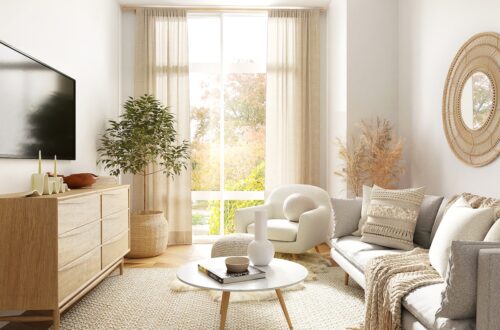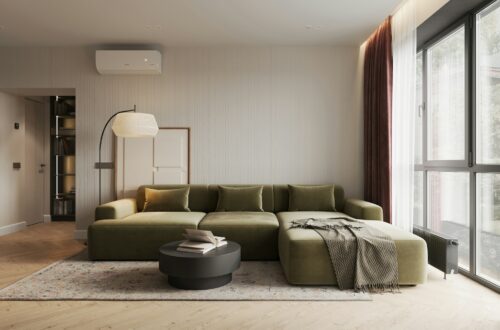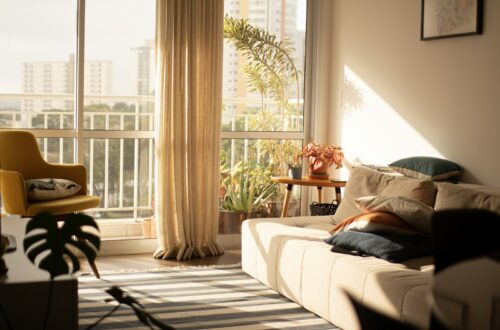
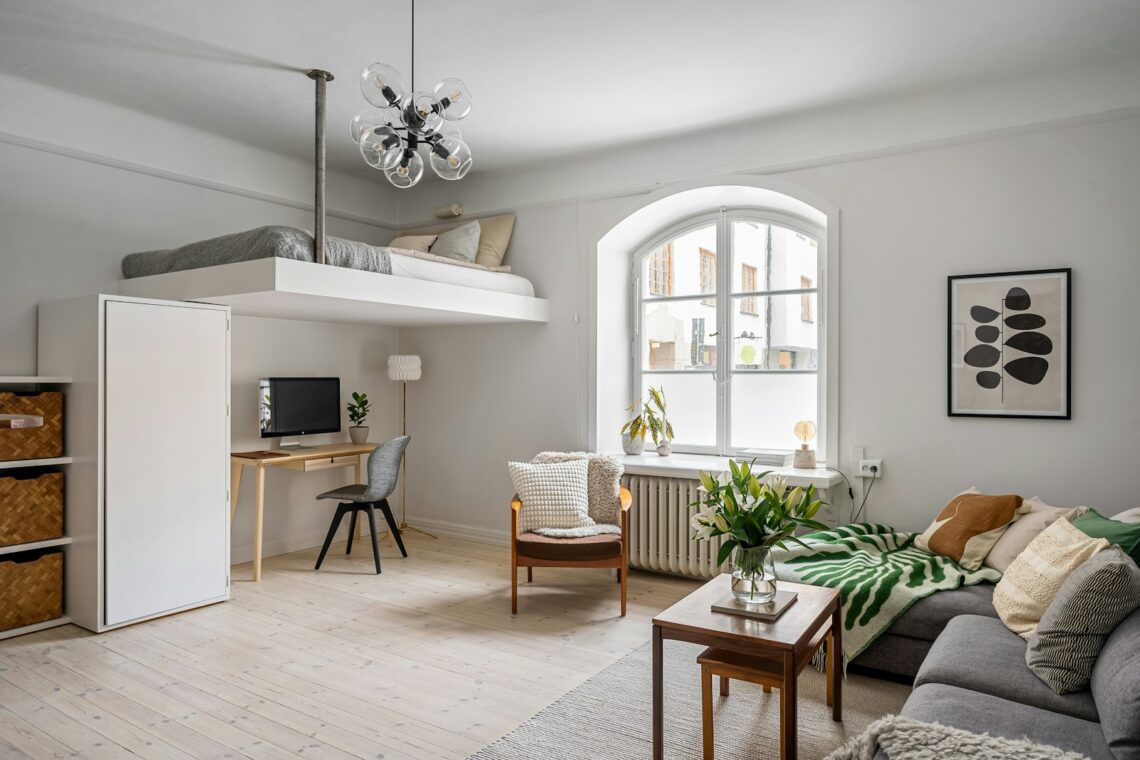
A 300 square foot studio apartment is not a small one-bedroom. It is a single rectangle that has to host sleeping, cooking, working, eating, and entertaining inside the footprint of a parking space. The studio apartment ideas 300 sqft renters need are not the same ideas that get posted under “tiny home tours” on Instagram, because most of those tours are 450 square feet shot at a wide angle.
This guide is the actual playbook for a 300 sq ft studio: how to lay out the room in zones, how to pick furniture that does two jobs, what to spend on the bed, where to put the desk, and which seven moves make a 300 square foot studio feel like a real apartment instead of a hotel room with a sink. Every layout below assumes you cannot remove walls, cannot drill into the structural bones, and have one window if you are lucky.
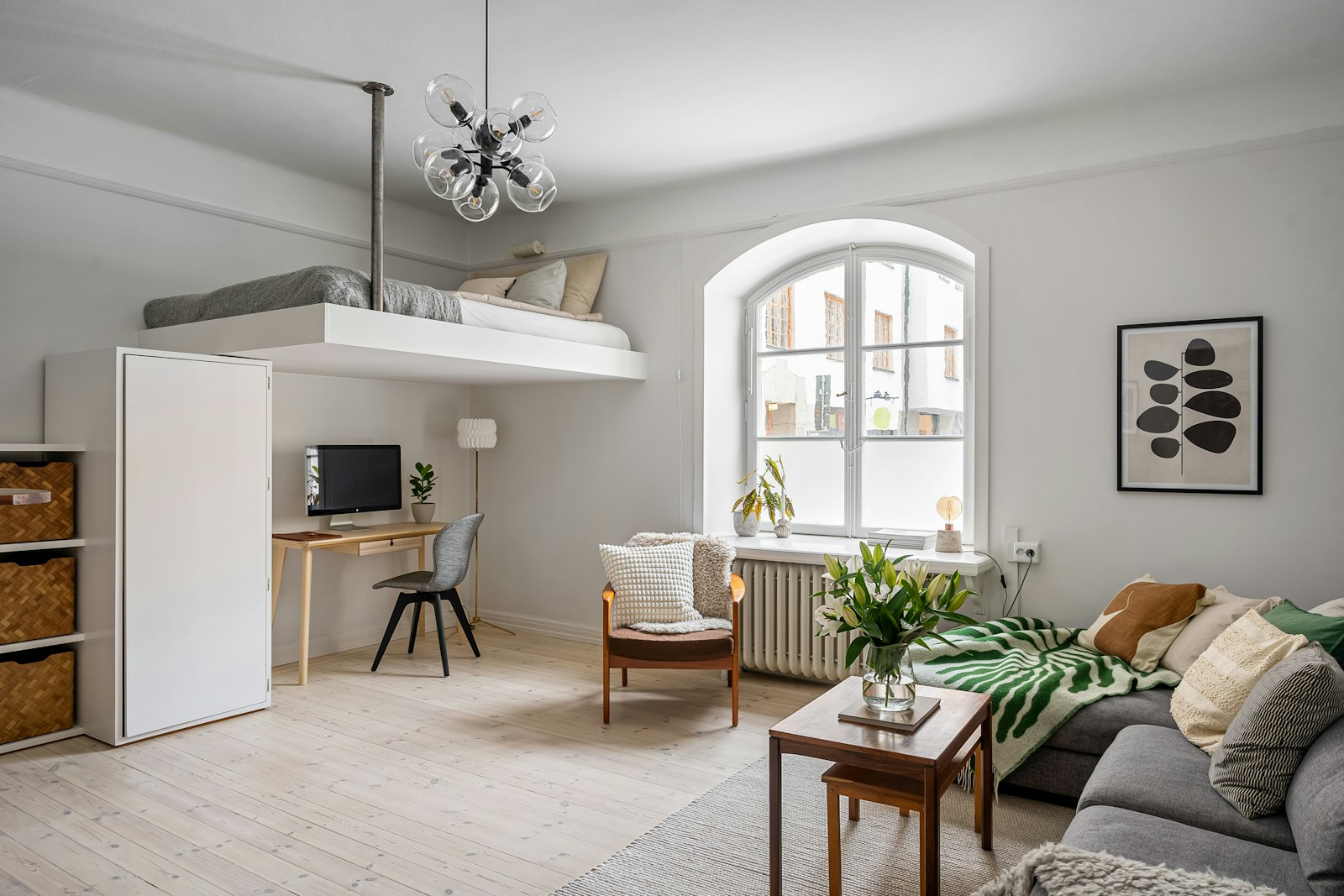
Start by mapping the studio apartment 300 sqft footprint on graph paper
Before buying anything, take a tape measure into the apartment and write down five numbers: the length of the room, the width of the room, the ceiling height, the location of the window (which wall, how wide), and the location of the radiator, the kitchen sink, and the entry door. A typical 300 square foot studio is roughly 12 feet by 25 feet, but the usable rectangle is usually closer to 11 by 22 once you subtract the bathroom, the kitchen counter, and the swing of the entry door.
Draw this on quarter-inch graph paper at one square equals one foot. Cut out paper rectangles for every piece of furniture you are considering at the same scale. A full size bed is 4.5 by 6.5 feet (so 4.5 by 6.5 squares). A two-seat sofa is 5 by 3 feet. A 36 inch round dining table is 3 by 3. Slide the cutouts around the room plan until you find an arrangement that leaves a 24 inch walking path through the middle of the apartment. If you cannot leave a 24 inch path, the layout is too dense and you need to cut one piece.
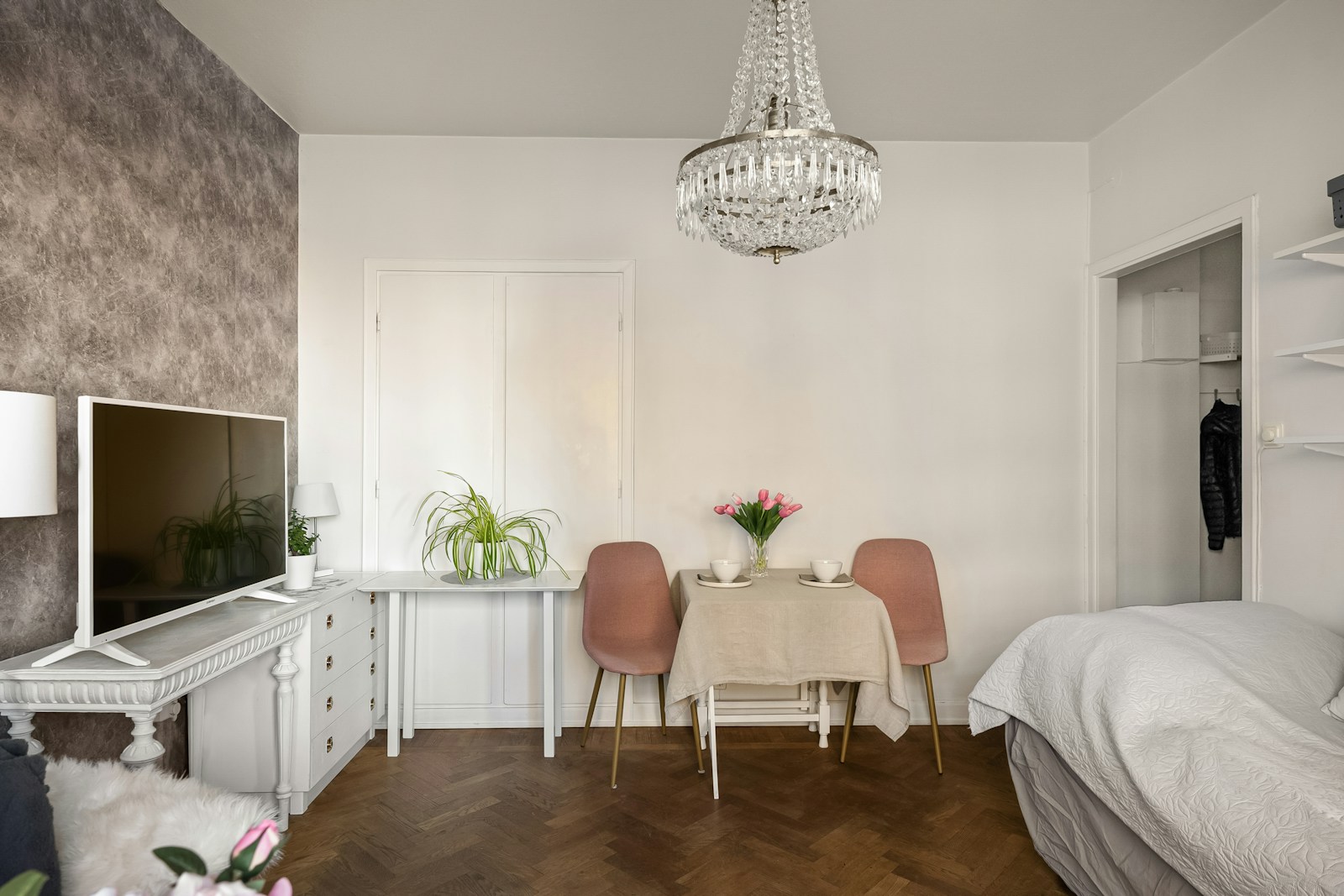
Define four zones in a 300 sq ft studio: sleep, sit, eat, work
The single biggest mistake people make in studio apartment ideas 300 sqft is treating the room as one open space. It is four zones, even if there are no walls between them. Sleep goes on one short end (usually the wall farthest from the door). Sit goes in the middle, anchored by a rug. Eat goes against the kitchen wall. Work goes by the window. Walk through this map every morning, in this order, and the apartment functions like a four-room layout.
Use rugs to mark the zones visually. A 5 by 7 area rug under the sofa says “this is the living room.” A 4 by 6 rug under the dining table says “this is the kitchen.” A small 2 by 3 runner at the foot of the bed marks the sleep zone. Three rugs in a 300 square foot studio is not too many. The seams between them are where the eye reads the room as separate areas.
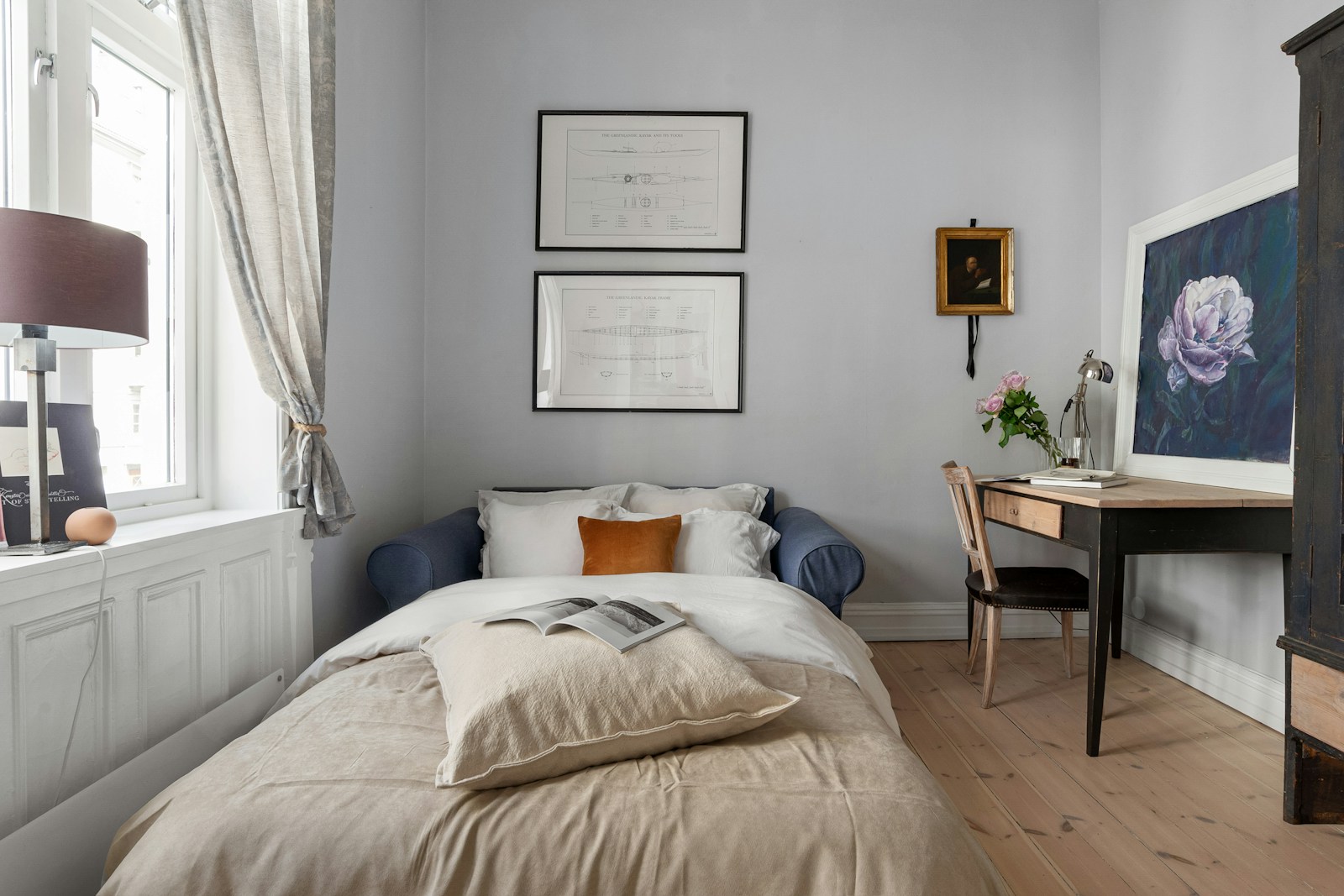
Spend the most on the bed and the bed alone
In a 300 square foot studio, the bed is on display 24 hours a day. It is the largest piece of furniture in the room, the first thing a guest sees, and the only piece that doubles as seating before noon. Buy a real bed, not a mattress on the floor. A full size bed (54 by 75 inches) fits any 300 sq ft layout and gives you 7 more square feet of floor than a queen. If you live alone, downgrading from a queen to a full opens up a usable second zone.
The best frames for a studio are storage platform beds: the IKEA Malm with four drawers underneath ($300), the Brimnes with a lift-up base ($350), or the West Elm Andes storage bed ($1,400) if you have the budget. Skip the box spring, since platform beds do not need one and the extra 9 inches of height makes a small room read shorter. A daybed (twin size, 39 by 75 inches) is the alternative if you almost never have overnight guests, because it doubles as a sofa during the day and reclaims about 15 square feet.
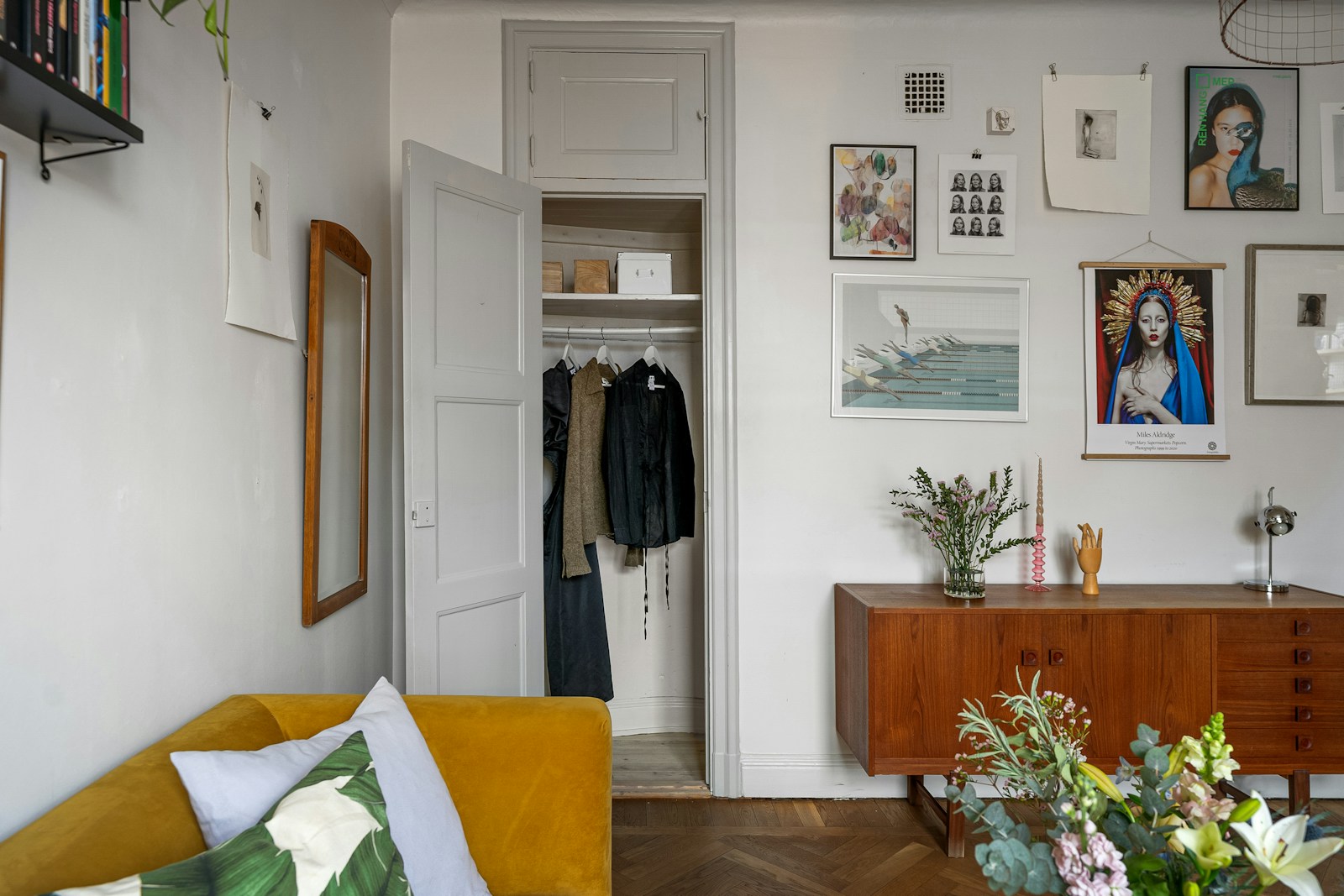
Run the kitchen counter as a continuous work surface
In a typical 300 square foot studio the kitchen is a 6 to 8 foot run of base cabinets, a tiny stove, a half-size fridge, and a sink. There is no kitchen island, no breakfast bar, and no separate pantry. The trick is to treat every inch of that counter as a single work surface and to keep the counter mostly clear. Move the toaster, the coffee maker, and the knife block onto a 24 inch wide rolling cart that lives against a different wall. Roll it over when you cook, roll it back when you are done.
Mount a magnetic knife strip on the backsplash. Hang a single rail (IKEA Kungsfors at $13) above the stove for utensils and oils. Put cling-on hooks on the side of the upper cabinets for mugs and pot holders. A clear counter is the single biggest visual upgrade you can make in a small kitchen, and a continuous 6 to 8 feet of usable surface is enough for almost any home cook.
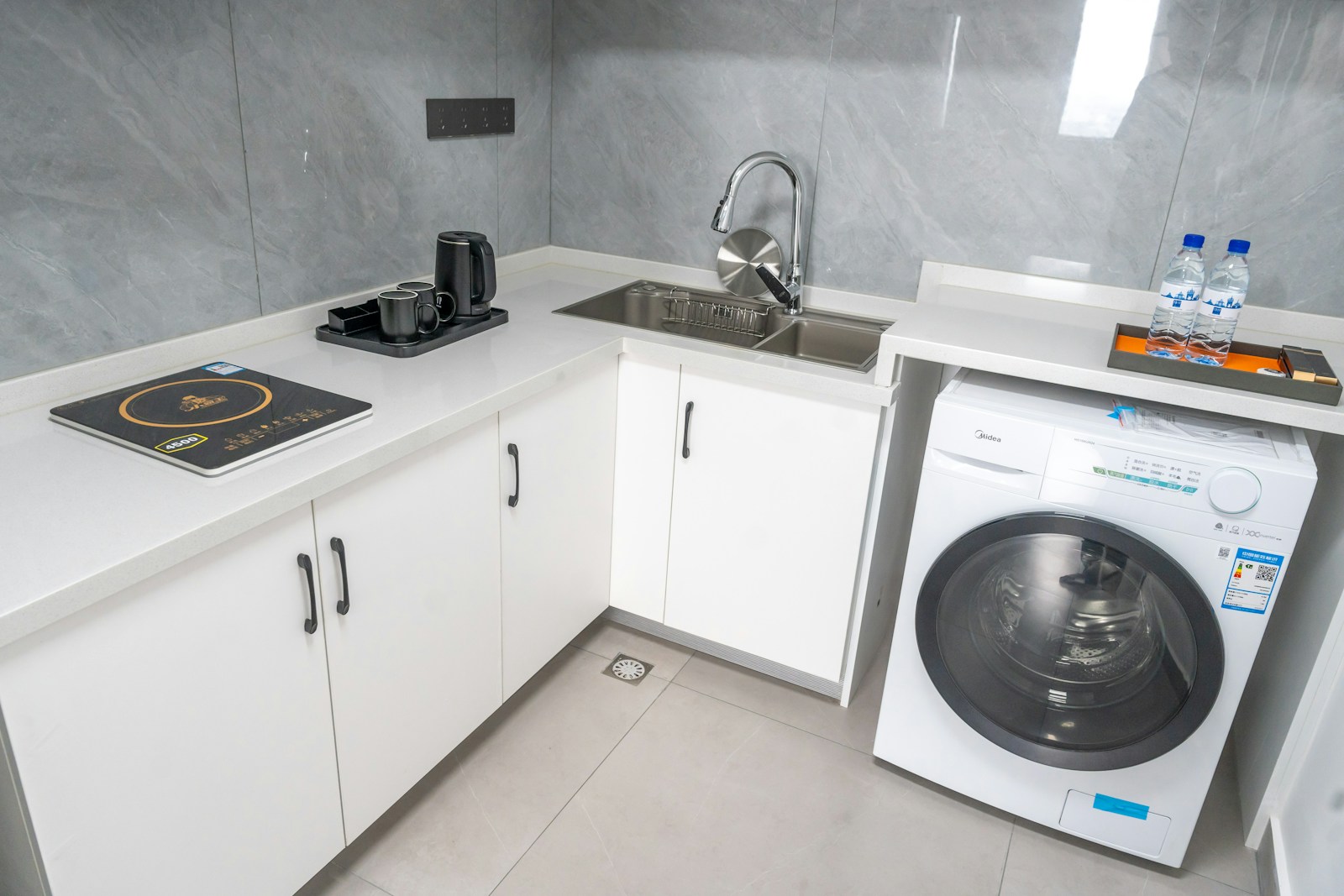
Make the dining table a 30 inch round, not a 48 inch rectangle
The dining zone is the single most over-budgeted area in studio apartment ideas 300 sqft. People buy a 48 by 30 inch rectangle, push it against a wall, and lose 15 square feet of floor to a table they use twice a week. A 30 inch round pedestal table seats two comfortably (or four squeezed for one dinner party a year), occupies 5 square feet, and can be folded against the wall if you buy a drop-leaf or gateleg version.
The IKEA Gamlared at $130, the West Elm Anton round at $400, or a vintage tulip table from Facebook Marketplace ($250 to $500) are all the right scale. Pair it with two simple wood chairs (Wegner CH33-style replicas at $90 each) that double as extra seating in the living zone when guests come over. Skip benches. Benches force one person to slide in and out and they do not pull double duty.
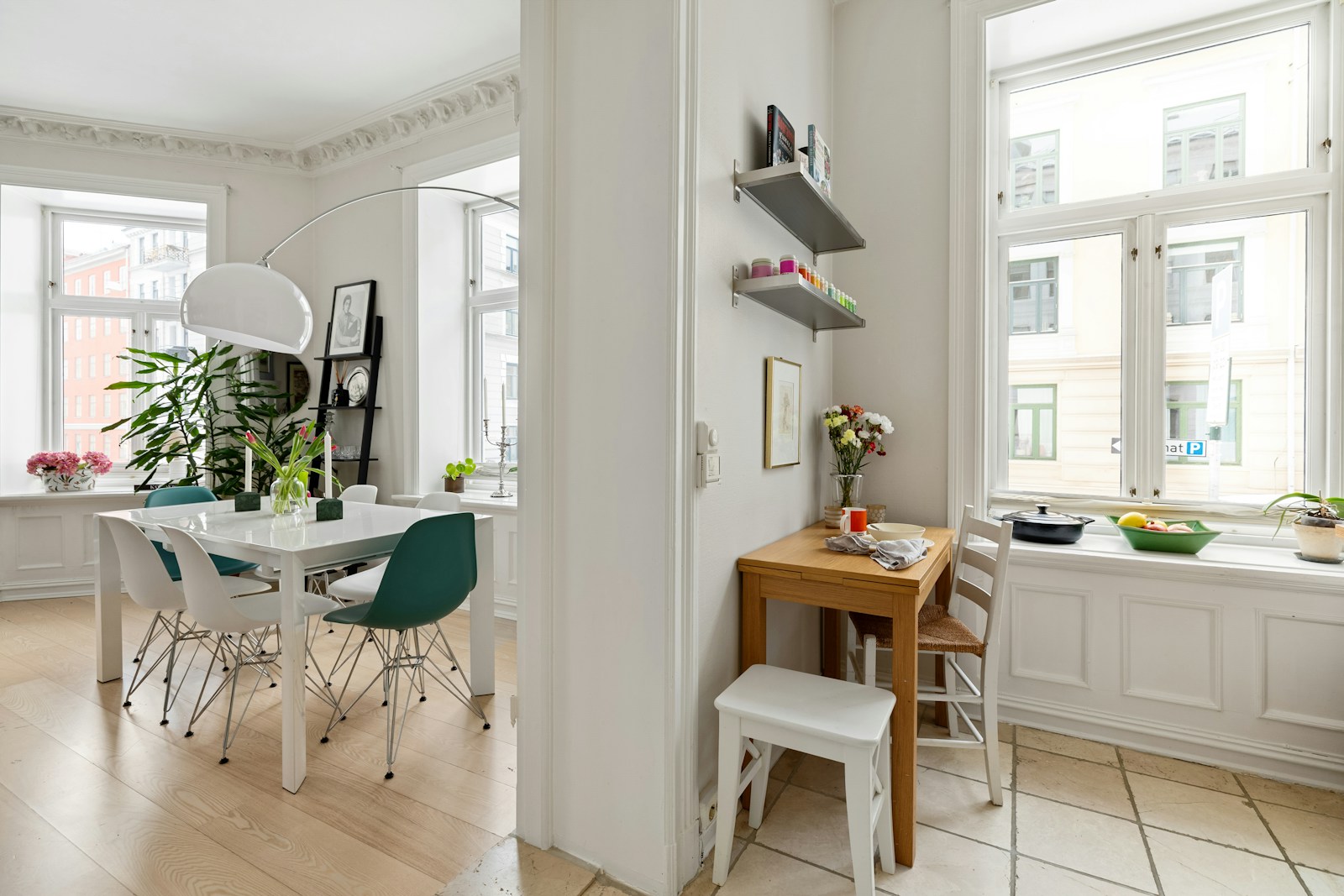
Put the desk where the natural light is
If you work from home (and most renters in 300 square foot studios now do at least sometimes), the desk needs the best light in the apartment. That means under the window, facing into the room, not facing the wall. A 48 by 24 inch desk takes 8 square feet and reads as an architectural element when it is the only piece on a window wall.
The IKEA Linnmon top on Adils legs is $50 and looks more expensive in oak or walnut woodgrain than in white laminate. Pair it with a single task lamp (the Hay PC Portable in green at $190 is the design-magazine pick), a low-profile chair you can tuck completely under the desk when not working, and one stack of three books as styling. The desk-by-window setup gives you the only thing better than a corner office: a window office in 8 square feet.
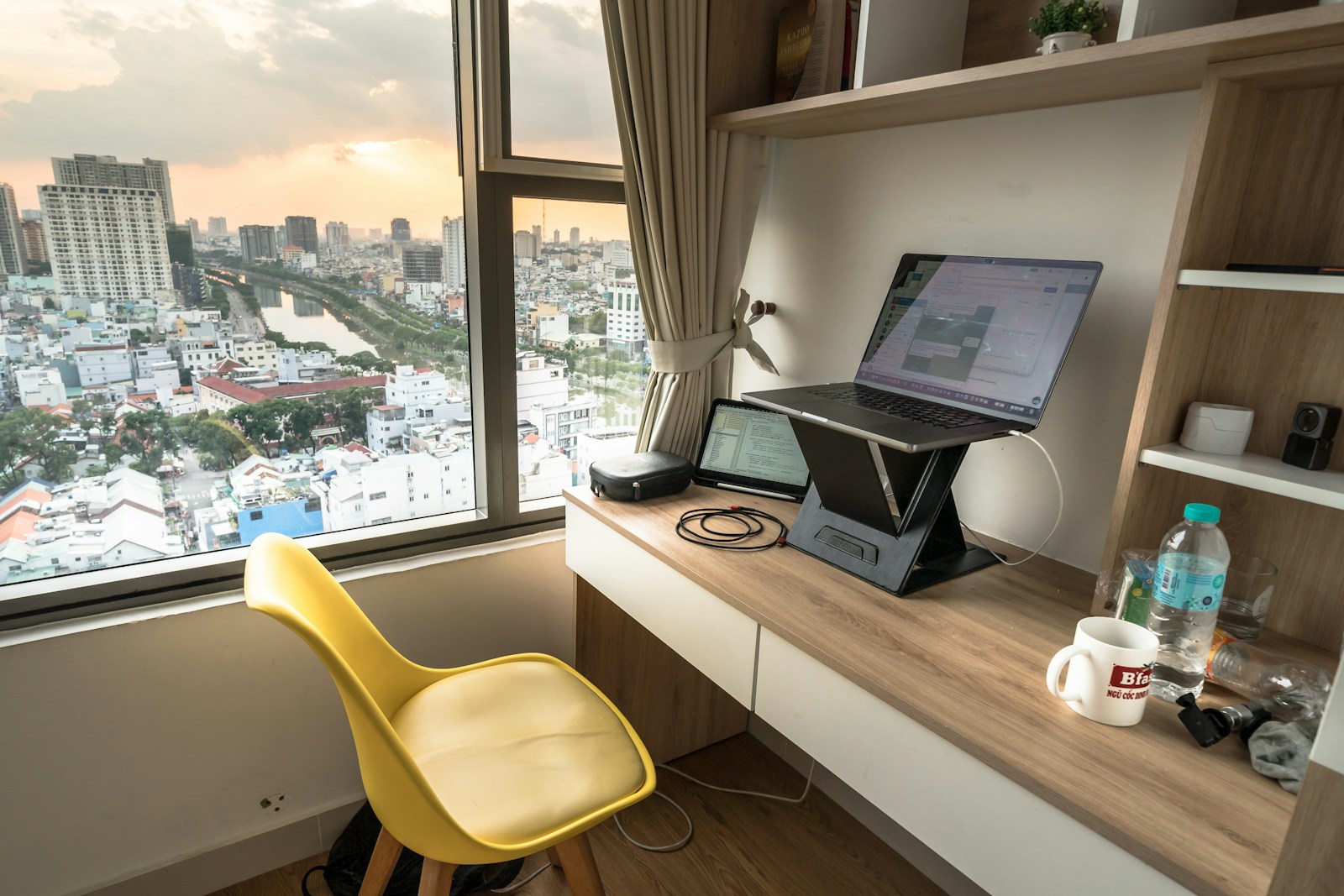
Use a tall mirror or mirrored closet doors to double the perceived size
A full length mirror in a 300 square foot studio is not optional. A 30 by 70 inch leaner mirror against the wall behind the sofa or in the entry corner reflects the window light, makes the room read 30 percent larger in photos, and gives you a place to check your outfit in a room with no closet door. The IKEA Stave at $70 or the IKEA Hovet at $200 are the standard answers. A vintage frame on a $40 Walmart leaner gives the upgrade look.
If the apartment came with mirrored closet doors (common in 1970s and 1980s buildings) do not cover them up, even if the gold edges feel dated. Mirrored closet doors are the single most powerful free design move in any rental. Add black-framed art over the mirror to break up the reflective field, and the dated reads as intentional. The cost of replacing them is $400 plus your security deposit. The cost of dressing them up is $40 in command hooks and a poster.
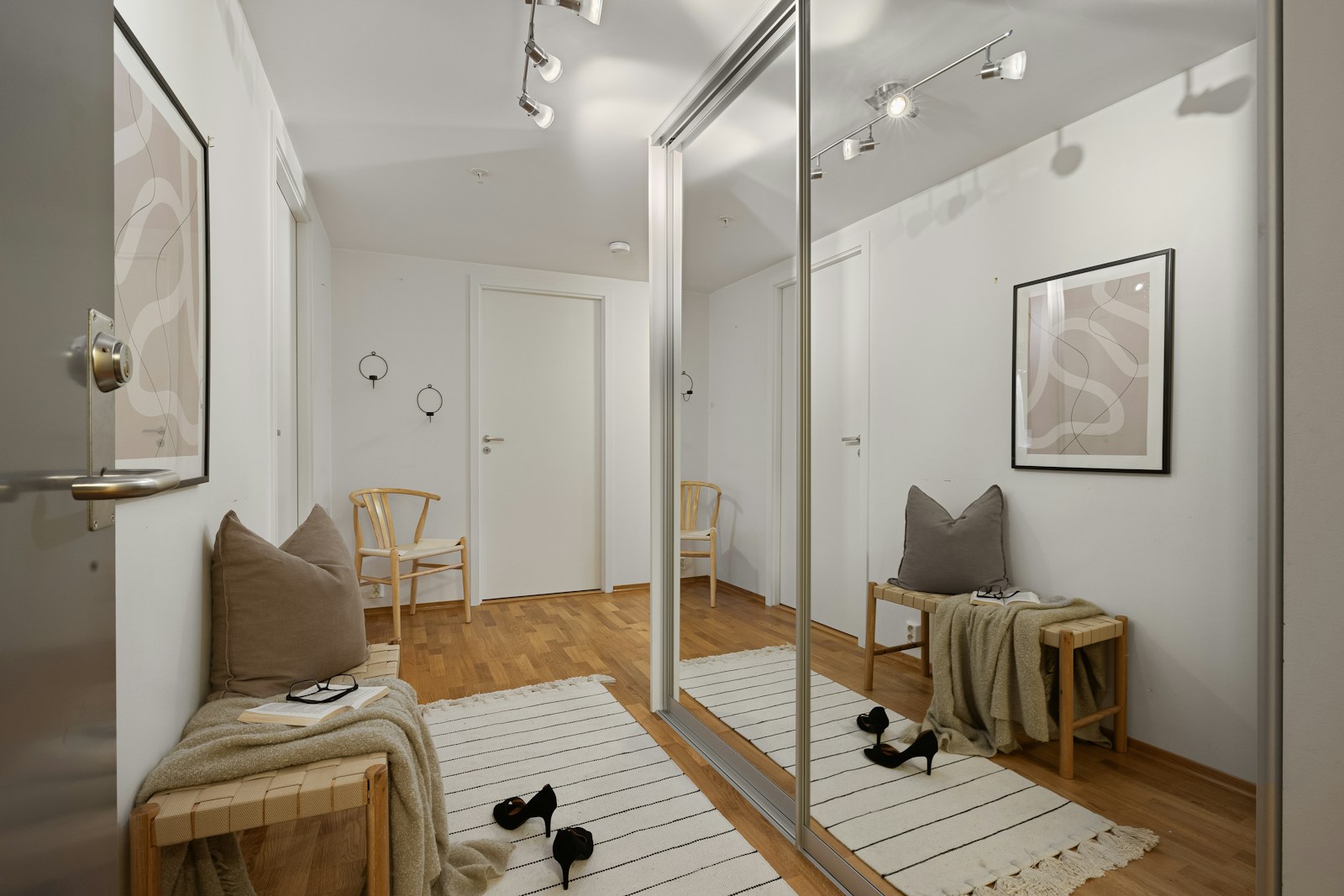
Build an entry zone in the first 18 inches by the door
Every 300 sq ft studio has the same problem: the front door opens directly into the living zone, there is no entryway, and within a week the area inside the door has become a pile of shoes, mail, and keys. Solving this is one small piece of furniture. A 24 inch wide shoe cabinet (the IKEA Stall at $130 is the cult favorite), a single wall hook strip above it (Command Variety Pack at $15), and a small tray on top for keys and mail is the entire fix.
If even that footprint is too much, screw a single 24 inch wood shelf to the wall at chest height (16 lbs of plaster anchors gets you there in a renter-safe way) and put a small bowl, a key hook below it, and a 12 by 16 inch art print above it. The brain reads “entry” the second you walk in, and the rest of the apartment stops being where you drop the groceries.
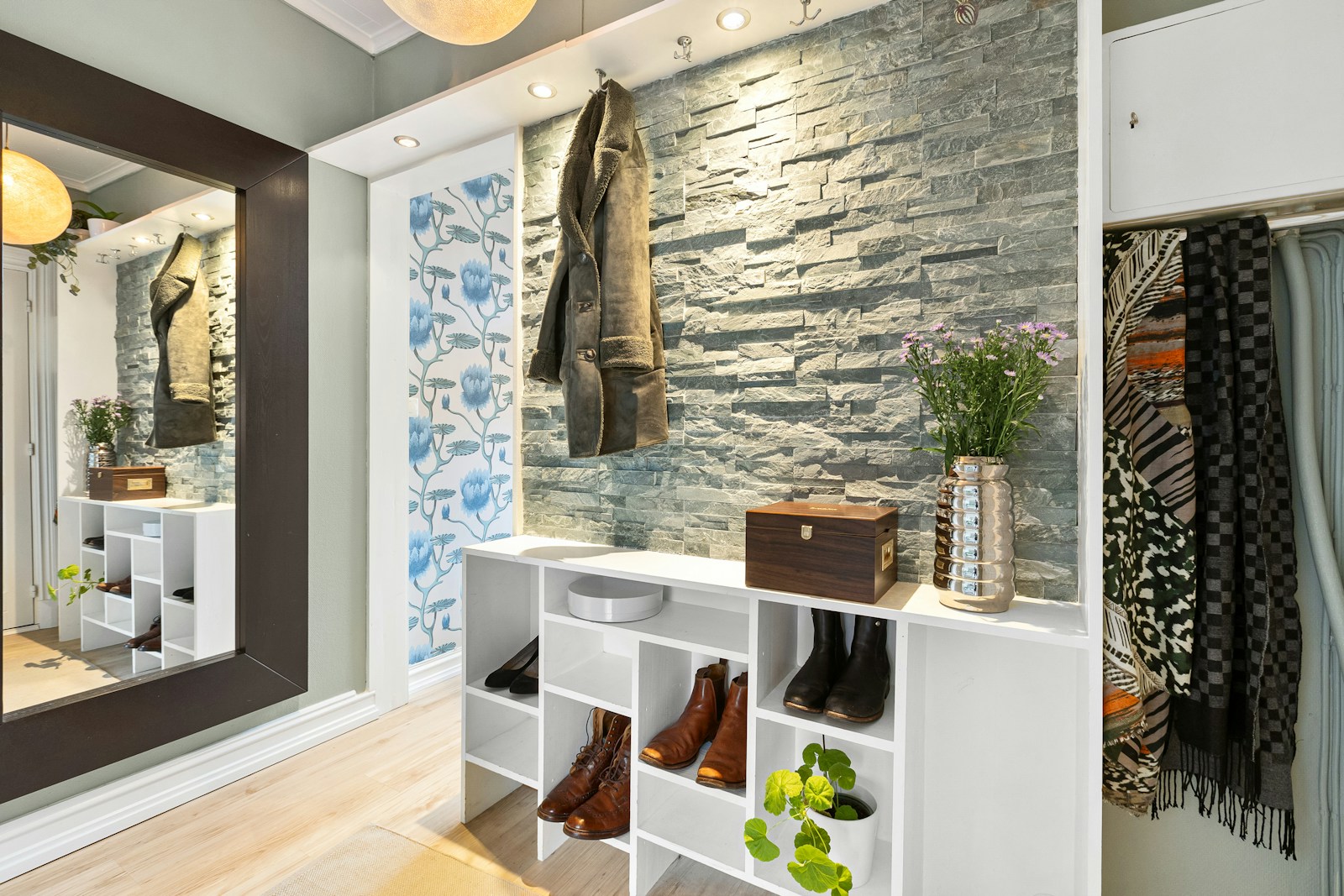
Keep three colors and nothing else in a 300 square foot studio
Color discipline matters more in 300 sq ft than in any other apartment size. The single fastest way to make a small studio feel chaotic is to introduce a fourth or fifth accent color. Pick a base (off-white, warm white, or oat), a contrast (black, charcoal, or deep brown), and one accent (terracotta, olive green, or muted blue). Every textile, every piece of art, every cushion has to fit that three-color brief.
This means saying no to the cute mustard throw blanket that does not match. It means buying frames in one finish (matte black or natural wood, pick one) and rugs in one tonal range. The result reads more expensive than the actual furniture cost, because the eye stops working hard. Magazine photos of small studios always look calm for this reason, not because the furniture is expensive.
Two layouts that work in almost any 300 sq ft studio
Layout A is the long-wall layout. Bed against the short wall furthest from the door. Sofa or daybed perpendicular to the bed, facing into the room. A 30 inch round table near the kitchen, two chairs that pull into the seating zone for guests. Desk under the window. Tall mirror by the entry. This is the most flexible plan and works in any 12 by 25 rectangle.
Layout B is the divider layout. Bed in one corner, with a 6 foot tall open bookshelf (IKEA Kallax 4 by 2 horizontal, $100) acting as a half-wall between bed and sofa. The shelf is open both sides, so it reads as a divider without blocking light. The sofa faces into the room, the desk is on the kitchen wall, and the dining table tucks against the bookshelf. Layout B works better if you sleep at odd hours or have a partner on a different schedule, because the bookshelf gives the bed a small zone of its own.
What to skip entirely in studio apartment ideas 300 sqft
Skip the coffee table. A 30 by 30 inch coffee table eats 6 square feet of the most-used floor in the apartment. Replace it with a 14 inch round side table next to the sofa ($60 from IKEA, West Elm, or any thrift store) and a single ottoman that doubles as extra seating or a footrest. You lose almost nothing in function and gain back the most valuable patch of floor in the studio.
Skip the second armchair. There is room for one piece of seating other than the sofa, and that piece should be the dining chairs you already own, pulled over when needed. A standalone armchair is the most-photographed and least-used piece of furniture in small apartments.
Skip the TV stand. Wall mount the TV (a Sanus VuePoint tilt mount is $40 and works on most plaster walls with the right anchors, or use a Vogel TVS3203 floor stand at $150 if you absolutely cannot drill). The 4 square feet of floor under a TV stand is enough room to swing the dining chair away from the table without bumping the wall.
The 300 sq ft studio takeaway
A 300 square foot studio is not a smaller version of a one-bedroom. It is a different kind of apartment, with different rules. The rules that work: map the room before you buy, define four zones with rugs, spend on the bed and the bed alone, keep the kitchen counter clear, downsize the dining table, put the desk under the window, use mirrors and color discipline to make the room feel larger than it is, and build a real entry in 24 inches by the door.
The studio apartment ideas 300 sqft renters keep coming back to are the boring ones: less furniture, picked carefully, in three colors, arranged with a 24 inch path. Get those right and 300 square feet feels like 450.
Related reading
For more on making a studio function like a real apartment, see our guide to decorating a studio apartment room by room. If you are working with a partner in the same square footage, the playbook is in studio apartment decor for couples. And for the wider storage problem, our list of 35 small apartment storage hacks covers every corner of a 300 sq ft floor plan.