15 Best Grow Lights for Apartment Plant Lovers Under $50
You love plants, but your apartment has one north-facing window and a neighbor’s building blocking most of the light. That used to mean choosing between sad, leggy pothos and bare shelves. Not anymore. A $20 grow light changes everything, and you do not need to spend serious money to keep your indoor plants thriving year-round. Every pick in this guide works in a small apartment, stays under $50, and looks intentional on a shelf instead of like a science experiment.

This list covers clip-on lights, LED strips, full-spectrum bulb swaps, and a few floor-standing options. Each one has been selected for small-space apartments where you need the light to look good, not just work. Read through the whole guide or jump to the section that fits your setup best.
Why Apartment Plants Need Grow Lights
Most apartments, especially in cities, simply do not offer enough natural light to keep most houseplants healthy. North-facing windows get zero direct sun. Even east and west-facing windows often get blocked by other buildings, awnings, or neighboring trees. In winter, day length drops to eight hours or fewer in northern cities, which is not enough for even the most forgiving low-light plants.

Signs your apartment plants need more light than they are getting:
- Leaves growing small, pale, or yellowing without being overwatered
- Long, stretched stems reaching toward any available window
- Slow or zero growth even during spring and summer
- Variegated plants losing their color patterns and reverting to solid green
- Herbs wilting within days of being brought home from the grocery store
A grow light does not replace sunlight exactly, but it fills the gap with spectrum-matched light your plants can actually use. The good news is that even a basic LED unit running 12 to 14 hours a day will dramatically improve growth and color in most common apartment plants.
Clip-On Grow Lights: Our Top Picks Under $30
Before picking a specific light, four things matter most for apartment use: full-spectrum output (not red and blue only), wattage matched to your plant count (10 to 20W for one to three plants, 40W for a shelf cluster), a mounting style that works without tools, and a built-in timer. Every pick below checks at least three of those four boxes.
Clip-on grow lights are the best starting point for most apartment plant lovers. They require zero installation, attach to almost any surface, and can be repositioned in seconds. All four picks below are under $30 and work with standard apartment shelving.

- Ankace 40W Clip-On Full Spectrum ($22). Dual gooseneck arms that position independently. Covers up to three plants side by side. Includes a timer with three settings. One of the most purchased grow lights on Amazon with reason: it works and the gooseneck holds position well.
- LORDEM 60W Dual Head ($28). Better for a larger cluster of plants. The 60W output pushes enough light for succulents and herbs that need higher intensity. Timer included with 4/8/12 hour settings.
- GooingTop 6W ($16). The budget pick for a single succulent or small herb pot. Very small footprint. Timer included. Not powerful enough for large leafy plants but perfect for a desk cactus or propagation station.
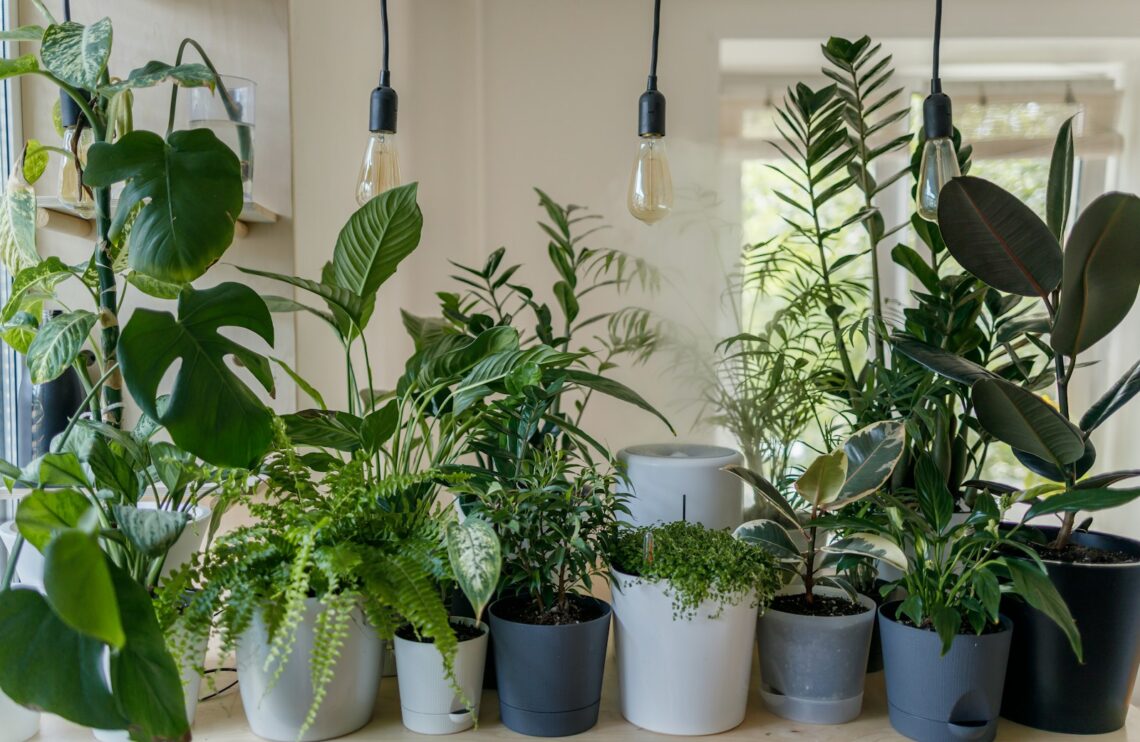
- BRIM Five ($25). Five individual LED pods on flexible arms that bend to direct light precisely. Unusual design but extremely useful when you need to light multiple plants at different heights from one clip point.
If you can only buy one grow light to start, the Ankace dual-arm at $22 is the most versatile pick for typical apartment plant collections.
LED Strip Grow Lights for Plant Shelves
If you have a dedicated plant shelf or use an IKEA Billy, Kallax, or similar unit as a plant display, LED strips are the cleanest solution. They mount under each shelf with included adhesive, connect end-to-end, and all run off one plug. The light spills down onto the plants below each shelf and the strips themselves are almost invisible from a normal viewing angle.

- Barrina T5 Grow Light Strips, 4-pack ($30). Each strip is two feet long and outputs 20W. Four strips cover the shelves of a standard bookcase. They daisy-chain together so you only need one outlet. Very popular with apartment plant people who want a tidy setup.
- Yescom Full Spectrum T5 LED Bar ($28, 4-pack). Slightly warmer color temperature than the Barrina, which makes the light blend better with a living room lamp setup. Same daisy-chain system.
- Roleadro T5 HO Grow Light ($26, 2-pack). Higher output per strip than most T5 options. Good choice if you are growing herbs or fruiting plants like cherry tomatoes that need more intensity.
For an IKEA Kallax plant shelf, two Barrina strips cover four cubes each and cost under $30 total. The whole system takes about 15 minutes to set up and runs cleanly on a single smart plug timer.
Full-Spectrum Bulbs: The $12 Swap That Changes Everything
The cheapest way to add grow light coverage to your apartment plants is to swap existing light bulbs for full-spectrum versions. If you have a floor lamp, table lamp, or overhead fixture near your plants, a full-spectrum LED bulb turns it into a functional grow light at almost no extra cost.

- GE Grow Light LED BR30 ($12 each). Drops into any standard BR30 socket. Designed specifically for plants. Emits a subtle pinkish white light rather than the harsh purple of old-school grow bulbs. Works in a floor lamp aimed at a plant corner.
- Sansi 15W Full Spectrum Bulb ($15). Higher output than the GE option. Good if you need to cover a wider area or support plants a bit farther from the lamp. Note: runs slightly warm, so keep it at least 12 inches from foliage.
- Soltech Solutions Vita Bulb ($22). Premium option that fits any standard socket and produces genuinely beautiful light quality. Expensive for a single bulb but looks the best of any option in a living room setting.
The bulb swap works best for low to medium light plants like pothos, snake plants, ZZ plants, and peace lilies. High-light plants like succulents or herbs need something with more focused output, so a clip-on or strip light is the better choice there.
Best Grow Lights for Apartment Plants: Floor and Hanging Options
If you have several large plants or want to create a real plant corner, a floor-standing or hanging grow light covers more ground than a clip-on can. These are still completely renter-friendly since they sit on the floor or hang from existing hooks and require no permanent installation.

- Juhefa LED Grow Light with Stand ($45). Tripod-style floor stand that adjusts from 15 to 63 inches. Three individual gooseneck heads each output 15W of full-spectrum light. Covers a plant cluster roughly three feet wide. The stand folds flat for storage.
- GooingTop LED Grow Light Stand ($38). Similar tripod design with two larger heads. Better for taller plants like monstera or fiddle leaf figs that need light from above rather than the side.
- Soltech Solutions Aspect Pendant ($99). Yes, this is over $50. It is worth a mention because it is the only pendant-style grow light that looks like actual pendant lighting rather than a grow lamp. If you are willing to spend a bit more, it genuinely looks beautiful above a dining table or in a high-ceiling apartment. Covers one large plant or a small cluster underneath.
For most apartments, the Juhefa stand at $45 is the sweet spot. It adjusts to your plants, covers a real area, and folds away when you rearrange the room.
How Many Hours Should Apartment Plants Get Grow Light Each Day?
This is where a lot of plant people go wrong. More is not better. Plants need a dark period, and running a grow light around the clock will stress or even kill your plants over time.

Here are the general guidelines:
- Low-light plants (pothos, snake plant, ZZ plant, peace lily): 10 to 12 hours per day
- Medium-light plants (philodendron, monstera, spider plant, Chinese evergreen): 12 to 14 hours per day
- High-light plants (succulents, cacti, herbs, peppers): 14 to 16 hours per day
A $8 outlet timer from any hardware store handles this automatically. Set it to turn the grow light on at 7am and off at 7pm for medium-light plants, and you never have to think about it again. Most clip-on grow lights now include a built-in timer, which makes this even easier. Check the product description before you buy.
One note on placement: grow lights should sit 6 to 24 inches above the plant canopy depending on wattage. Too close and you get bleaching on leaf tips. Too far and the intensity drops off quickly. Start at 12 inches and adjust based on how your plants respond over two weeks.
Best Plants to Grow Under Apartment Grow Lights
Not all plants respond equally well to supplemental lighting. The ones below do extremely well under the grow lights listed in this guide, which makes them the best choices for a grow-light setup in a small apartment.

- Pothos and philodendron. Already the most forgiving apartment plants, but they thrive and put out bigger leaves when given 12 hours of supplemental light. Variegated varieties like golden pothos and Brasil philodendron hold their color much better under grow lights than they do in low natural light.
- Herbs. Basil, mint, chives, and parsley all grow well under LED strips or clip-on lights. Place the light 6 to 8 inches above a small planter and harvest regularly. Basil needs 14 to 16 hours; mint can get by with 12.
- Succulents and cacti. These actually need more light than most apartments can provide, making a grow light a genuine upgrade rather than a supplement. Use a 40W or higher clip-on at 6 to 10 inches above the plants for best results.
- Snake plant and ZZ plant. Both survive neglect, but under a grow light they actually look healthy rather than just surviving. Growth picks up noticeably with 10 to 12 hours of supplemental light.
- Propagation cuttings. A grow light speeds up rooting dramatically on most cuttings. Keep a small propagation station near a clip-on light and you will see roots in half the time it takes on a windowsill.
For more ideas on which plants to start with, the guide to beginner-friendly indoor plants for renters covers 12 varieties that work specifically in small apartments with limited light.
Setting Up Grow Lights So They Actually Look Good
The biggest complaint about grow lights in apartments is the aesthetic. Purple and pink LED lights, industrial-looking clamps, and tangled cords are not exactly what you want in your living room. Here is how to set up grow lights that look intentional rather than accidental.

- Choose full-spectrum over red and blue. Full-spectrum LED lights emit a warm white or slightly warm pinkish white that blends with normal room lighting. The purple grow light glow is a dead giveaway and makes a space look clinical.
- Route cords along shelf edges. Use small adhesive cord clips to run the power cable along the back or bottom edge of a shelf. A $5 pack of cable clips from any hardware store makes the difference between a messy cord trail and an invisible one.
- Use a smart plug for timing. A Kasa smart plug ($12) lets you control the grow light from your phone and set a precise schedule without any extra timer hardware on the outlet.
- Mount strips under, not on top of, shelves. LED strips that mount under shelf lips cast light down onto plants and stay hidden from normal viewing angles. The light appears to come from the shelf itself, which reads as intentional ambient lighting rather than a grow light setup.
- Match the light color temperature. Most full-spectrum grow lights sit between 3000K and 6500K. If your room uses 2700K warm white bulbs, choose a grow light in the 3000K range so the light tones feel cohesive rather than jarring.
If you love the hanging plant look, pair a grow light with the ideas in the guide to cozy hanging plant ideas for small apartments. The two work together well: hanging plants positioned near a pendant-style grow light get the benefit of both the aesthetic and the light coverage.
The Takeaway
A dark apartment is not a plantless apartment. The grow lights in this guide start at $16 and the most recommended options land around $22 to $30. A clip-on full-spectrum light on a built-in timer running 12 to 14 hours a day is the single highest-impact improvement you can make for apartment plants that are struggling in low natural light.
Start with one clip-on on your most struggling plant. Watch it for two weeks. You will almost certainly be back to add a strip light to your shelves after that. For a full picture of which plants reward this kind of investment most, the guide to low-light indoor plants for small apartment renters covers the 15 varieties that respond best to supplemental lighting in small spaces.
Related Reading
- 12 Beginner-Friendly Indoor Plants for Renters – The best low-maintenance starting points for apartment plant collections, with care notes for each.
- 15 Cozy Hanging Plant Ideas for Small Apartments – Macrame hangers, ceiling hooks, and shelf arrangements that work for renters without leaving major holes.
- 15 Low-Light Indoor Plants for Small Apartment Renters – The plants that do best in city apartments with minimal natural light, even without a grow light.