
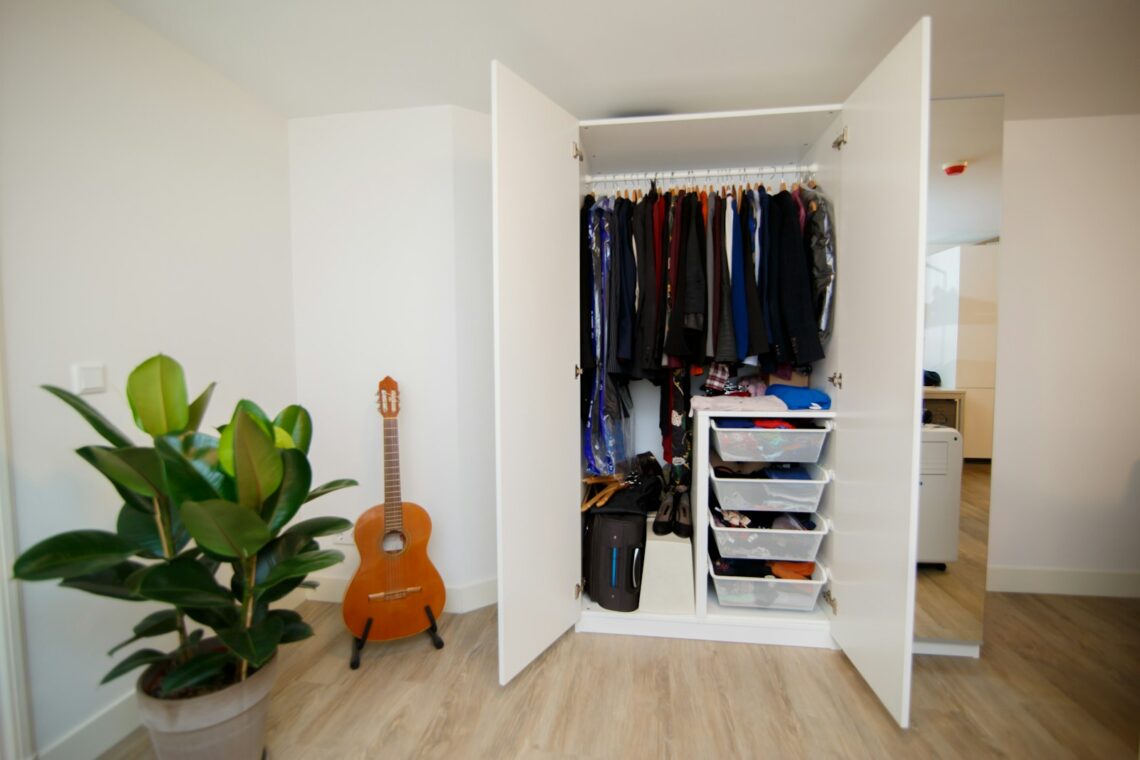
Two people. One cramped closet. That is the source of more apartment arguments than dirty dishes and thermostat wars combined. If you and your partner are fighting over inches of hanging rod, these couples sharing closet hacks will help you divide the space fairly and keep it that way.
The good news: you do not need a bigger apartment or an expensive renovation. With some inexpensive tools, a clear division system, and one honest conversation about how many hoodies is too many hoodies, two people can live comfortably out of a single standard closet. Here is how to make it happen, step by step.
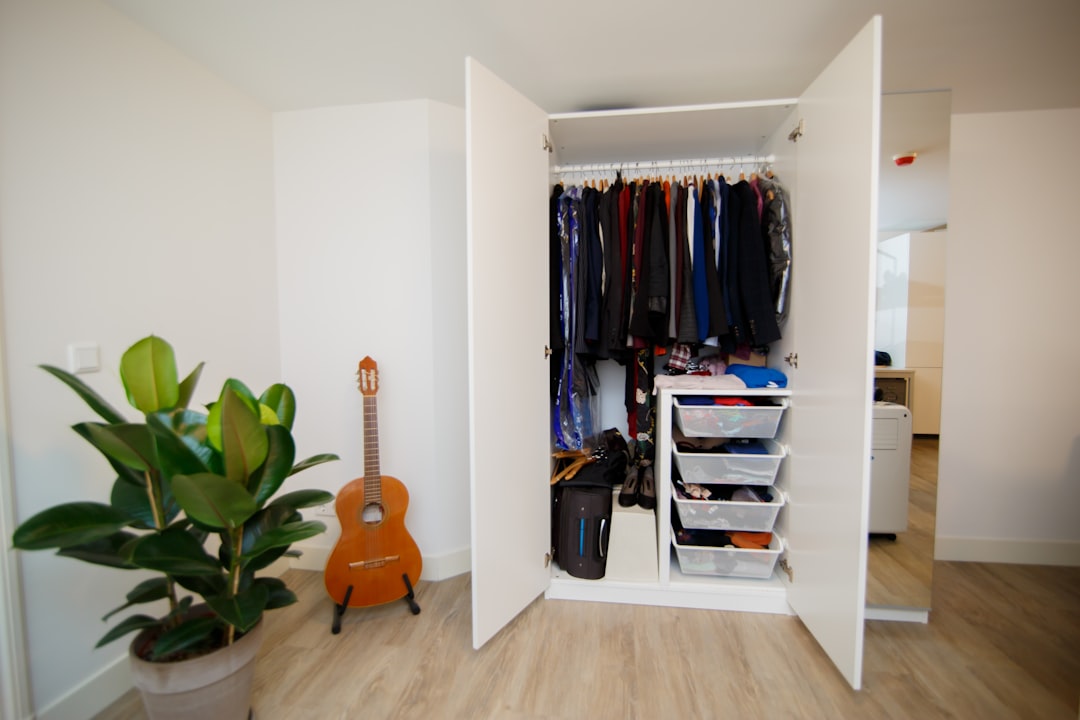
The Top Couples Sharing Closet Hacks Start with an Honest Purge
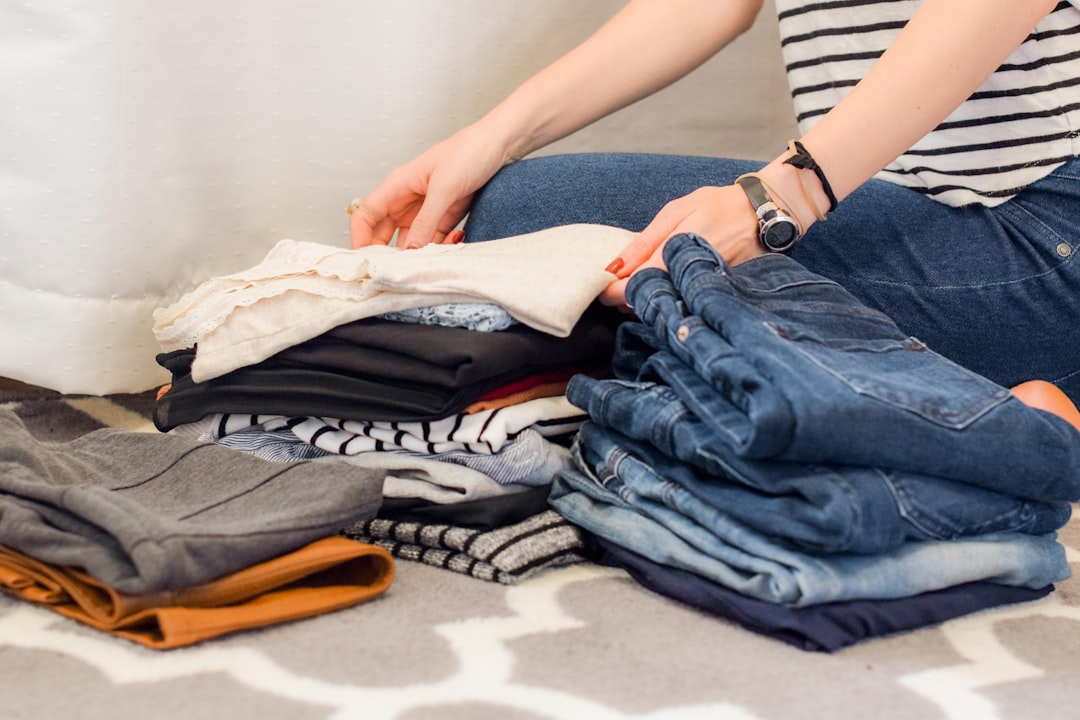
Before you buy a single organizer or debate who gets the left side, both of you need to pull everything out of the closet. Yes, everything. Lay it all on the bed, the floor, whatever surface you have. This is the step most couples skip, and it is exactly why most reorganization attempts fail within two weeks.
Go through the pile together. The goal is to cut each wardrobe by at least 20 to 30 percent. Ask three questions about each item: Have I worn this in the last 12 months? Does it fit right now? Would I replace it if it disappeared tomorrow? If the answers are no, no, and no, it goes.
- Seasonal rotation: Pack off-season items in vacuum storage bags under the bed or in a labeled bin on the top shelf. This single move can free up 25 to 35 percent of hanging rod space in most closets.
- The duplicates problem: Couples often discover they own four sets of bed linens, six towels per person, and three nearly identical rain jackets. Pick your best one and donate the rest.
- Work clothes trap: If you work from home or rarely wear formal clothes, move those suits and blazers into a garment bag stored under the bed or in a secondary closet. They do not need prime hanging rod real estate.
- The sentimental pile: Both partners likely have a small stack of things they are not ready to part with but rarely wear. Give each person a single bin for those items and agree that what does not fit in the bin gets donated.
Do this purge before any reorganizing. You cannot organize clutter. You can only relocate it to a different part of the same cramped closet.
How to Divide the Closet Fairly Between Two People
There is no universal 50/50 split that works for every couple. One person might own twice the clothes, need more hanging space because they press everything before wearing it, or have a shoe collection that fills an entire shelf on its own. Division needs to follow actual needs, not equal fractions.
A practical process works like this: each person counts their hanging items, their folded items, and their shoes or accessories. Then you allocate rod length, drawer space, and shelf space proportionally based on those counts. If one person has significantly more hanging clothes, they get more rod. The other person might get more shelf or drawer space in exchange.
- Divide the rod left and right: For a standard reach-in closet with one rod, left side and right side works cleanly. For a small wardrobe with limited rod length, a double-hang rod expander ($12 to $20) creates a second tier below for shorter items like folded shirts, blazers, and skirts.
- Mark your zones: Use two different colors of hangers or a small strip of painter’s tape on the rod to mark where one person’s section ends and the other’s begins. This stops the slow wardrobe creep that plagues most shared closets.
- Give shoes their own shelf: Shoes should not pile up on the closet floor. A clear shoe rack ($15 at Target or IKEA) stacked against the back wall keeps pairs visible and off the floor, which makes the entire closet feel twice as large.
- Assign a dedicated shelf per person: Each person gets at least one shelf that is entirely theirs. No negotiating, no borrowing. This prevents the constant feeling that your belongings are being encroached upon.
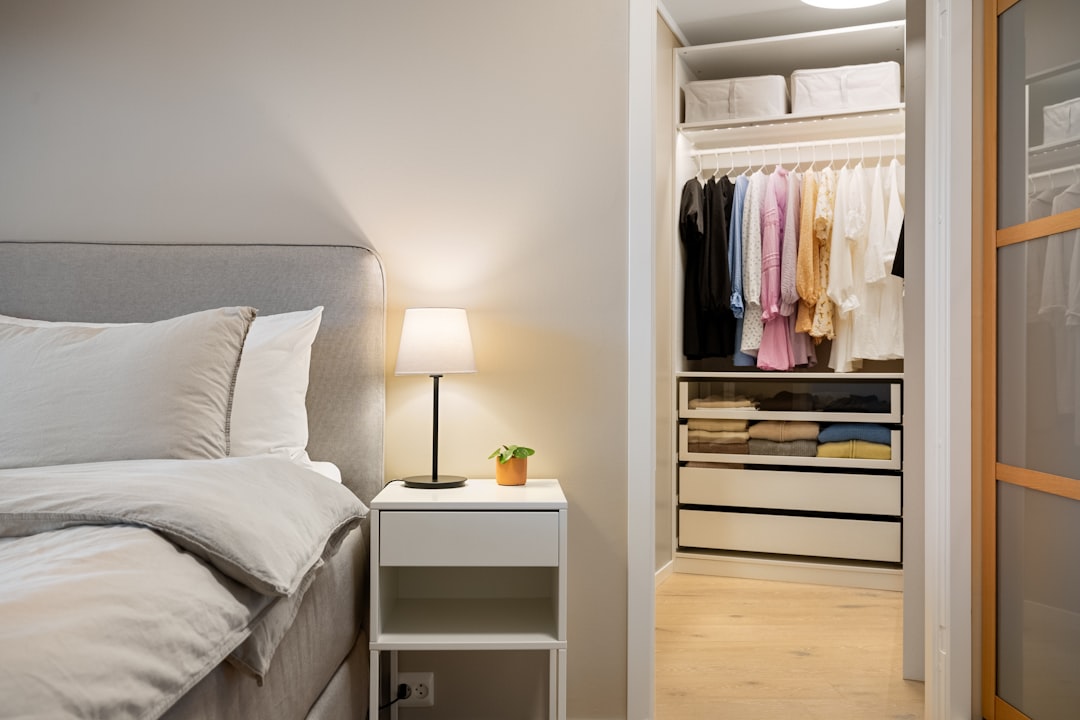
Double Your Hanging Space with One Small Tool
The fastest way to add hanging capacity in a tiny closet costs less than $20. A cascading hanger expander, also called a closet doubler or double hang rod, clips onto your existing rod and drops a second rod below it. On the lower tier you can hang anything shorter than 30 inches: folded jeans, t-shirts, blazers, skirts, and jackets.
A standard reach-in closet has roughly 48 to 60 inches of rod. With a doubler installed on half of it, you essentially create two tiers of hanging space for shorter items in that section. That is often enough to handle one person’s entire casual wardrobe in a single expanded zone.
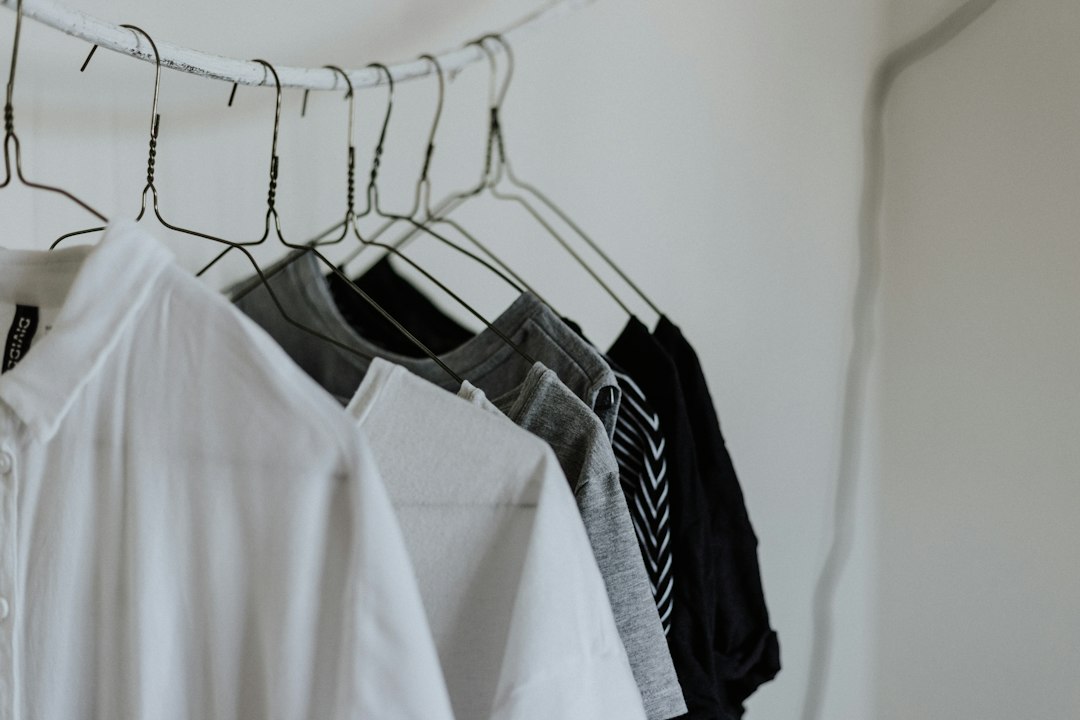
- Switch to slim velvet hangers: Replacing every hanger in the closet with slim velvet ones adds about 30 percent more rod capacity immediately. At $8 to $12 for a 50-pack, this is the single highest-return closet upgrade you can buy. Wire hangers and chunky plastic ones waste a surprising amount of rod space.
- Color-code by person: One partner uses charcoal velvet hangers, the other uses grey or white. At a glance you can tell whose clothes are whose without reading labels or digging around.
- Face everything the same direction: All hangers facing the same way pack more tightly and let you slide items along the rod with one hand. It also makes the closet look intentional rather than chaotic at first glance.
- Group by category, not by person: In some couples, organizing by category (all shirts together, all pants together) regardless of person works better than left/right splits. Try both and see which your household actually maintains.
Add a Freestanding Clothing Rack for Overflow
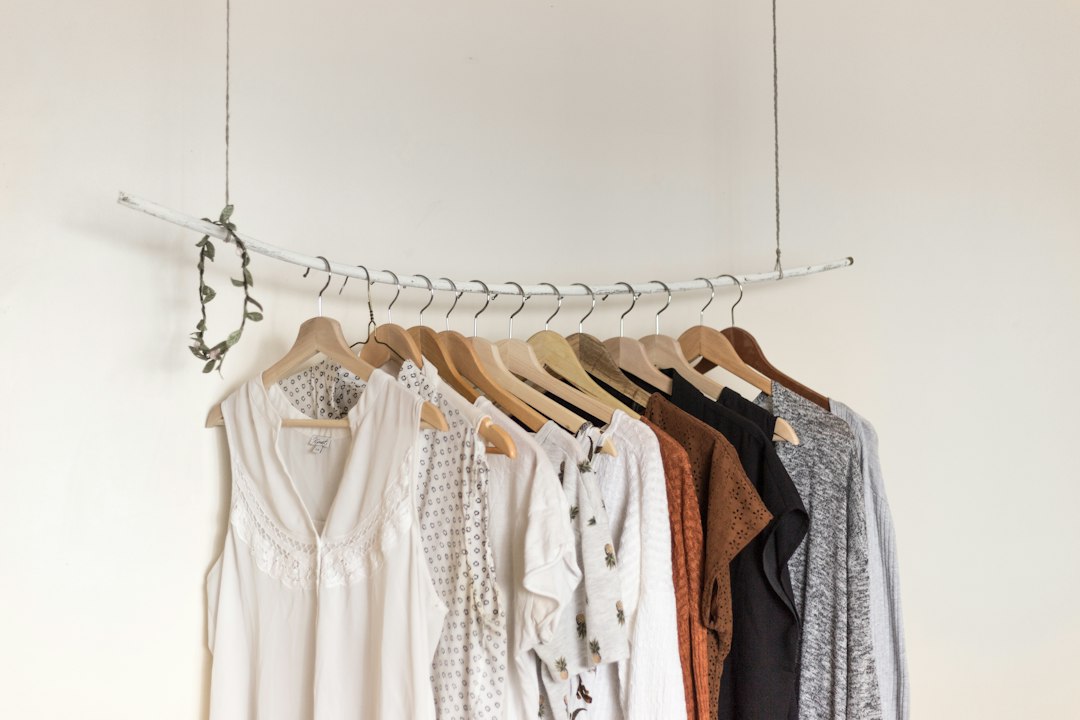
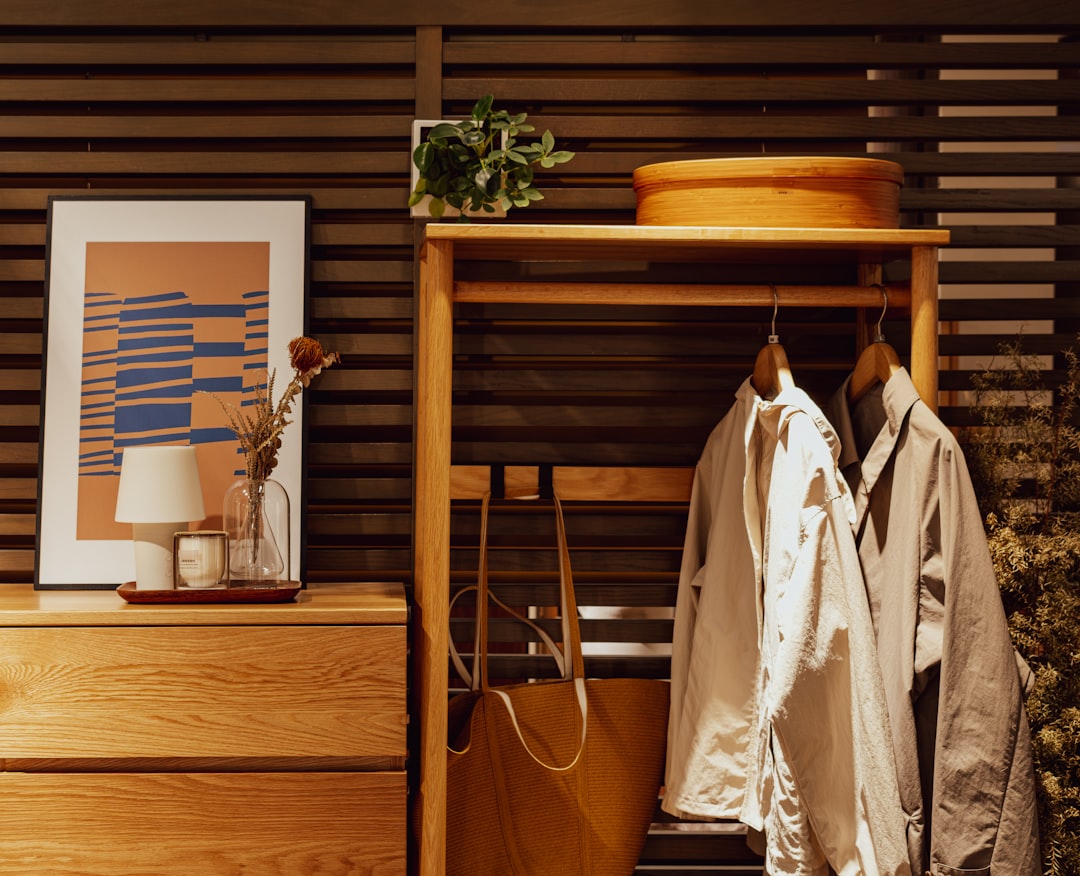
When two people’s wardrobes genuinely do not fit in one closet, a freestanding clothing rack is the smartest overflow solution. A simple pipe rack or a wooden standing rack costs $25 to $80 and holds 20 to 30 items without taking up much floor space. You can find them at IKEA, Target, and Amazon in dozens of styles that look intentional rather than like a storage stopgap.
Put the rack in a corner of the bedroom or behind the door. Use it for the current season’s most-reached-for items: the coats you grab every morning, the blazers you wear twice a week, the jeans you rotate through constantly. The closet then holds everything that is less frequently used, all of it neatly hidden away.
- Keep it curated: A rack only works as intended if you treat it like a capsule wardrobe, not a dumping ground. Limit it to 15 to 20 items per person maximum or it starts looking like a thrift store sale rack within a week.
- Add a small floating shelf above it: A single floating shelf 18 inches above the rack holds bags, hats, and decorative boxes. Pair the shelf and rack as a unit and the corner of your bedroom becomes a compact, functional dressing area.
- Use it seasonally: In winter the rack holds coats, sweaters, and layering pieces. In summer it holds linen shirts, light jackets, and sandals. Rotate the contents when the season changes and store the rest.
Master Folded Storage with Drawers and Bins
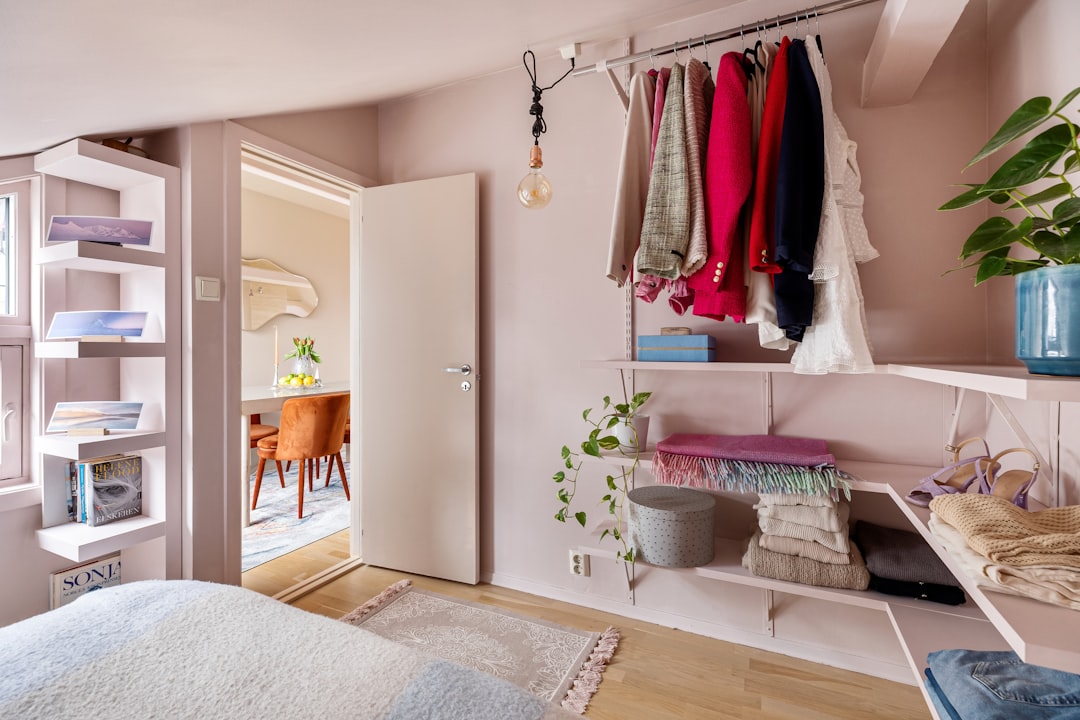
Not every item of clothing needs to hang. T-shirts, jeans, sweatshirts, socks, underwear, and workout clothes take up far less space folded in a drawer than hanging on a rod. If two people are sharing one closet and one hanging rod, shifting all folded items to drawers or bins can free up half the rod instantly.
The file-fold method is the best approach for small spaces. Instead of stacking clothes in a pile, you fold each item into a small rectangle and stand them upright in a row like files in a drawer. Every item is visible at once and you can pull one out without disturbing anything next to it. This works especially well for jeans, t-shirts, and workout clothes.
- Divide drawers strictly by person: If you share a dresser, each person gets specific drawers and those assignments do not change. Shared drawers become an archaeology dig within two weeks without exception.
- Use labeled bins on shelves: Clear bins or wicker baskets on closet shelves handle items you access less often: swimwear, gym gear, seasonal accessories, formal occasion pieces. Label every bin so both partners know where things go and can return them correctly.
- Drawer dividers: Small adjustable dividers ($10 to $15) inside a drawer keep socks and underwear from collapsing into one tangled pile. This single upgrade makes a shared drawer actually usable by two people without daily re-sorting.
More Couples Sharing Closet Hacks: Go Vertical with Shelves and Hooks
The parts of the closet most couples waste are the space above eye level and the back of the closet door. Both are prime real estate for overflow storage, and neither requires a contractor to use effectively.
The top shelf of most closets becomes a graveyard for items no one can reach without a step stool. Fix this with a small stool stored nearby and clear labeled bins at that level. Labeled bins at any height become functional; unlabeled bins become the place where things disappear for months.
- Over-door organizers: An over-door shoe organizer ($10 to $20) can hold shoes, accessories, toiletries, or small folded items. One organizer with 24 pockets holds a dozen pairs of shoes and takes zero closet floor or shelf space.
- Adhesive hooks inside the door: Command adhesive hooks ($5 to $8 for a pack) on the inside of the closet door or on the back wall hold bags, belts, scarves, and hats. These are renter-safe and leave no damage when removed.
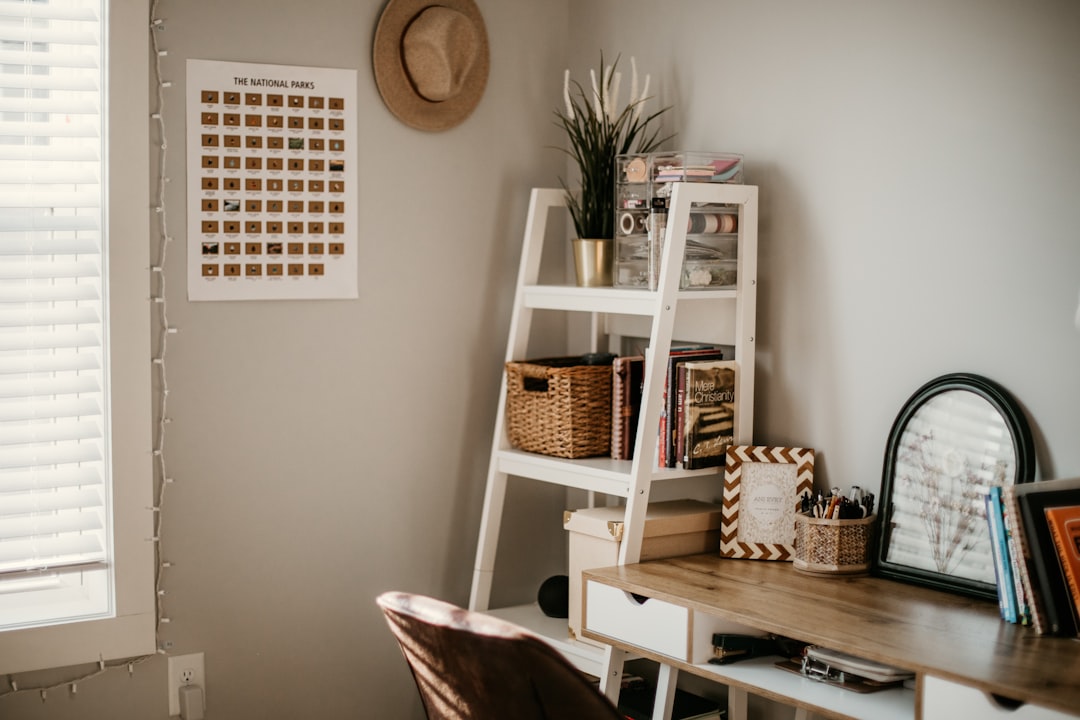
- Ladder shelf or leaning shelf: If your bedroom has a corner to spare, a ladder shelf ($40 to $80) provides four to five tiers of open shelving for folded items, bins, plants, and everyday things you want within reach without opening the closet at all.
- Wall hooks for outerwear: A row of three to five wall hooks in the bedroom keeps tomorrow’s outfit, gym bags, and jackets out of the closet entirely. This is especially useful for the partner whose morning routine is faster and needs quick access to a few key pieces.
For more ideas on maximizing a small apartment’s storage without replacing furniture, see our guide to 35 small apartment storage hacks that work for renters in any size space.
Make the Dresser Work for Both of You
If you are sharing a closet as a couple, the dresser is not optional furniture. It is a load-bearing part of the storage system. A 6-drawer dresser splits neatly into 3 drawers per person. A 4-drawer dresser is tighter but workable if one person claims 3 drawers and the other gets 1 drawer plus significant shelf and bin space elsewhere.
The dresser should absorb everything that does not need to hang: underwear, socks, workout clothes, pajamas, everyday t-shirts, and casual jeans. When the dresser handles all those categories, the closet rod handles only what genuinely needs to hang: dress clothes, structured jackets, dresses, and shirts that wrinkle badly when folded.
- Fit the dresser inside the closet if the dimensions allow: Some reach-in closets are wide enough to fit a small 3-drawer chest on one side next to the hanging rod. Sliding it inside the closet keeps bedroom floor space clear and makes the dresser look intentional rather than squeezed in.
- Use the top of the dresser as functional space: A small tray, a bowl for keys and jewelry, and one plant keep the dresser top useful without becoming a clutter magnet. One partner gets the left side, the other gets the right. Small trays at $5 to $10 each prevent the jewelry-wallet-phone pile that takes over any flat surface.
- Label the drawers: A small tag on each drawer handle tells both partners at a glance which drawers belong to whom. When you are half-asleep reaching for socks at 6 a.m., this matters more than you expect.
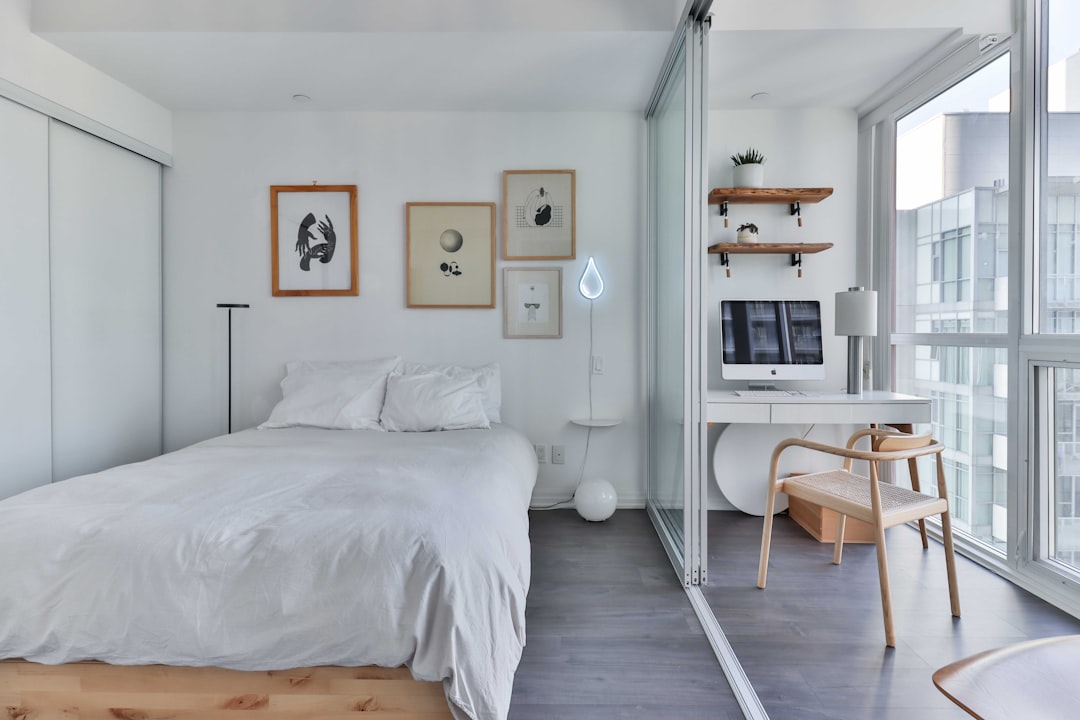
If you are working with a full studio setup and navigating shared spaces beyond just the closet, our article on studio apartment decor for couples covers how to carve out separate zones when you share one room for everything.
A Simple Weekly Reset to Keep the System Running
The best closet organization system in the world fails when neither person maintains it. You do not need a full weekend clean-out every month. You need 5 minutes every Sunday evening.
The Sunday reset is simple: return everything to its designated zone, put wandering hangers back in the right section, fold anything that got draped over a chair during the week, and do a quick visual check that the shared system is still working for both of you. If something is consistently out of place, that is a signal the system needs a small adjustment, not evidence that you are both bad at maintaining it.
- Seasonal swap every 3 months: Spend 30 minutes rotating off-season clothes in and out of under-bed or high-shelf storage four times a year. This keeps the active closet manageable and prevents winter boots from being buried behind summer sandals in October.
- One in, one out: Agree as a couple that every new item coming into the closet means one item leaves. This is the only rule that prevents gradual wardrobe growth from eventually undoing every hack on this list. It does not need to be strict, just consistent.
- Quarterly system check: Every few months ask each other whether the current split is still working. Life changes, jobs change, and so does what you actually need in your wardrobe. A brief check-in prevents the slow build-up of frustration over a system that quietly stopped serving both partners.
For couples sharing a small apartment beyond just the closet, the same logic applies everywhere: clear systems, consistent maintenance, and willingness to adjust when something stops working. See how other renters approach layout decisions in our guide to small apartment decor for couples in 500 square feet.
The Takeaway
Sharing a tiny closet as a couple is not about finding the perfect system on the first try. It is about starting with a thorough purge, dividing space based on honest need, adding a few inexpensive tools, and committing to a simple weekly habit that prevents everything from sliding back to chaos.
The biggest mistake most couples make is buying organizers before editing their clothes. A double-hang rod does not help when you have 40 shirts that should become 20. Slim velvet hangers do not solve a problem that is fundamentally about owning too much for the space available.
Start with the purge. Agree on zones. Add tools second. Then maintain it together. If you are also dealing with no dedicated closet space at all, our guide to no-closet bedroom ideas for renters covers creative alternatives including open wardrobes, armoires, and hanging systems that work even when the apartment has nothing built in.