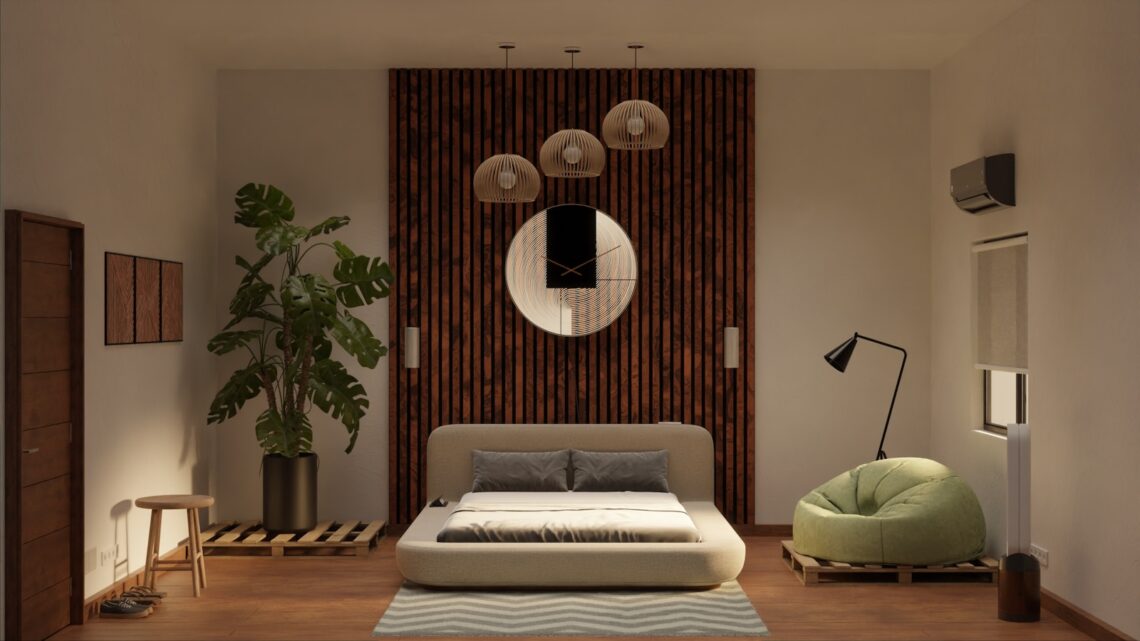
Renting does not mean settling for whatever the last tenant left behind. Japandi, the design hybrid of Japanese minimalism and Scandinavian warmth, is the one bedroom aesthetic built specifically for small, rented spaces. No drilling, no landlord permission slips, no budget beyond $200. These 12 corner ideas prove that constraint is an excellent design brief.

What Makes a Corner Feel Japandi
Japandi is not a product category. It is a set of decisions. In a bedroom corner, those decisions look like this:
- Natural materials over synthetic ones: bamboo, linen, pine, jute, rattan, terracotta
- A warm neutral palette: oatmeal, sage, clay, off-white, walnut brown, warm white
- One meaningful object per surface instead of a collection of things
- Low furniture that keeps sightlines open and the room feeling taller
- Negative space treated as part of the design, not as emptiness to fill
For renters, this is genuinely good news. You do not need to own the walls or install anything structural. The Japandi bedroom corner is built from what you put into it, not from what you build into it. That distinction is why the aesthetic works so well in apartments where the lease forbids modification.
The 12 ideas below each target a specific corner or surface in a bedroom. Most cost between $10 and $40 individually. All in, you can execute every idea for under $200, and most renters will hit every idea they actually want for closer to $80 to $120.

Ideas 1 and 2: The Low Bed Corner (Japandi Bedroom Small Apartment Essential)
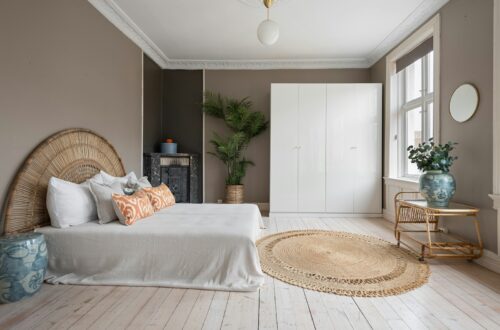
Going low is not a compromise in a small bedroom. It is a strategy. A platform bed or a low-profile bed frame that sits six to eight inches off the floor expands the visual ceiling height by a meaningful amount when you are standing or sitting at typical room-height eye level. That change costs nothing beyond choosing the right frame.
Idea 1: The low platform bed as your corner anchor. The bed is always the largest object in a bedroom. When it sits low, the entire room feels calmer and more intentional. Good low-frame options for renters in the Japandi price range:
- IKEA NESTTUN: under $100, pine slat construction, low profile, ships flat
- IKEA FJELLSE: even lower to the ground, $79, solid pine, entirely minimal
- Floor-level futon frame or tatami mat base: the most Japanese-adjacent option, $40 to $80 from Amazon or Japanese home goods shops
Pair the low frame with a linen duvet cover in oatmeal, sage, or warm white. H&M Home and Amazon both carry linen-blend duvet covers in these tones for $35 to $55. The material does a significant amount of visual work: it communicates texture, warmth, and intentionality before anything else in the corner has a chance to.
Idea 2: The under-bed storage corner as a visible design element. Most renters treat under-bed space as hidden storage. In a Japandi bedroom, one flat rattan basket pulled halfway out from under the bed converts storage into visual texture. Tuck two or three IKEA SKUBB linen boxes (six for $20) all the way under, and pull one natural fiber basket (Amazon, $15 to $22) so the edge is visible. The visible basket signals intentionality. Everything else stays hidden.

Idea 3: The Plant Corner
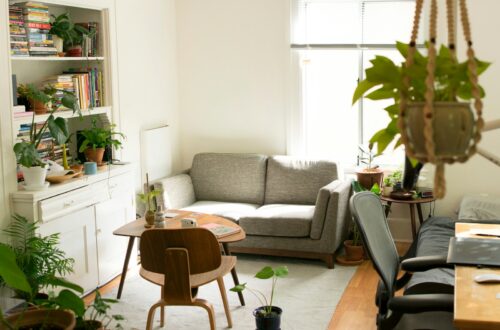
A single large plant in a bedroom corner does more design work than almost any other element at the same price point. It softens the hard right angle of the corner. It adds a vertical element without mounting anything to the wall. It moves the eye upward, which makes the ceiling feel higher. It costs between $15 and $40 for the plant and $8 to $20 for the pot.
The best Japandi bedroom plants for renters:
- Monstera deliciosa: the classic choice. A $25 plant in a terracotta or white ceramic pot fills a three-foot corner radius. The leaf shape is architectural without looking manicured.
- Snake plant (Sansevieria): taller and more geometric, $15 to $20, extremely low maintenance, thrives in low light. The vertical growth pattern is very Japandi.
- Pothos: trailing, works on top of a low shelf so the leaves drape down the side. Creates movement in a static corner.
- Peace lily: white flowers against dark leaves, works well in low light rental bedrooms, very affordable at $12 to $18.
The rule for the plant corner is one plant per corner, maximum. Two plants in one corner is a jungle. One plant is an intention. The pot matters as much as the plant: a $4 terracotta pot from any garden center, a $14 white ceramic pot from IKEA, or a $15 to $22 rattan pot cover from Amazon. All three communicate the same aesthetic. Avoid plastic at any price point.

Ideas 4 and 5: The Wall Art Corner (Japandi Bedroom Under $200 Budget Stretch)
The most Japandi wall art you can put in a bedroom costs between $0 and $35. It uses botanical prints, minimal line drawings, or single abstract forms in frames that lean against a surface rather than hang from a wall anchor.
Idea 4: The botanical print corner. Two or three framed botanical prints above the bed or along an empty wall are among the most consistent visual elements across actual Japandi bedroom photographs. They appear in design publications, apartment tours, and every relevant Pinterest board for good reason: they add organic reference, pattern, and warmth without requiring a trip to an art gallery.
How to do it for under $35:
- Download free botanical illustration files from public domain archives or search for vintage botanical prints on Unsplash and similar platforms
- Print at 8×10 or 11×14 at a Walgreens or CVS photo counter: $3 to $8 per print
- Frame with IKEA RIBBA black or white frames at $6 to $9 each
- Lean two frames side by side against the wall on top of your dresser instead of hanging them
Three leaning framed prints cost under $45 total and read as intentional wall art to anyone looking at the corner.
Idea 5: The single large print above the bed. One 16×20 or 18×24 print centered above the headboard creates a visual anchor that functions the way a headboard does in more traditional bedrooms. An abstract line drawing, a simple face, or an architectural sketch in a plain black IKEA SANNAHED frame ($18) is a $30 design decision that transforms the wall above a bed from blank rental space to a composed surface.

Idea 6: The Natural Light Corner
Light is free. Japandi interiors are almost always photographed in morning light because the aesthetic depends on soft shadows and warm daylight tones. In a rental bedroom, you can influence this more than most renters realize.
Three moves for the natural light corner:
Swap heavy curtains for sheer linen panels. Two sheer panels from Amazon or H&M Home run $25 to $40 for a standard window. They filter light without blocking it and create the soft, diffuse glow that makes any room feel more considered. A command strip curtain rod ($12 to $18 at Target) means no holes in the wall.
Move the bed toward the window side. Even moving the bed frame 12 inches closer to natural light changes how the room reads at 7 a.m. and how it photographs. You are not always locked into the furniture arrangement the previous tenant preferred.
Keep the windowsill edited. A bare windowsill, or one with a single object on it, a small plant, a smooth stone, a ceramic cup, lets light come in unobstructed and frames whatever you choose to place there. Avoid the instinct to fill the sill. Empty windowsill space in a Japandi bedroom is not wasted. It is the point.

Idea 7: The Nightstand Ritual Corner
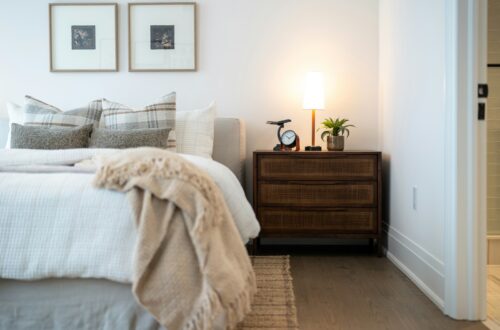
The Japandi nightstand is not a storage surface. It is a ritual surface. You put on it only the objects you interact with every single night. Everything else goes in the drawer, into a basket, or back in the closet where it belongs.
The standard Japandi nightstand edit:
- One lamp: warm bulb, simple shade, functional before decorative
- One book you are actually reading, not a stack of books you intend to read
- One small vessel: a cup for water, a small ceramic candle holder, or a shallow dish for rings
Three objects maximum. The nightstand itself is part of the composition. Options that work under $80:
- IKEA KALLAX single cube as a nightstand: $35, adds open display space without a drawer, very adaptable
- IKEA KNARREVIK: $20, narrow and minimal, perfect for tight bedside spaces
- LACK side table: $15, extremely simple geometry, works well when paired with the right objects
The lamp makes the biggest difference in this corner after dark. A linen shade with a warm bulb (2700K to 3000K) runs $20 to $45 and changes the entire feel of the corner once the overhead light is off. Avoid chrome finishes, industrial looks, or colored shades in a Japandi bedroom.

Idea 8: The Window Reading Corner
A window corner with a low floor cushion or a small chair is among the most photographed Japandi moments in any bedroom, and it is among the cheapest to execute correctly.
The $60 window reading corner:
- One large floor cushion in a neutral linen or cotton cover: Amazon, $25 to $40
- One low side table, a wooden stool, or a small IKEA stool ($12) to hold a cup and a book
- Sheer linen curtains on the window (as above)
- One small plant on the windowsill, optional
What you do not need for this corner:
- A dedicated reading chair, which adds cost and takes floor space
- A built-in window seat, which requires tools and landlord permission
- Curtain hardware that requires wall anchors or drilling
The corner works because it establishes a zone within the bedroom. You sleep in one part of the room. You sit and read in another. That behavioral separation makes the room feel like it contains more than one kind of space, which is exactly what good Japandi design does for small apartments. Related reading: 15 Cozy Reading Nook Ideas for Small Apartments on a Budget.

Ideas 9 Through 12: The Dresser Corner as a Still Life
The dresser is the most overlooked surface in most renter bedrooms. The top of the dresser accumulates whatever lands on it: chargers, receipts, things with nowhere else to go. In a Japandi bedroom small apartment setup, the top of the dresser is a composed still life. It is not empty. It is edited.
The rule for a Japandi dresser top: three objects maximum, at least one of which is organic.
Idea 9: The wooden tray anchor. A flat wooden or ceramic tray corrals all the small items that would otherwise scatter: phone, rings, a hair tie, a chapstick. The tray makes a collection of small objects read as a single composed element rather than clutter. Wooden trays run $10 to $20 on Amazon; IKEA carries a ceramic version for $7.
Idea 10: The organic element. One plant, a small bunch of dried botanicals, or a branch in a simple vase. This is the object that does the most aesthetic work on the surface. Dried pampas grass, wheat stalks, or eucalyptus in a small wooden or ceramic vessel costs $8 to $20, never needs water, and adds texture and movement that no lamp or candle can match. The organic shape breaks the geometry of the dresser surface in a way that feels intentional rather than decorative.
Idea 11: The leaning mirror. A small round mirror leaning against the wall on top of the dresser takes up no wall anchors and no drilling. IKEA LANGESUND is $15. The mirror adds depth to the corner, makes the room feel larger, and reflects light in a way that affects the whole bedroom, not just the dresser area.
Idea 12: The candle with intention. One candle in a ceramic or concrete holder, placed on the dresser tray, completes the still life. The candle is not decoration. It is an object you actually light at night. Choosing a wax candle in a plain holder over a decorative candle in a branded jar is the kind of edit that distinguishes Japandi from generic apartment decor. A plain soy candle in a ceramic vessel runs $8 to $18 at most home goods stores.

The Takeaway
Japandi for renters is not a redesign project. It is a series of small, reversible decisions: lower the furniture, edit the surfaces, add one plant, frame one print. The aesthetic is built for people who cannot paint walls, cannot install shelving, and cannot spend $2,000 on new furniture.
You do not need all 12 ideas. You do not need five. Pick the two corners in your bedroom that bother you most and apply one idea to each. That is enough to shift how the room feels, and how you feel inside it. The budget ceiling of $200 is generous. If you focus only on the changes that matter most, a linen duvet, a plant, one framed print, and a good lamp, you will likely spend under $100 and see more improvement than most full-bedroom redesigns accomplish.
The aesthetic handles the rest. For more ways to improve your bedroom without spending much, see 12 Above-the-Bed Decor Ideas for Small Bedrooms and 15 Under-Bed Storage Ideas for Small Apartments.