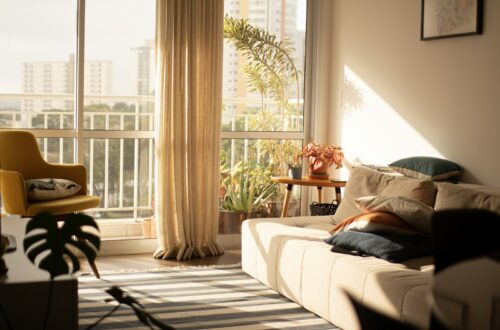
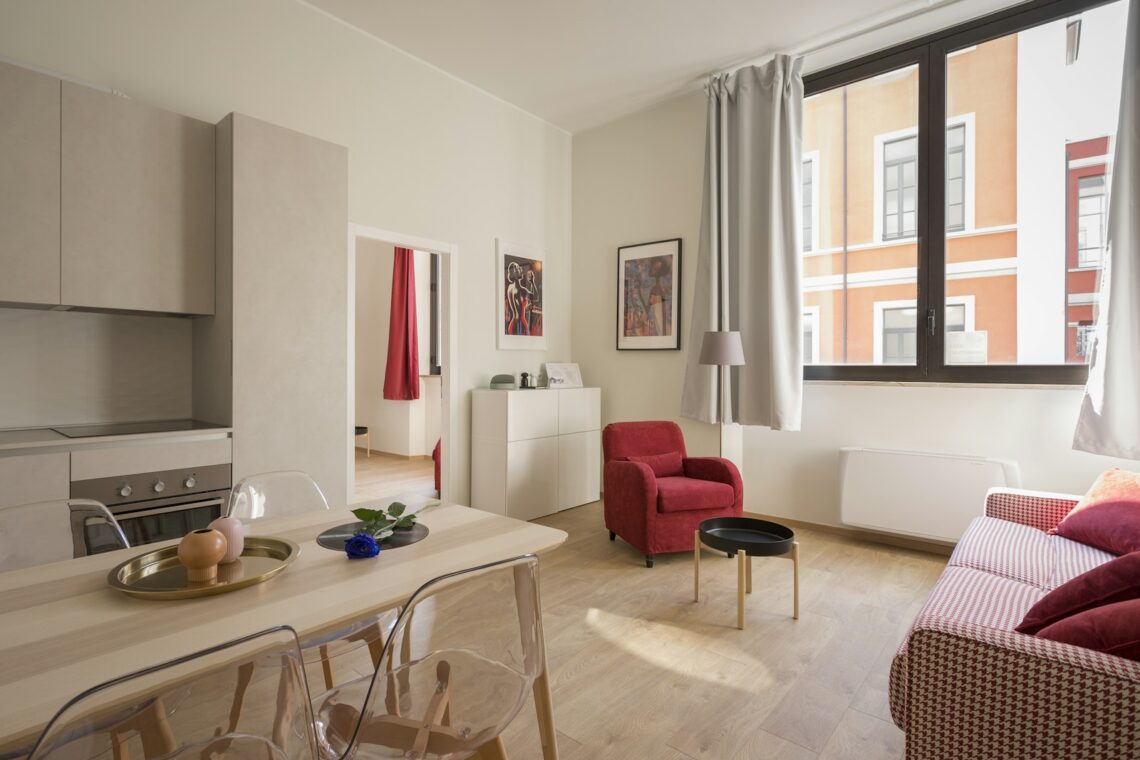
Small apartment decor for young professionals sits in a specific window: you are out of the dorm or first sublet, you have a salary that covers rent plus a real furniture budget, and you have not yet bought the things that lock a person into a permanent address. The apartment has to function as bedroom, office, gym corner, dining room, and the place you actually want to bring people back to, all on 400 to 700 square feet.
This guide is the field manual for small apartment decor for young professionals in their first or second post-grad apartment: the furniture decisions that scale across three or four moves, the workspace setup that respects 50-hour weeks, and the styling moves that read as adult without crossing into corporate. Every recommendation below is built for renters, with move-out reversibility baked into every choice.
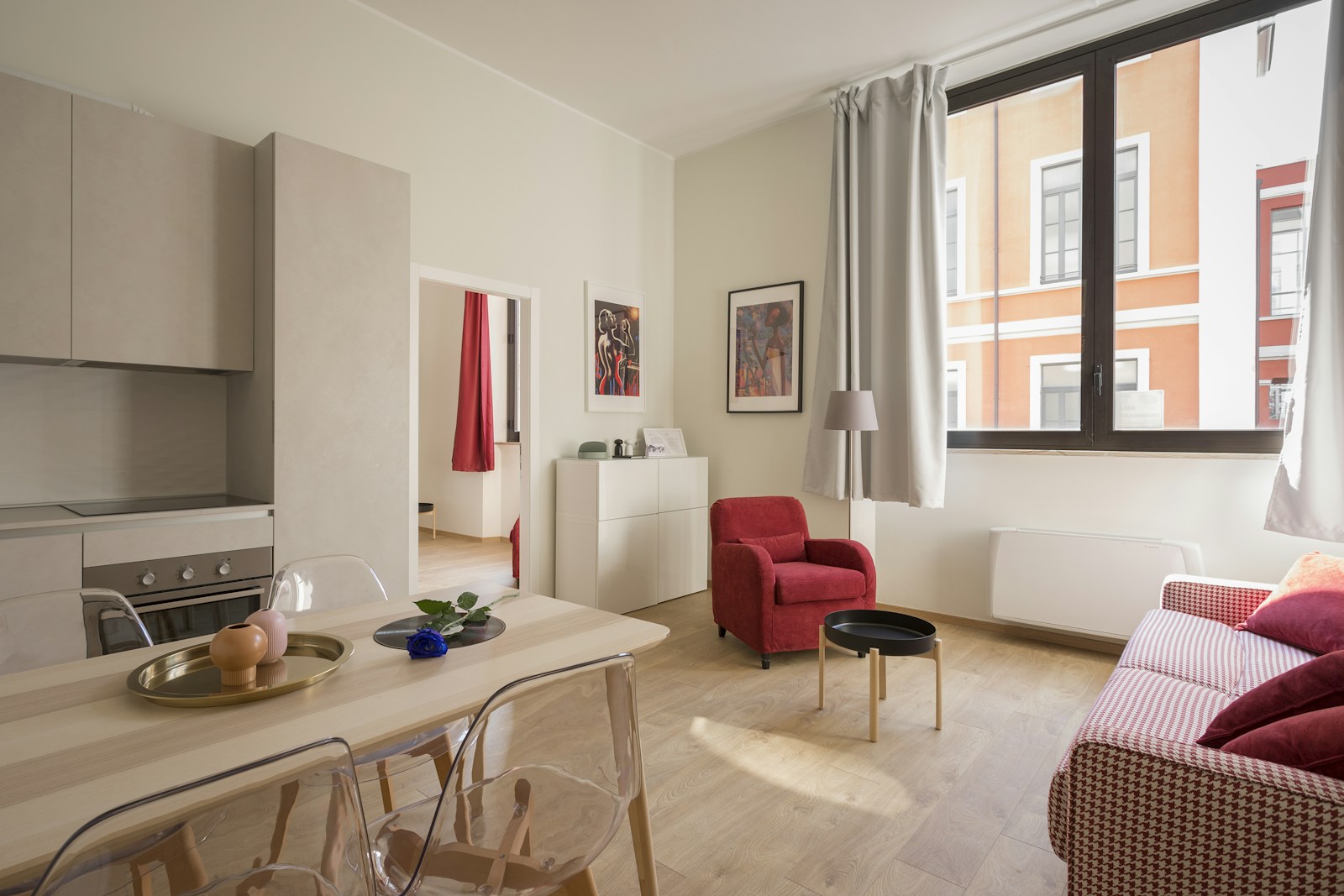
The first-apartment furniture budget breakdown
Small apartment decor for young professionals tends to fail at one of two extremes: under-buying (sleeping on a mattress on the floor with a folding chair for guests at age 28) or over-buying (a $4000 Restoration Hardware sofa in a 500 sq ft rental that you will move twice before the warranty runs out). The right zone is the middle: $2500 to $5000 total for a fully furnished one-bedroom, spread across pieces that survive three apartments and pieces that get replaced every other lease.
The pieces that earn long-term investment are the mattress ($800 to $1500, lasts 8 years), the sofa ($800 to $1800, 5 to 8 years), and a real task chair ($300 to $600, 10 years). Everything else is mid-range and replaceable: bed frame ($150 to $400), nightstands ($60 each), dining table ($150 to $400), TV stand ($120), lamps ($30 to $80 each). Skip the matched bedroom set, the credenza, and the bar cart for the first apartment. You can add them at apartment two.
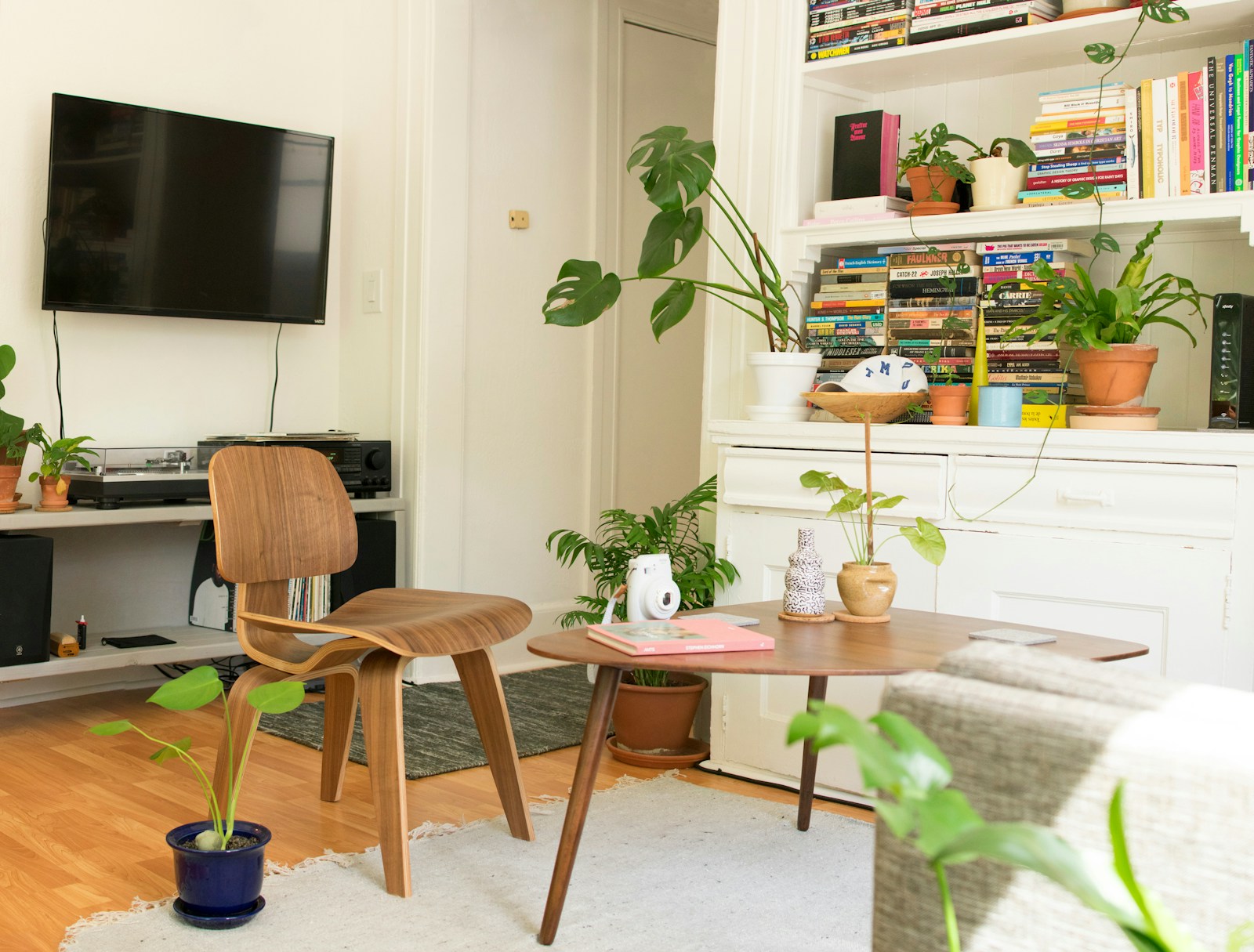
The sofa is the centerpiece, pick it for the next three apartments
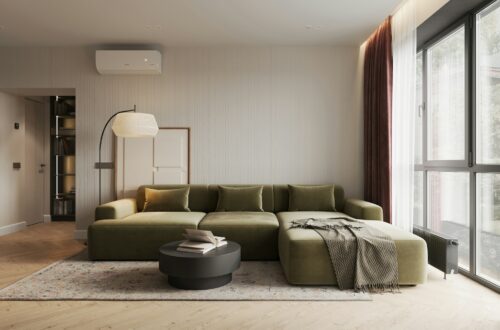
The sofa decision in small apartment decor for young professionals is the highest-stakes single buy because the wrong sofa eats the room, refuses to fit through future doorways, or shows wear by month nine of college-grade upholstery. The right sofa is 72 to 84 inches long, modular (so it reconfigures in the next apartment), and upholstered in performance fabric that survives drinks and dogs.
The Article Sven ($1300, leather or fabric, 72 inches), the Castlery Adams ($1000, sectional or sofa), and the West Elm Andes ($1500, MCM lines) are the three references in the $1000 to $1500 zone that look good and last. Below $1000, the IKEA Soderhamn modular at $600 is the best value, especially because the covers wash. Above $1500, you are paying for finish details that do not show up in a small apartment.
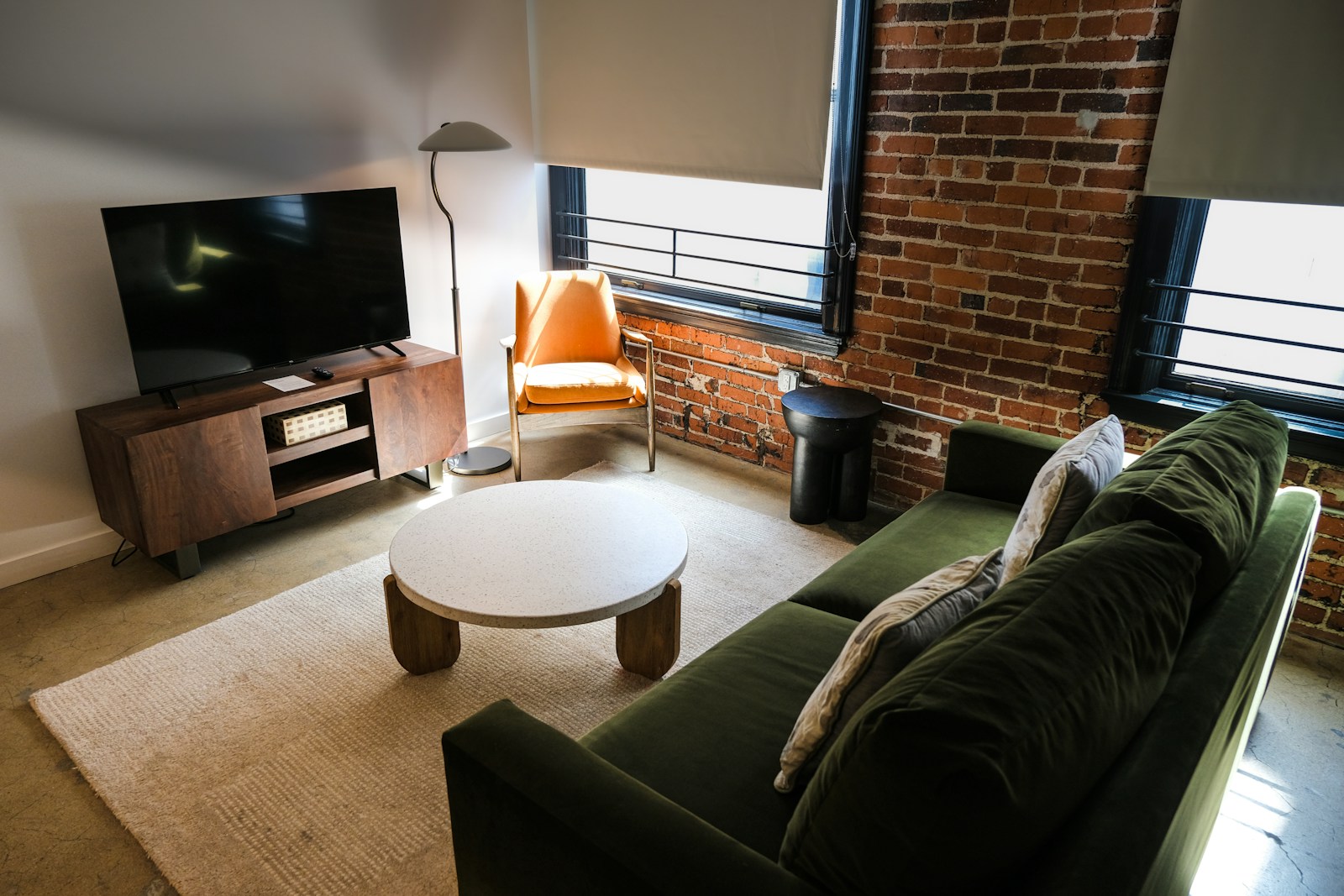
Color matters more than pattern. Olive, navy, deep rust, charcoal, and saturated cream all photograph well in small apartments and hide wear. Avoid white or very light gray unless you are a person who covers furniture before sitting down. The sofa is the largest color decision in the apartment, and a saturated color does the styling work that a beige sofa offloads onto pillows.
The workspace upgrade nobody made in their last apartment
Small apartment decor for young professionals has to take the work-from-home setup seriously, even for people who go to an office most days. The home setup absorbs late nights, sick days, side projects, and the weekend hours that should have been at a desk but were at the kitchen table instead. A dedicated workspace pays back faster than any other apartment investment.
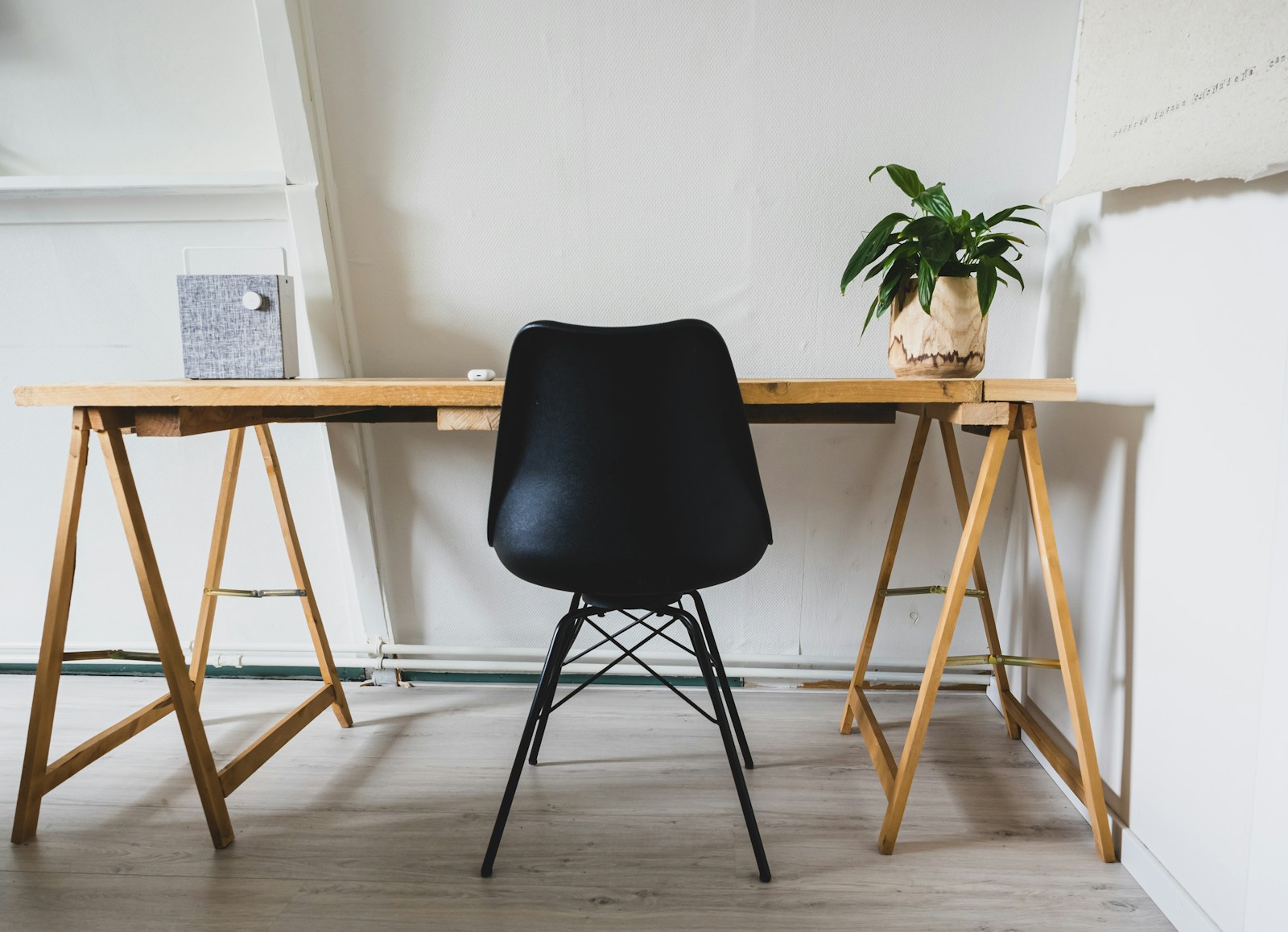
The desk is 47 to 55 inches wide minimum (one monitor plus a laptop dock plus a notepad), 23 to 28 inches deep, and has cord management built in or added with $15 of clips. The IKEA Bekant at $200 with cable tray is the rental workhorse. The Fully Jarvis at $500 with adjustable height is the upgrade for anyone over six feet tall or anyone who is on five hours of video calls a day.
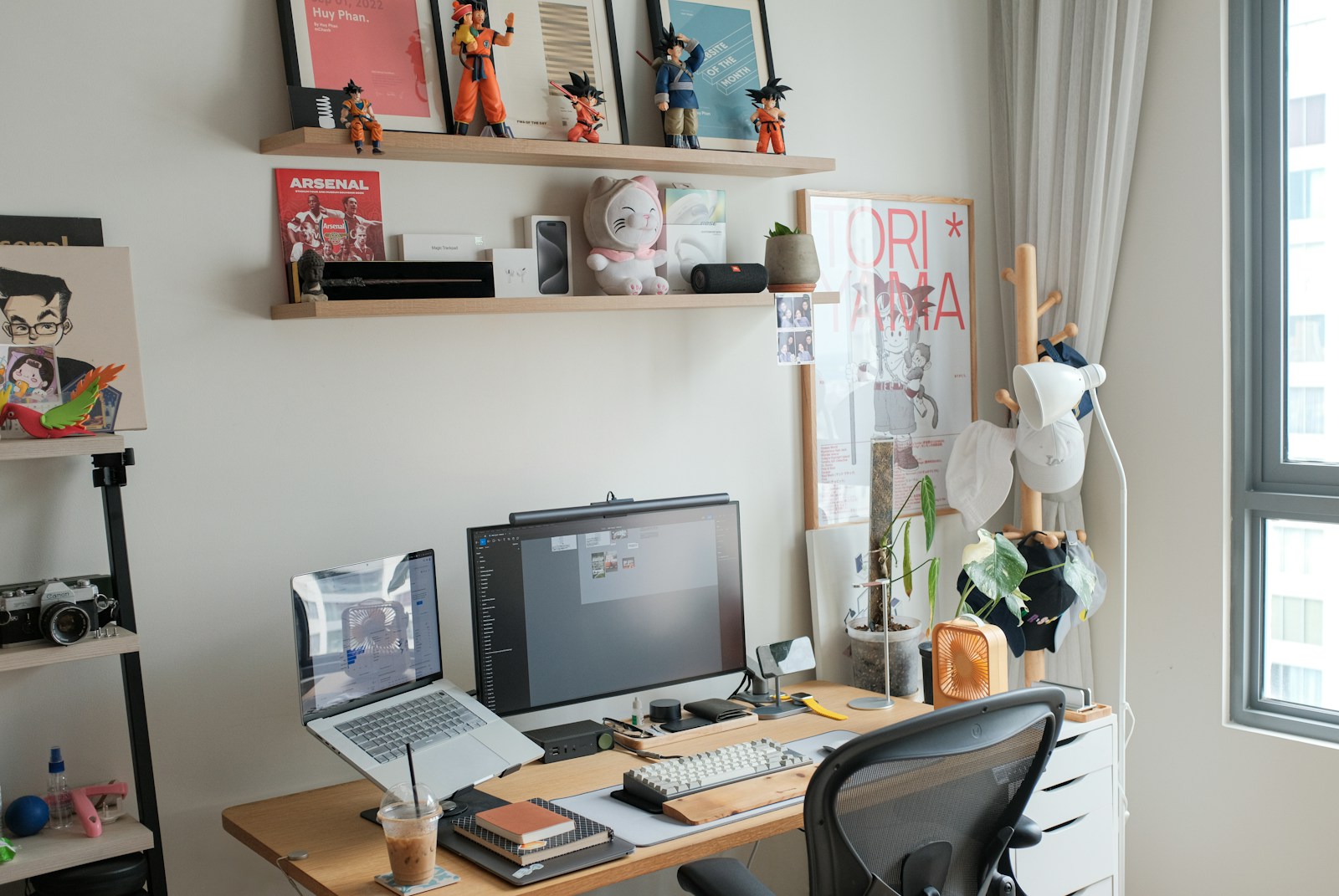
The chair is non-negotiable in any small apartment decor for young professionals guide. A real ergonomic chair (Herman Miller Aeron used $500, Branch Daily $300, Steelcase Series 2 $400) lasts the entire decade of your twenties and prevents the shoulder, back, and wrist problems that the cheap office chair guarantees by year three. The math is brutal: $400 over ten years is forty dollars a year, less than one bad ergonomic massage.
The monitor matters less than the chair, but a 27 inch 4K display ($350 from Dell or LG) makes coding, design, and spreadsheet work meaningfully faster. Mount it on a $35 monitor arm so the desktop stays clear and the height is adjustable. The whole upgraded desk setup costs $700 to $1200 and is the single most-used corner of the entire apartment.
The bedroom that does not look like a dorm
The flip from collegiate to adult happens in the bedroom, and it happens through three specific upgrades: a real bed frame with a headboard, hotel-quality bedding, and lighting that does not include the overhead. Everything else (the IKEA dresser, the mismatched art, the laundry basket in the corner) can stay for another year if those three things are done.
The bed frame is $200 to $500 from Article, Floyd, or Thuma, all of which ship flat-pack and assemble in 30 minutes without a drill. The headboard adds height to the room and protects the wall from oily hair stains, both of which matter in a rental. Look for a 48 to 60 inch tall headboard (taller than the standard 36 inches) because tall headboards photograph as luxury and cost the same as short ones.
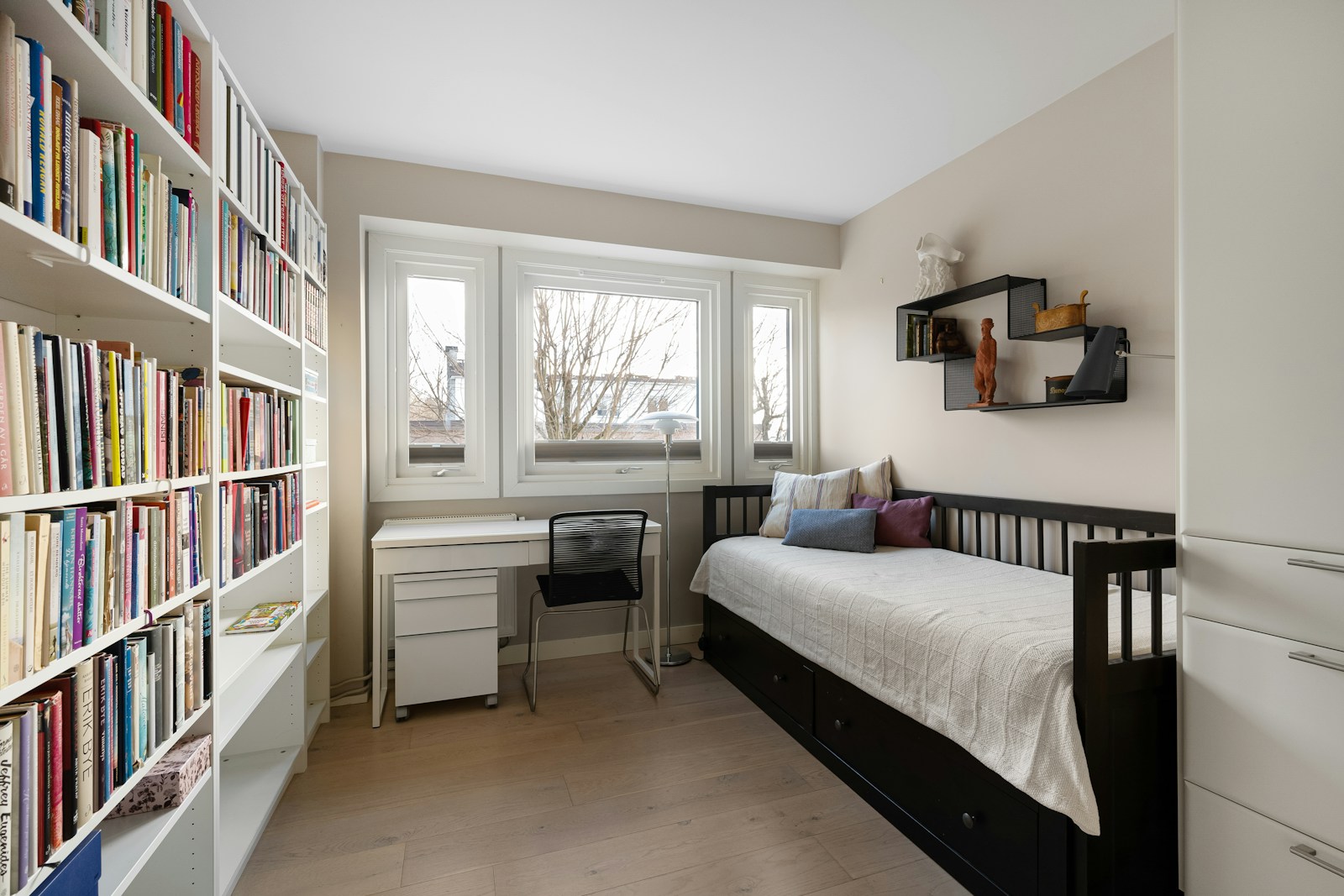
The bedding is one duvet cover (Brooklinen $129, Parachute $179, or Quince $80), two euro shams, two standard pillows, and one throw at the foot. Total: $250 to $400 depending on which brand. The same setup looks dramatically different in linen versus percale versus sateen, but any of the three reads as adult bedding once the IKEA duvet insert is upgraded to a hotel-weight down alternative ($60).
Lighting in three layers, never the overhead
The single fastest move in any small apartment decor for young professionals project is turning off the builder overhead light and replacing its function with three lamps. The overhead is harsh, casts hard shadows, and makes every room read as a waiting area. Three warm lamps at 2700K transform the entire feel of the apartment for under $200.
The three lamps are a floor lamp near the seating area (Article Sotti $140, Target Project 62 $80, IKEA Holmo $25), a table lamp on the bedside or the desk ($50 to $120, ceramic base plus linen shade), and an accent light somewhere low (a $20 USB-powered picture light from Amazon, a candle, or warm string lights along a shelf). Add a smart bulb controller ($25) so you can set scenes for morning, evening, and movie-night without standing up.
The bulb temperature change alone (cool 4000K to warm 2700K) is the single most underrated upgrade in any rental. A six-pack of Philips Hue White at 2700K is $40 and changes how every room photographs and how late you can stay productive in the apartment. The cool builder bulbs go in the bathroom and the closet, where you actually want clinical light.
The kitchen that supports actually cooking
Small apartment decor for young professionals tends to under-invest in the kitchen because it looks already-done and there are no walls to change. The reality is that the rental kitchen has zero counter space, eight square inches of usable storage, and lighting that makes cooking unpleasant. Three small upgrades fix all of that for under $200.
First, a $50 rolling kitchen cart or butcher-block top island doubles the counter space. Look for 24 to 36 inches wide, locking wheels, and an open shelf below for cookbooks and a stand mixer. The IKEA Bror at $130 is the workhorse; the IKEA Forhoja at $99 is the entry version. Both move out of the kitchen for dinner parties and become an extra surface in the living room.
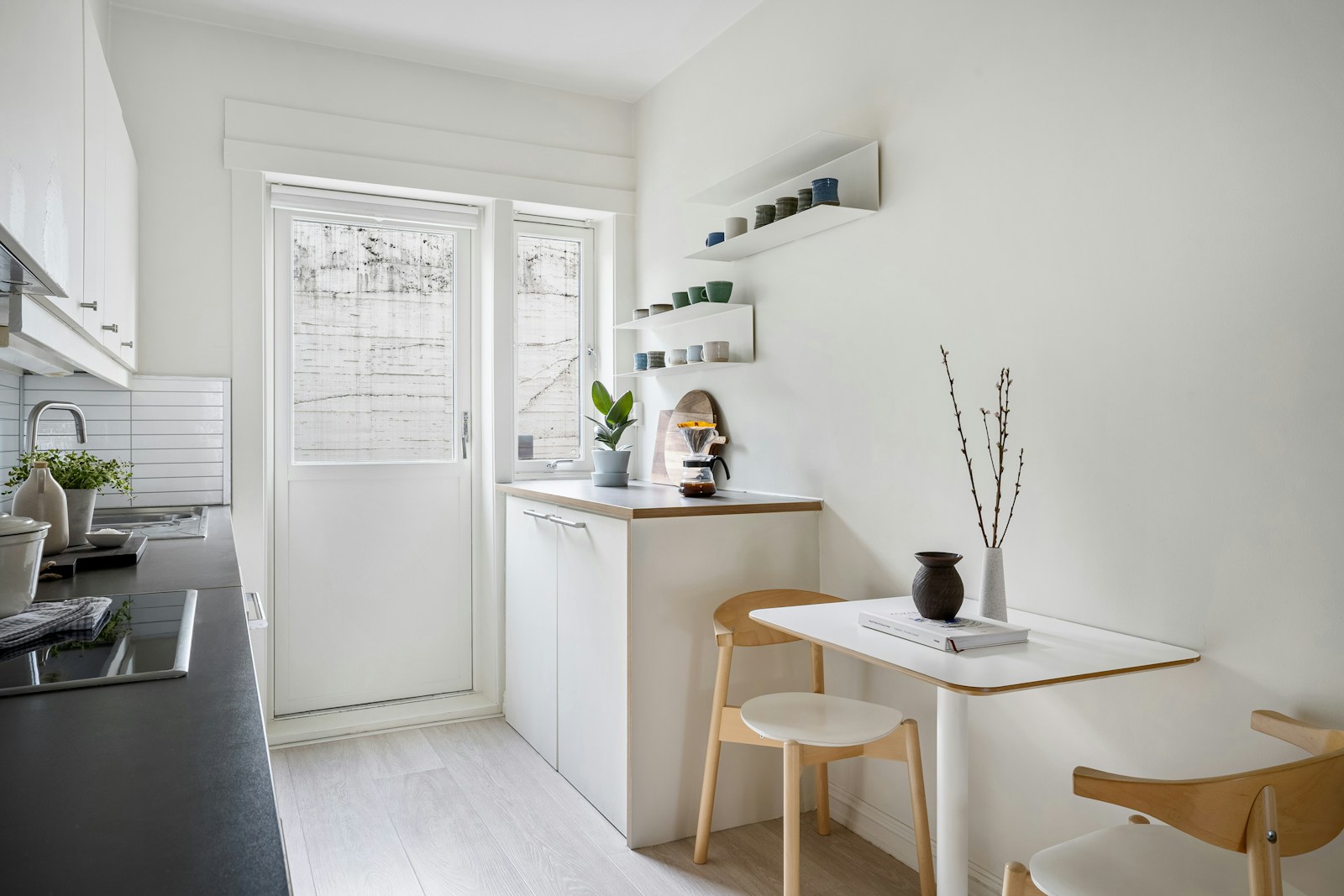
Second, an over-the-sink dish drainer ($35 from Amazon, the Sakugi or KitchenAid versions) reclaims the entire sink area as counter space when you are not actively washing dishes. Third, a $25 magnetic knife strip mounted with command strips or a $15 stick-on tension rod under the upper cabinet adds vertical knife and utensil storage that frees up the drawer for everything else.
The lighting upgrade for the kitchen is a $30 plug-in under-cabinet LED strip (Govee or Philips) that runs along the bottom of the upper cabinets and gives task light directly on the counter where you cut. The kitchen suddenly photographs well and the task of cooking becomes pleasant. Total kitchen upgrades: $130 to $220 with no drilling.
Art and shelving that reflect taste, not the dorm poster era
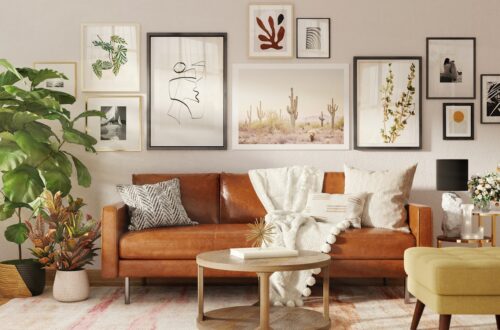
The single most visible signal in small apartment decor for young professionals is the art. A pair of $20 Society6 posters in IKEA Ribba frames reads as a transitional apartment that the resident has not committed to. Three to five real pieces (originals, vintage prints, signed editions) read as a real apartment with a real adult who chose them.
Sources for real art at the under-$200 price point: Etsy artists (search the medium plus the city), Tappan Collective ($75 to $400), Minted ($100 to $300), Saatchi Art ($100 to $1000 for emerging artists), local artist Instagrams (DM them directly), estate sales and flea markets (vintage botanical prints, old maps, midcentury posters $5 to $40). The first piece is the hardest. After one, the second and third compose around it.
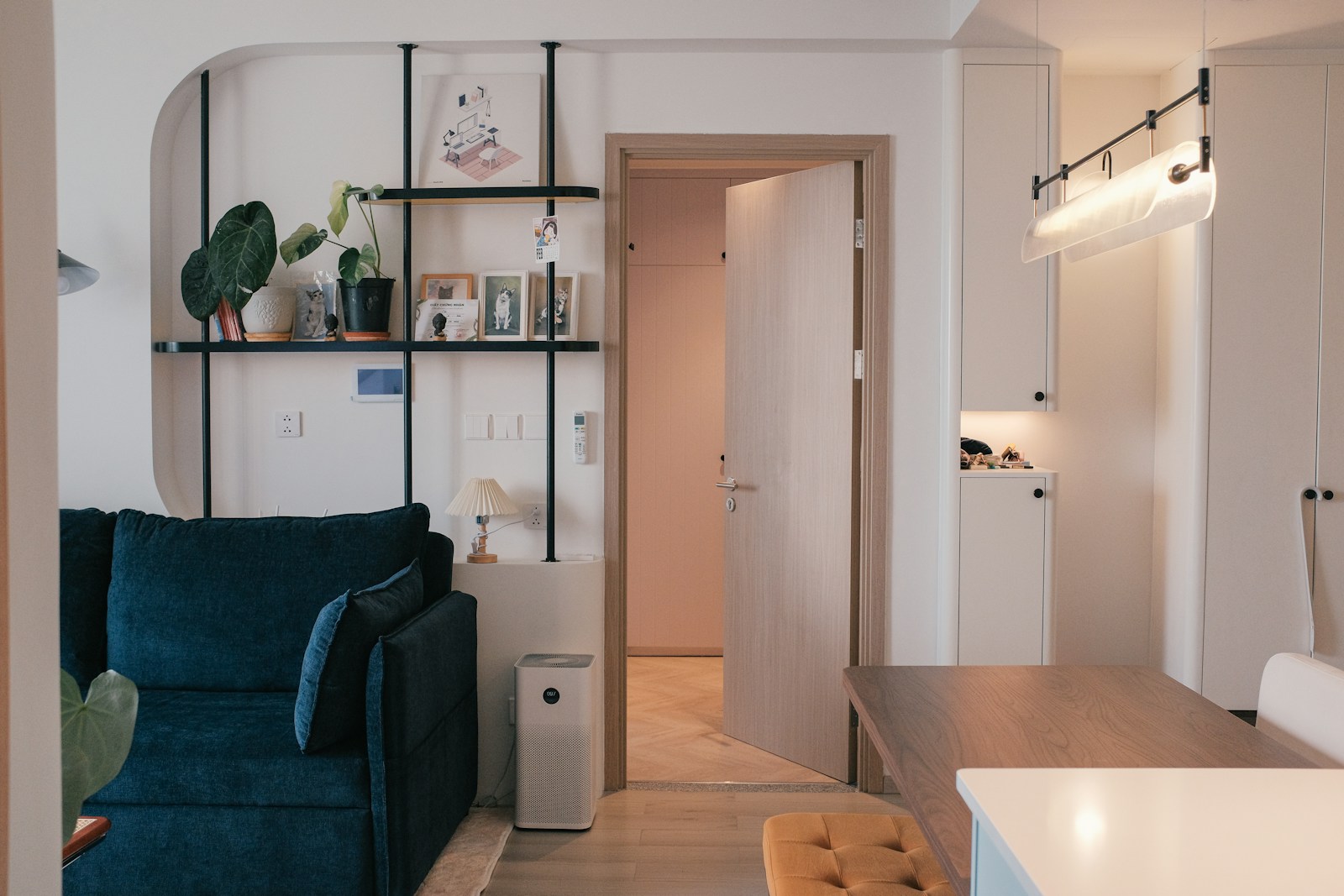
Shelving is the art’s wingman in a small apartment. One pair of $30 IKEA Lack shelves above the sofa, styled with seven items total (three books standing, two books stacked, one ceramic, one plant), reads as a curated space. Skip the giant Kallax cube unit unless you have a wall to spare; the lower-profile Eket or two Lack ledges look more adult and store the same number of books per square foot.
The plant rule for people who travel for work
Small apartment decor for young professionals has to assume the resident is gone for two weeks at a stretch on work trips, weddings, and visits home. The plant list shrinks accordingly: snake plant, ZZ plant, and pothos handle two weeks of neglect; everything else dies. Three to five plants is the right number; the Pinterest fifteen-plant version requires a daily watering schedule the actual job does not allow.
Buy plants in pots that are already nice (terracotta, ceramic, or wood) and skip the repotting step entirely for the first year. The IKEA Daidai planter at $7, the Target Studio McGee terracotta line at $20, and the Bloomscape pre-potted plants ($45 to $90) all work without a weekend project. One large floor plant (snake plant in a 12 inch pot, $80) anchors the corner near the window; small plants on shelves and the desk fill in.
Storage for the things you do not want guests to see
The visible-storage problem in any small apartment is the gym bag, the running shoes, the suitcase from last weekend, the laundry hamper, and the Amazon boxes. All five live in plain sight in most young-professional apartments and signal that the room is in transition rather than finished.
Two pieces of furniture earn their footprint by hiding the visible clutter. A storage ottoman at the foot of the bed ($150, holds bedding and the off-season jacket) and a media console with closed cabinets under the TV ($200 to $400) handle most of it. The laundry hamper goes in the closet behind a $25 over-the-door shoe organizer that holds 24 small items vertically. The gym bag lives on a hook inside the closet door, not on the floor.
The suitcase problem is the hardest to solve in a small apartment. The two solutions: a hard-shell carry-on that doubles as the bedside table (Away or Monos, $200 to $300) or a soft duffel that compresses flat under the bed. Both work; the carry-on is more aesthetic and the duffel is more practical if you check bags.
One unexpected style move per room
The difference between small apartment decor for young professionals that reads as catalog-bought and small apartment decor that reads as personal is one unexpected element per room. The catalog version is correct, beige, and forgettable. The personal version has a vintage chair next to the new sofa, an inherited rug under the modern coffee table, or a stack of art books on the floor next to the dining chairs.
The unexpected move in the bedroom can be a vintage trunk at the foot of the bed instead of a bench, a mid-century lamp from Chairish instead of the matching set from Target, or a hand-tufted rug from Etsy instead of the rental-friendly synthetic from Rugs USA. In the living room, the move is usually one vintage chair (Eames, Wegner replica, or a thrifted leather club), one piece of art over $200, and one item with provenance (the brass tray from your grandmother, the leather-bound book set you actually paid attention to).
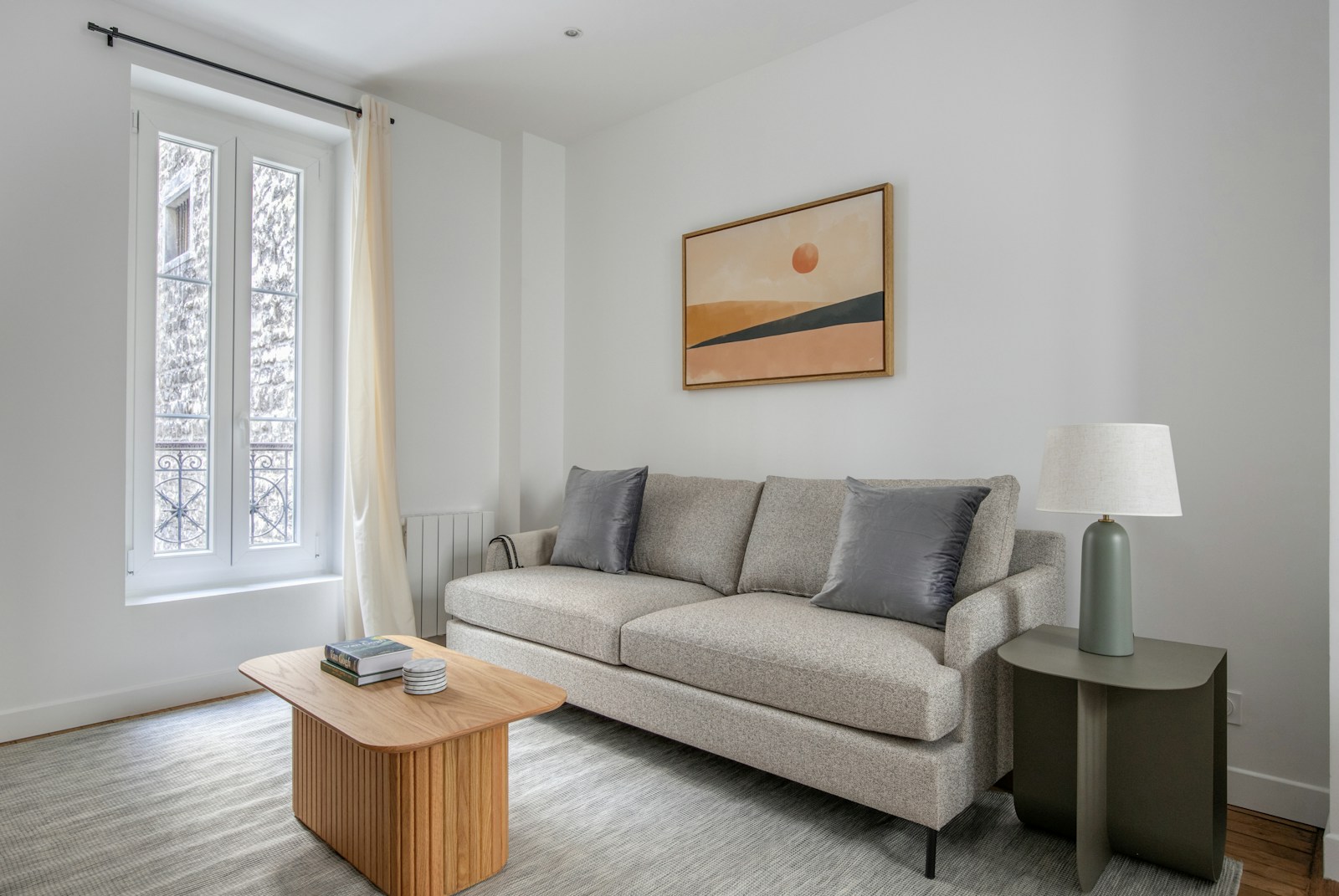
The kitchen and bathroom get the smallest unexpected moves: a single piece of framed art over the toilet, a vintage cutting board leaning behind the stove, a hand-thrown ceramic mug collection on display. These small moves cost $50 to $200 each and do more for the apartment’s personality than the whole IKEA delivery did.
The takeaway
Small apartment decor for young professionals is an exercise in spending the budget on the four or five pieces that will follow you to three apartments (mattress, sofa, desk chair, dining table, one good lamp) and treating everything else as replaceable. The first apartment is the rehearsal; the second is where the style sharpens; the third is where the apartment finally photographs the way the moodboards did.
Skip the bar cart, the gallery wall, and the matching bedroom set for the first apartment. Buy the saturated-color sofa, the ergonomic chair, and the three warm-bulb lamps. Hang one piece of real art per room and three plants total. The apartment reads as adult by month three, and the photos taken at month six are the ones that go on the refrigerator at your parents’ house.
Young professionals in their first salary years get a narrow window where the decor budget is real but the apartment is small, the lease is short, and the move is always six to eighteen months away. Lean into the constraint. Pick the pieces that move easily, that survive small doorways and walk-up stairs, that look better lit by a single warm lamp than by track lighting. The apartment is a draft of the apartment you will have at thirty, and small apartment decor for young professionals is most of the practice.
Related reading: WFH setup for studio apartments, 27 small apartment decor ideas, 25 IKEA hacks for small apartments.