If you own 50 or more pairs of shoes and live in a small apartment, you already know the math does not add up. The average bedroom closet gives you maybe 18 inches of floor space. That holds about 6 pairs. So where do the other 44 go? As a renter, you cannot gut a closet or add built-ins. But there are 21 storage hacks that actually work in real apartments with limited square footage, no power tools required for most, and a total budget that does not require selling a pair of Jordans to fund the project.

Start With a Shoe Audit Before You Buy Anything
The single biggest mistake apartment dwellers make is buying storage before counting what they own. Pull every pair out. Lay them on the floor. Now sort them into three groups: daily rotation (worn at least once a week), seasonal (boots you wear October through March, sandals May through September), and special occasion (wedding heels, hiking boots for that one camping trip per year).
Your daily rotation should live in accessible spots. Seasonal shoes can go into harder-to-reach but organized storage. Special occasion pairs can go into labeled boxes under the bed or on a high closet shelf. This mental model drives every decision below. If you store everything as if it needs to be grabbed in 30 seconds, you will always feel cluttered regardless of how many racks you buy.
- Daily rotation: aim for 8 to 15 pairs max in prime real estate spots
- Seasonal: rotate twice a year using labeled under-bed bins
- Special occasion: clear stackable boxes with a photo on the front
- Donate rule: if you have not worn it in 18 months and it is not sentimental, it goes
The Entryway Shoe Rack Is Your First Line of Defense
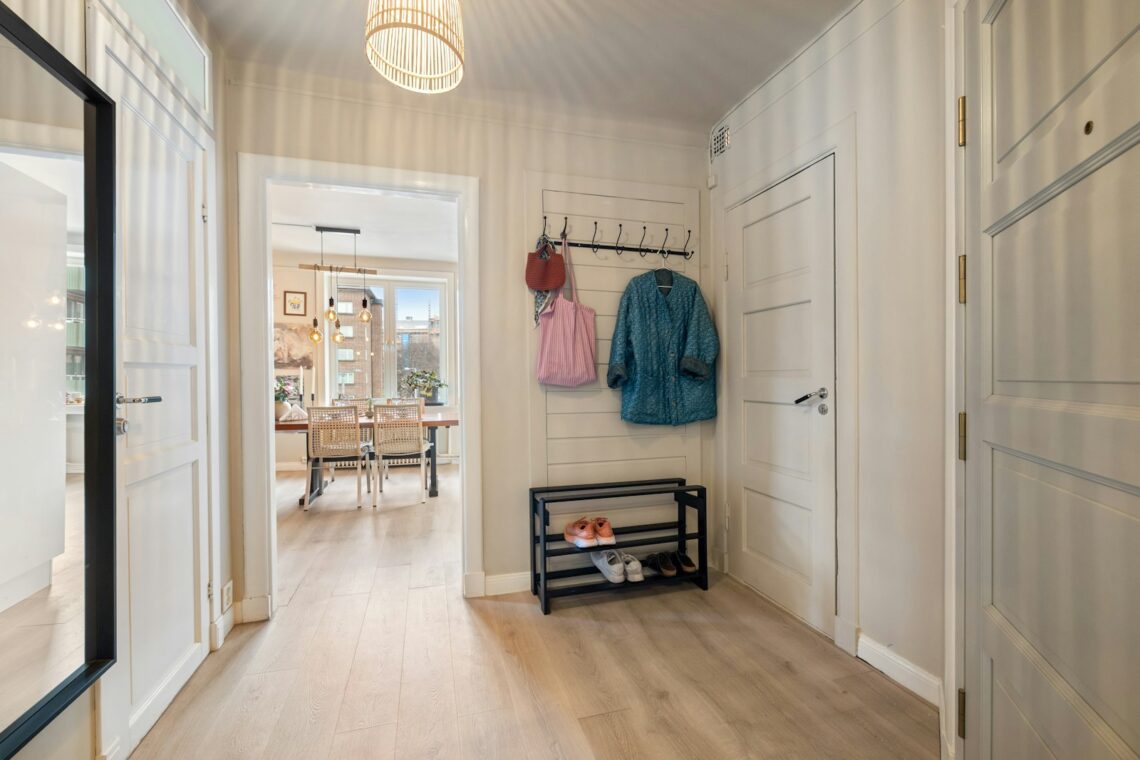
Every apartment has some version of an entryway, even if it is just two feet of space between the front door and the living room. A narrow 2-tier or 3-tier shoe rack dropped into that zone immediately removes the pile-of-shoes-by-the-door problem and keeps your most-worn pairs organized without touching closet space.

The SONGMICS 3-tier metal shoe rack ($26 on Amazon) holds 9 pairs and folds flat when you move out. The Honey-Can-Do bamboo version ($34) looks more elevated and handles 12 pairs across 3 shelves. For truly tight entryways under 24 inches wide, go vertical with a tower rack that has angled shelves. These designs hold 8 to 10 pairs in a 6-inch footprint.
- Choose a rack no deeper than 12 inches so doors still clear it
- Metal or bamboo both work; metal is cheaper, bamboo ages better
- Angled shelves pack 30% more shoes than flat shelves at the same height
- Add a small tray under the bottom shelf to catch rain and mud
The Hall Tree With a Built-In Shoe Bench Is Worth Every Inch
If your entryway can fit a bench (roughly 36 inches wide, 14 inches deep), a hall tree solves two problems at once: a place to sit while putting on shoes and lower storage for 3 to 4 pairs on the shelf below the seat. Hooks above handle coats and bags, which frees up the coat closet for actual shoe storage.

The VASAGLE industrial hall tree ($89) has a bottom shelf that fits 3 pairs of boots plus a storage pocket. Pottery Barn makes a more polished version for $299 that suits a nicer apartment. The key measurement is the clearance between the seat and the bottom shelf. Boots need at least 13 inches. Sneakers need 6. Check before you buy.
- Pick a hall tree with at least 5 hooks so coats and bags have their own spots
- The seat doubles as a place to leave bags while you search for keys
- Add a small basket under the shelf for shoe care supplies
- Dark-finish metal hides scuffs better than white in a high-traffic entryway
Open Wire Shelving Systems Can Triple Your Storage in 24 Square Inches
The Elfa system from The Container Store and the ALGOT system from IKEA are the renter’s version of a custom closet. Both mount to the wall with minimal hardware and hold far more than a freestanding rack. A single column of wire shelving (24 inches wide, floor to ceiling) can hold 20 or more pairs when you angle-stack shoes and alternate heel-to-toe.

IKEA ALGOT wall uprights cost $10 each, and the shoe shelves are $8 per piece. A floor-to-ceiling setup for one person costs under $80 total. The Container Store Elfa costs two to three times more but has better brackets and a nicer finish. Both systems come apart with a screwdriver, leaving only small holes the size of a standard picture nail when you move out.
- Use angled shoe shelves rather than flat ones to nearly double capacity
- Add a hanging rod at the top for coats above the shoe zone
- Pull a curtain across the front if you want to hide the system
- Mount to studs or use wall anchors rated for at least 50 pounds per shelf
A Hall Tree Plus Floating Hooks Handles the Entryway Overflow
When a full hall tree is too large, a wall-mounted coat rail with lower hooks handles bags and coats, and a separate narrow shoe rack sits below. This split approach works in entryways as narrow as 20 inches wide. IKEA TJUSIG ($25) is a classic: it holds 4 pairs below and 5 bags or coats above in a footprint under 10 inches deep.

Command strips rated for 5 pounds each can hold floating hooks for bags without making large holes. For heavier coats, a two-stud toggle bolt holds up to 75 pounds. The key is keeping the bottom shoe area clean so it does not collect junk mail and random items the way an unorganized entry always does.
- Position the lowest hook at 48 inches for coats, 36 inches for bags
- Leave a basket below the rack for incoming shoes that need to dry
- Label hooks if multiple people share the entryway
- Command strips work for bags under 3 pounds, not winter coats
A Cubby Shoe Organizer Doubles as a Decorative Statement
A cubby organizer, which has open square compartments instead of open shelves, is the most photogenic shoe storage option for apartments. Each cube holds one pair of shoes plus a small decorative item. A 12-cube organizer (3 cubes wide by 4 high) holds 12 pairs and takes up less than 4 square feet of floor space.

Target’s Room Essentials cube organizer is $35 for a 9-cube unit. IKEA KALLAX is $69 for the 2×4 version and can hold heels, boots in the taller cubes, and sneakers in the standard cubes. The visual trick is to leave one or two cubes open with a small plant or candle so the whole thing reads as decor rather than overflow storage. Related: creating an entryway when your apartment has no dedicated one.
- Standard cubes at 13 inches square hold most sneakers and flats
- Tall cubes or doubled cubes handle ankle boots (need 12 inches height)
- Mix closed baskets and open shoes for visual rhythm
- Place the unit near the door, not across the apartment, for daily use
Maximize Your Existing Closet With Shelf Dividers and Angled Inserts
Most apartment closets have one shelf above the hanging rod and floor space below. The floor space is where shoes end up in a pile. Fix that with a freestanding shoe rack or angled shoe inserts placed on the floor. Closet shoe racks from Amazon (under $25) hold 12 pairs in the same floor area that a messy pile of 4 would occupy.

The upper shelf is often underused. Add a second shelf above it using adjustable shelf brackets (if the closet has a track system) or freestanding risers. That second shelf holds shoeboxes, bags, or infrequently worn pairs. A typical closet with two shelves and a floor rack can realistically hold 20 to 25 pairs without any renovation. Related: behind-the-door storage ideas that renters often overlook.
- Double-hang short clothes (jackets, blazers) to free the floor for a full shoe rack
- Use matching slim hangers to gain 2 inches of hanging rod per item
- Label shoe shelf levels if multiple people share the closet
- Freestanding tension shelves add a shelf without drilling
Open Wardrobe Systems Let You See and Style Your Collection
If closet space is truly at a premium, an open wardrobe system adds storage in a bedroom corner or against a wall. Open systems from IKEA (PAX without doors, or a pipe rack system) let you organize clothes above and shoes below at floor level. The visual payoff is real: seeing your collection displayed on shelves motivates you to keep it organized.

This approach works best when you have a collection worth displaying: colorful sneakers, a curated heel collection, or boots with interesting textures. If your shoes skew toward running gear and work shoes, a closed solution will look cleaner. For open systems, intersperse plants and small decorative items between rows of shoes to make the setup look intentional. Related: above-bed wall decor ideas that can frame a bedroom wardrobe corner.
- Position the system on an interior wall so it does not block natural light
- Add a small lamp or LED strip to the top shelf to illuminate the display
- Group shoes by color or type for the cleanest visual result
- A cotton canvas drop cloth from Home Depot ($8) makes a curtain if you want to hide it
Sneaker-Heads Need a Dedicated Display and Protection Strategy
If 30 or more of your 50 pairs are sneakers, especially limited-edition or collectable pairs, the standard organizational advice does not apply. You need display cases, not racks. Sneaker display cases range from acrylic Crep Protect boxes ($6 each) to full wall-mounted LED lit acrylic displays (around $200 for a 12-pair setup).

The budget path: clear drop-front sneaker boxes from IRIS USA ($3 to $5 each) stack flat and make a grid display on any shelf or floor space. You can see the shoe without opening the box. The Shoebox app lets you photograph and catalog every pair so you always know what you own. For high-value pairs, add a silica gel packet to each box to prevent midsole yellowing. 20 pairs in stacked clear boxes take up about 4 square feet of floor space.
- Clear drop-front boxes at 14 x 10 x 5 inches fit most sneakers up to size 14
- Silica gel packets prevent yellowing and keep the sole glue from degrading
- Stack no more than 6 boxes high without a freestanding shelving unit behind them
- Rotate displayed pairs quarterly so the whole collection gets some air
Under-Bed Storage Is Your Secret Weapon for Seasonal Shoes
The space under a standard bed holds approximately 25 pairs of shoes in under-bed rolling bins. A platform bed with 7 inches of clearance fits flat bins for sandals and flats. A bed with 12 inches of clearance fits taller bins that hold boots. You need two or three bins: one for summer sandals, one for winter boots, one for special-occasion pairs.
The Sterilite 6-quart clear bin ($5 at Target) holds 3 to 4 pairs of flats or sandals. A set of 6 costs $30 and holds 20 to 24 pairs. Label each bin with a sticky label on the short end so you can read it without pulling them out. IRIS rolling under-bed bins ($25 each) are deeper and have wheels, which makes retrieval much easier. For seasonal rotation twice a year, the extra cost pays for itself in time saved.
- Measure your bed clearance before buying: most bins need 7 to 12 inches
- Plastic bins prevent dust and are easier to wipe clean than fabric ones
- Label bins on the end that faces out so you can read without pulling them out
- Spray a cedar shoe spray in each bin before sealing for seasonal storage
The Takeaway
Storing 50 or more pairs of shoes in a small apartment is a systems problem, not a space problem. The renters who pull it off consistently do three things: they audit before they buy storage, they dedicate a zone for daily rotation, and they rotate seasonal pairs twice a year into under-bed or high-shelf storage. A $30 entryway rack, a $70 closet shoe insert, and two under-bed bins get most collections fully organized for under $150. The 21 ideas above give you options at every price point, from free rearranging of what you already own to a full wall-mounted display system for serious collectors. Pick the tier that fits your collection, your budget, and your apartment layout, and you will never have to move a shoe pile to vacuum again.