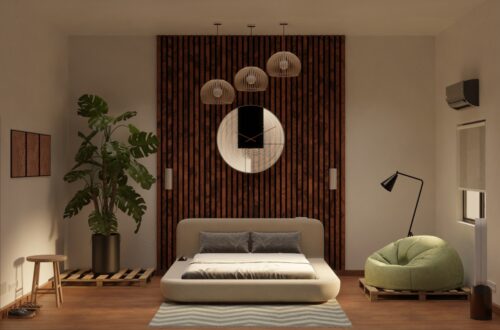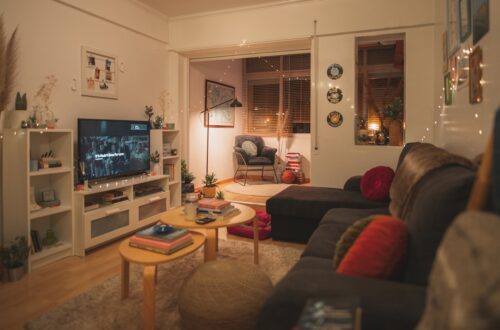
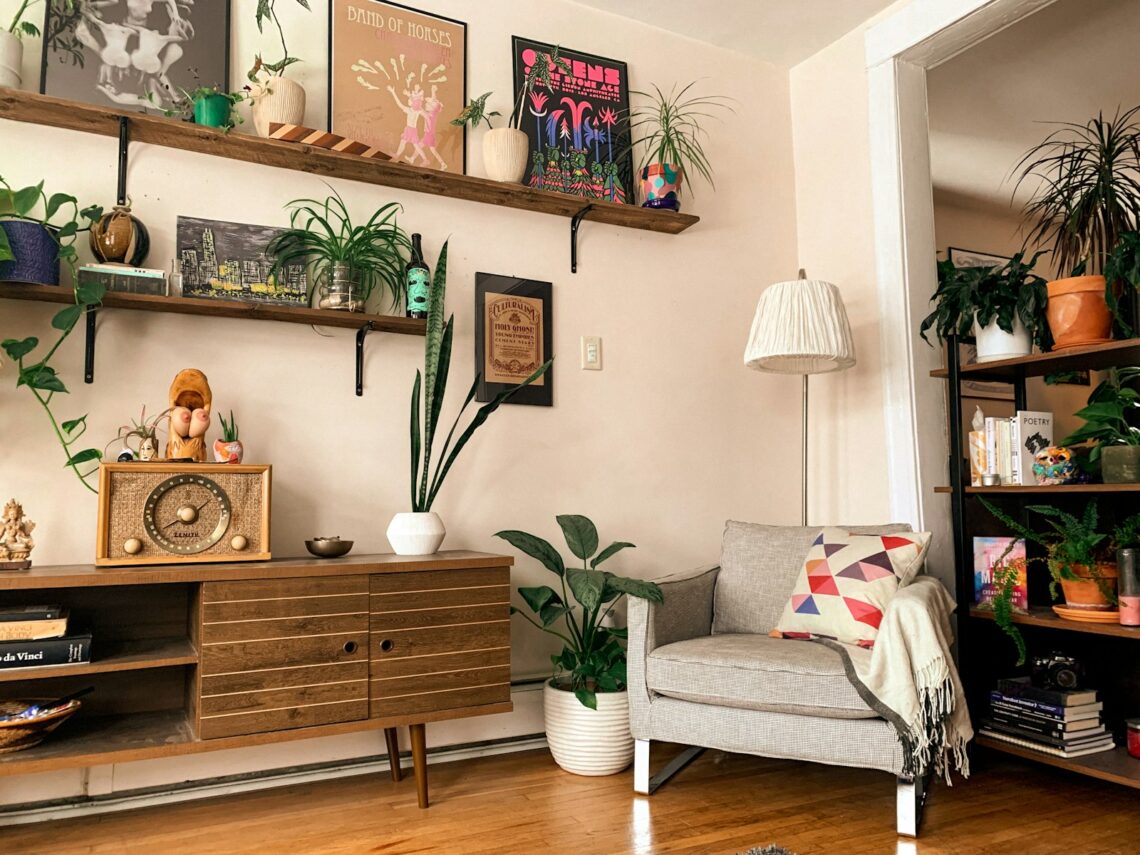

Basement apartments get a bad reputation. Dark, cold, cave-like. But renters who know what they are doing turn these below-grade spaces into some of the coziest, most personality-packed apartments around. This guide covers 15 specific, renter-friendly basement apartment makeover ideas that address the real challenges: low light, limited airflow, and the psychological weight of living underground. No landlord permission required for most of these.
Why a Basement Apartment Makeover Requires a Different Playbook
Basement apartments present challenges that standard decorating advice does not address. A tip like “let in more natural light” falls flat when your windows sit at ground level and face a concrete wall. The tricks that work in a sun-drenched loft actively backfire below grade.
The good news: once you accept the constraints, working around them becomes a creative puzzle with surprisingly affordable solutions. The renters who thrive in basement apartments stop trying to pretend they live somewhere else and instead lean into what makes these spaces unique.
- Below-grade spaces stay cooler in summer, which cuts utility bills significantly
- Thick concrete walls mean better sound insulation from street noise
- Lower rents in most cities give you more budget for makeover upgrades
- The “cozy cave” aesthetic is genuinely on trend for a reason
Approach your basement apartment makeover as a design challenge with a clear budget and a specific list of problems to solve. That framing changes everything.
How to Brighten a Small Basement Apartment With Natural Light

Your basement apartment’s natural light situation is probably not as hopeless as it feels. It just requires intentional management rather than passive hope.
Start by making the most of every window you have. Window wells outside basement windows can be lined with reflective material or white gravel to bounce more light inside. Keep window sills completely clear of anything that blocks the limited light coming through. Replace heavy curtains with sheer white panels that diffuse whatever light enters without cutting it off entirely.
- Clean windows thoroughly inside and out (grime blocks 20 to 30 percent of light)
- Line window wells with white stones or reflective film to amplify light reflection
- Install sheer linen or voile curtains in white or off-white
- Remove window sill clutter completely and replace with a small mirror angled toward the room
- Consider solar shades that maintain privacy while allowing diffused light through
If you have even one window that gets direct sun for a few hours, position your most-used seating area near it. Natural light exposure matters for mood, and optimizing your daily exposure to what you have makes a real difference over weeks and months.
Layer Your Lighting to Replace What Sunlight Cannot Provide

Layered lighting is the single most impactful upgrade you can make in a basement apartment. One overhead bulb creates flat, institutional light that makes any space feel like a storage room. Multiple light sources at different heights create warmth and dimension.
The formula: ambient light (overhead or floor lamps for general brightness), task light (desk or reading lamps for specific activities), and accent light (string lights, LED strips, or table lamps for atmosphere). You need all three.
- Use bulbs with a color temperature of 2700K to 3000K for warm, incandescent-style glow
- Place a tall floor lamp in every corner that lacks overhead coverage
- Add string lights along shelving or window frames for ambient glow without overhead fixtures
- Use plug-in wall sconces to get light at mid-wall height without hardwiring
- LED strip lights behind furniture (under a sofa or bed frame) add subtle uplighting
A good rule of thumb: aim for at least four separate light sources in your main living area. Related reading: 15 Cozy Arc Floor Lamp Ideas for Small Apartments and 15 Plug-In Pendant Lights for Renters for no-installation options that work perfectly in rental units.
Choose Paint Colors That Reflect Light and Feel Airy

Paint is the highest-ROI upgrade in any rental makeover, and in a basement apartment it matters more than anywhere else. The right colors can visually lift ceilings, push walls back, and make natural light feel twice as strong. The wrong colors trap what little light you have.
Go with light, warm neutrals rather than stark white. True white reads cold and institutional under artificial light. Warm whites, creams, soft greiges (gray-beige blends), and very light sage greens reflect light while adding personality.
- Benjamin Moore White Dove (OC-17): classic warm white that flatters artificial light
- Sherwin-Williams Accessible Beige (SW 7036): a reliable warm greige that works in any light
- Benjamin Moore Simply White (OC-17): slightly warmer than pure white for basement walls
- Farrow and Ball Elephant’s Breath: a sophisticated warm gray-green for renters who want character
- Any light sage: adds organic warmth without making a dim space feel darker
Always check with your landlord before painting, but most landlords allow it as long as you restore the walls before moving out. Budget around $80 to $120 for a full apartment’s worth of quality paint and supplies.
Use Mirrors Strategically to Double Your Perceived Space

Mirrors do two things that matter enormously in a basement apartment: they reflect light and they create the illusion of depth. A large mirror on a wall opposite a window can effectively double the amount of perceived light in a room by bouncing it back across the space.
The placement matters as much as the size. Position mirrors so they reflect a light source (a window, a lamp, or a bright wall), not a dark corner or a pile of clutter. A mirror that reflects the wrong thing makes a small space feel smaller.
- Place a large floor mirror opposite or adjacent to your best window
- Use a gallery cluster of smaller mirrors instead of one mirror if wall anchoring is limited
- Lean an oversized mirror against the wall to avoid drilling (landlord-friendly)
- Mirrored furniture like nightstands or console tables add reflectivity without taking wall space
- Avoid mirrored ceiling tiles, which look dated and landlords rarely approve
A full-length mirror in a dark hallway or entryway is one of the cheapest high-impact upgrades available. IKEA’s Hovet mirror (about $150) or Nissedal (about $70) both lean against walls without wall damage and read as intentional design choices.
Bring in Plants to Counter the Underground Feel

Plants address something that paint and lighting cannot: the psychological sense of being cut off from nature. Basement apartments can feel sealed from the outside world. A collection of thriving plants directly counters that feeling, making a space feel alive and connected to something growing.
Low-light plants are the practical choice here. Pothos, snake plants, ZZ plants, and heartleaf philodendrons survive with minimal natural light and bounce back from irregular watering. These are not compromise picks; they are genuinely beautiful plants that thrive in exactly the conditions basement apartments provide.
- Pothos: impossible to kill, trails beautifully from shelves or hanging planters
- Snake plant (Dracaena trifasciata): dramatic upright form, tolerates neglect completely
- ZZ plant: glossy dark leaves that look expensive on zero natural light
- Peace lily: the only plant on this list that blooms in low light
- Cast iron plant: literally named for its toughness, thrives in dim conditions
If you want to grow plants that need more light, a grow light makes it possible. See our guide to the 15 Low-Light Indoor Plants for Small Apartment Renters for a full breakdown of what works below grade.
Choose Furniture That Works With Low Ceilings and Compact Square Footage

Furniture selection in a basement apartment comes down to two principles: low profile and multi-function. Tall furniture makes low ceilings feel oppressive. Furniture that does only one job wastes space you cannot afford to lose.
Low-profile sofas, platform beds, and furniture with short legs keep the eye line low and give the ceiling more visual breathing room. The IKEA Kivik sofa, the West Elm Haven sofa, and most Japanese-style platform beds sit low enough to work well in basement spaces.
- Platform bed: eliminates the need for a box spring, sits lower, frees up under-bed storage
- Storage ottoman: replaces a coffee table while adding hidden storage for throws and remotes
- Murphy bed or wall bed: in studio basements, a fold-up bed reclaims the entire living area during the day
- Narrow console table: works as a desk, entry table, and display shelf without taking floor space
- Sofa with built-in storage: models like IKEA Friheten provide a bed and storage in one piece
Avoid furniture that sits on tall legs (it looks awkward against low ceilings), anything bulky that anchors the center of the room, and anything with a solid bottom that blocks airflow under it. Airflow matters more in basements than in upper-floor apartments.
Layer Rugs and Textiles to Build Warmth From the Ground Up

Basement apartments often have concrete subfloors beneath thin carpeting or basic vinyl. They also run cold. Rugs solve both problems at once: they add insulation, soften hard surfaces, and provide the warmest-looking visual layer in any room.
Layering rugs is a particularly effective technique for basement apartments. A large neutral base rug (think jute or sisal) topped with a smaller printed or textured rug creates depth and visual interest while maximizing coverage. This approach also lets you customize the look without replacing the whole rug when your taste changes.
- Use rugs to define zones in open-plan basement apartments (living area, dining nook, workspace)
- Opt for warm-toned colors like terracotta, rust, ochre, and warm gray rather than cool blues
- Layer a sheepskin or faux fur throw rug over a flat-woven base rug for texture contrast
- Add throw pillows in velvet, bouclé, or chunky knit fabrics to seating surfaces
- Hang a large textile (tapestry, woven wall hanging, or macrame) to warm up concrete or bare walls
Wayfair, IKEA, and Target all sell large area rugs in the $80 to $200 range that hold up well in a rental context. Ruggable makes machine-washable rugs in great patterns for around $150 to $250 for an 8×10 size, which is worth it in a high-traffic apartment.
Small Basement Apartment Storage Ideas That Actually Work

Storage is a consistent pain point in basement apartments because these units are often carved out of spaces not originally designed for living. Closets are undersized, layouts are awkward, and the square footage that exists has to work twice as hard.
Vertical storage is the primary tool. In a basement apartment where horizontal space is limited, walls are underused real estate. Floating shelves, pegboards, and wall-mounted storage systems move clutter off surfaces and into vertical space that would otherwise be wasted.
- Install floating shelves above doorways and windows for extra display and storage surface
- Use an IKEA Kallax unit as a room divider in open-plan spaces while doubling as storage
- Add over-door organizers to every door (closet, bathroom, pantry) to capture wasted space
- Use vacuum storage bags for seasonal items under the bed to reclaim prime floor storage
- Add a pegboard in the kitchen or entryway for hooks, shelves, and magnetic organizers
The most important storage rule in a basement apartment: everything needs a place, and that place needs to be out of view. Visual clutter makes a dark, compact space feel claustrophobic immediately. Invest in matching baskets, boxes, or bins that contain chaos while looking intentional on open shelves.
The Takeaway
The final layer of any basement apartment makeover is the finishing details. Frame and hang meaningful art at eye level. Use scented candles or a diffuser with woody, earthy notes like cedar, sandalwood, or eucalyptus to counter mustiness common in below-grade spaces. Install a smart bulb system such as Philips Hue or LIFX so you can shift from bright-functional to warm-ambient lighting with one tap. A basement apartment with intentional finishes feels completely different from one where someone moved furniture in and stopped.
A basement apartment makeover is not about disguising where you live. It is about understanding the specific constraints of below-grade living and addressing them with targeted solutions. Light, warmth, vertical storage, and intentional finishing touches transform a space that could feel like a penalty into one that genuinely feels chosen.
Start with the highest-impact changes: lighting and paint. Both are affordable, reversible (or restorable when you move), and make an immediate visible difference. Layer in rugs, plants, mirrors, and smart furniture choices over time as budget allows.
Basement apartments reward the renters who approach them with creativity instead of resentment. The result is usually a space with more character, better acoustics, and a lower rent than anything above ground in the same building.
Related reading: