15 Cozy Top-Floor Walkup Ideas for Small Apartment Renters
You signed the lease on a top-floor walkup and now you’re staring at four flights of stairs wondering what you got yourself into. Here’s the truth nobody says out loud: the top floor is the best floor in the building. No one stomping above your head at midnight, morning light that floods every room, and a view that costs nothing extra. This guide gives you 15 concrete ideas for making that walkup apartment work beautifully for you, from beating the summer heat to hauling groceries without losing your mind.

Why the Top Floor Is the Best Floor for Renters
Before diving into tactics, it helps to understand what you actually have. Top-floor renters get a set of advantages that lower-floor residents pay more for in taller buildings with elevators. Once you recognize them, you’ll stop apologizing for the stairs and start leaning into the perks.
- Tip 1: Own your quiet. You have zero upstairs neighbors. That is worth more than you think. No footsteps at 2 a.m., no dropped weights, no dragging furniture. The ceiling is yours and it is silent. If you’ve ever dealt with noisy upstairs neighbors, you know exactly how valuable this is.
- Tip 2: Claim your light. Top floors get unobstructed sun from multiple angles throughout the day. South-facing windows in particular flood a space from sunrise to sunset. This isn’t just pretty; it’s free warmth in winter and a genuine mood booster year-round.
- Tip 3: Enjoy the reduced street noise. Foot traffic, car doors, and sidewalk conversations fade fast above the second floor. By the fourth or fifth story, you’re living in a noticeably quieter world without paying for a doorman building.

Maximize Your Views With the Right Window Treatment
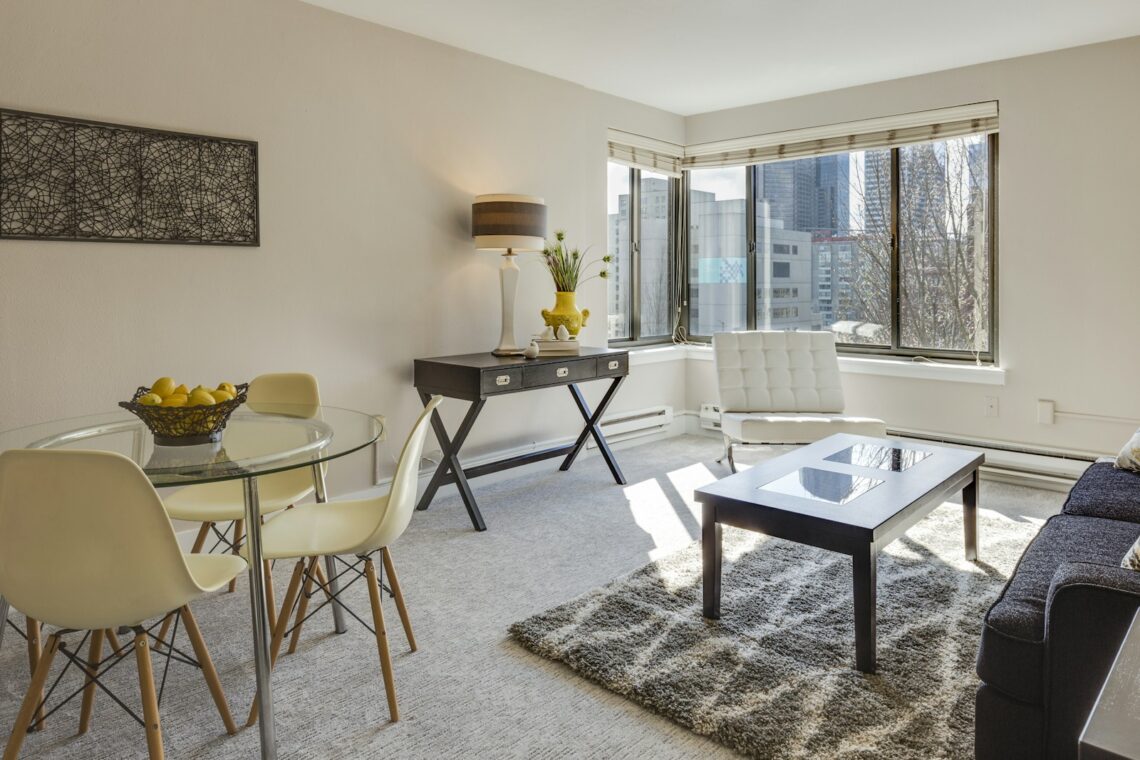
The biggest mistake top-floor renters make is blocking their view with heavy curtains. You earned that skyline. The goal is to control light without giving up your outlook.
- Tip 4: Go sheer for daytime, blackout for sleep. Layer sheer curtains during the day to diffuse harsh midday glare while keeping the view intact. Add a blackout liner or a separate blackout panel for your bedroom window at night. IKEA’s LILL sheers ($9 a pair) and the MAJGULL blackout curtains ($30) are a budget-friendly duo that works well in city apartments.
- Tip 5: Mount curtain rods at ceiling height. Install your rod as close to the ceiling as possible and let curtains pool slightly on the floor. This makes ceilings look taller, windows look larger, and the view feel like a proper feature rather than an afterthought. Even in rentals, most landlords allow small curtain rod holes filled with spackle on move-out.
- Tip 6: Use a tension rod + clip-on sheers for no-damage setups. If your lease prohibits any holes, tension rods in window frames hold clip-on sheer panels for daytime privacy without drilling a single hole. It takes under five minutes per window.

Beat the Heat: Staying Cool on the Top Floor in Summer
Heat rises. If you are on the fourth or fifth floor without central air, late July is a real challenge. The good news is that a few targeted purchases under $150 total solve most of it.
- Tip 7: Set up a cross-ventilation system with two box fans. Place one fan facing inward in the coolest window (usually north or east-facing in morning) and one fan facing outward in the warmest window. The outward fan pulls hot air out while the inward fan draws cooler air in. Do this after 9 p.m. when outdoor temps drop and your apartment cools down in roughly 20-30 minutes. A basic 20-inch box fan runs $25-35 at Target or Home Depot.
- Tip 8: Use thermal or blackout curtains on west-facing windows. West-facing windows take the full brunt of afternoon sun from 2-7 p.m. in summer. A single layer of blackout curtain reduces heat gain by up to 33 percent, according to the Department of Energy. Close them at noon and your bedroom temperature drops noticeably by evening.
- Tip 9: Get a portable AC unit for the bedroom only. You don’t need to cool the whole apartment. A portable unit (around $350-450 for a 12,000 BTU model) in the bedroom gives you one genuinely cool room. Sleep in comfort and deal with the rest of the apartment in the morning when it’s cooler.

Smart Storage That Reduces the Number of Stair Trips
Every trip up and down stairs with extra stuff costs you time and energy. The solution isn’t fewer possessions; it’s smarter placement. The goal is to keep everything you use daily on your floor and minimize the need to haul things up or down.
- Tip 10: Build upward with vertical shelving. Floor-to-ceiling shelves let you store more without using more floor space. IKEA Billy bookcases ($60-80) extend with add-on units all the way to a standard 8-foot ceiling. Use the upper shelves for things you access monthly: seasonal decor, extra linens, rarely used appliances. This keeps your floor clear and your daily items accessible at eye level.
- Tip 11: Use a rolling cart as a kitchen island and storage unit. A kitchen cart on wheels ($45-90 at IKEA or Amazon) does triple duty in a small walkup kitchen: it adds counter space, stores pantry staples, and rolls out of the way when you need floor room. More storage on-floor means fewer trips to a separate storage unit downstairs.

Your Bedroom at the Top: Turning the View Into a Feature
A top-floor bedroom has one thing no ground-floor unit can offer: sky. Whether you’re looking at rooftops, treetops, or a proper city skyline, your view deserves a layout that puts it front and center.
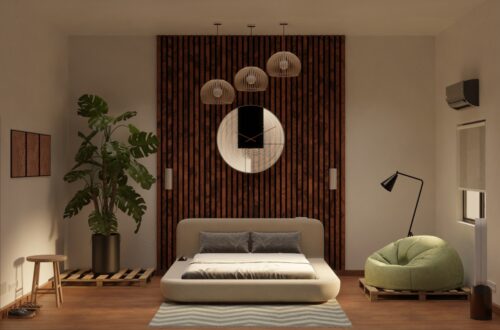
- Tip 12: Position your bed to face the window. When possible, orient your bed so you wake up looking out rather than at a wall. In a small bedroom, this sometimes means placing the headboard on the wall perpendicular to the window instead of against it. The first thing you see in the morning should be your view, not your closet door.
- If your bedroom is small enough that a full platform bed feels cramped, consider a low-profile bed frame (under 14 inches) or a floor futon setup. Lower beds make small rooms feel larger and let you use the wall above for storage shelving without the shelf feeling oppressive over your head.
- Built-in drawer storage under the bed replaces a separate dresser entirely. A platform bed with 4-6 drawers gives you roughly the same storage as a 6-drawer dresser while using zero additional floor space.

Work From Home at the Top: The Best Natural Light in the Building
If you work from home even part of the week, a top-floor apartment is a genuine competitive advantage. The light is better, the noise is lower, and you can set up a real desk situation without a separate home office.
Put your desk directly beside your best window. Ideally, the window should be to your side (not behind your monitor screen) so you don’t get glare on your display. A north-facing window gives consistent, diffused daylight all day with no harsh sun. An east-facing window gives you great morning light and relatively cool afternoons.
A simple folding shelf mounted at window height doubles as a standing desk option during calls. At $20-30, a basic wall-mounted shelf from IKEA (LACK or EKBY) handles a laptop, a glass of water, and not much else, but that’s all you need for a standing break from your main desk setup.

Grocery Haul Hacks for Top-Floor Renters
Carrying groceries up four flights is the single most complained-about part of walkup life, and rightfully so. A few changes to your shopping and hauling habits make a noticeable difference within the first week.
First, invest in a proper grocery tote bag with a wide, padded shoulder strap. Over-the-shoulder bags let you take two heavy bags per arm (one handle-carry, one shoulder-sling) without your hands cramping. Baggu’s standard bags ($12 each) hold 50 pounds and compress to a pocket-sized pouch. Keep two or three of them by your door.
Second, shop smaller and more often rather than doing one massive weekly haul. A daily or every-other-day stop for fresh produce and proteins means lighter bags each trip. Use grocery delivery (Instacart, Amazon Fresh) for the truly heavy items: water cases, bulk toilet paper, 12-packs. The delivery fee is worth it for anything over 10 pounds that you’d otherwise dread hauling upstairs.
Third, get a two-wheel folding hand truck for move-in, move-out, and any large deliveries. A basic aluminum folding dolly ($25-35 at Home Depot) stores under a bed or in a closet and handles boxes, laundry bags, and large grocery runs that would require multiple trips otherwise.

Make Moving In and Out Less Painful
Moving into a walkup is the one day you’ll genuinely wish you had an elevator. But it’s one day, and there are ways to make it much less miserable.
Hire movers who specifically advertise walkup experience. Ask how they charge for it; some companies add a per-floor fee, others don’t. Get at least three quotes and mention the floor count in your first message. Expect to pay $50-100 more for a top-floor walkup versus a ground-floor move of the same size.
Deconstruct furniture before move day whenever possible. A bookcase that takes 45 seconds to pull apart saves 10 minutes of stairwell wrestling. Box spring mattresses in particular are brutal on stairs; if you’re buying new, choose a bed with a platform base and a foam or hybrid mattress that can be compressed and carried in a bag (Purple, Casper, and Tuft and Needle all ship compressed).
Move as light as you can. A walkup apartment is an excellent reason to be ruthless about what you own. Every item you bring in is something you’ll eventually carry back out. Apply the same logic to furniture: buy things that serve two or more functions and take up minimal floor space. For a deep dive into fitting everything into a smaller budget, check out our guide on setting up a first apartment under $1000.

Cozy Decor Touches That Honor Your Altitude
The best top-floor apartments feel intentional. They don’t fight their height; they celebrate it. A few specific decor choices reinforce the feeling that being up here is a choice, not a compromise.
Use plants at window height to frame the view rather than block it. A trailing pothos or a hoya on a macrame hanger beside the window adds life without filling the frame. Plants on windowsills are another layer, but keep them in low-profile planters so they don’t obstruct your sightlines. For a full guide to apartment plants that thrive in high-light conditions, see our roundup on beginner-friendly indoor plants for renters.
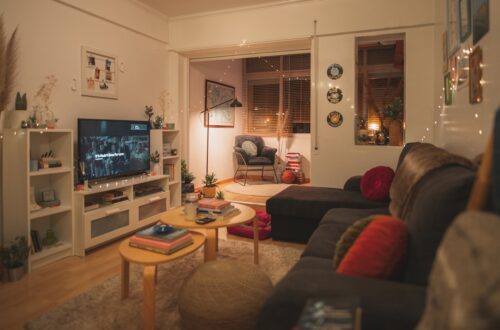
Layer your lighting in the bedroom and living room so you’re not dependent on overhead fixtures after dark. A combination of table lamps, floor lamps, and string lights keeps the atmosphere warm and flexible. Floor lamps with adjustable arms near reading chairs are especially good in walkup apartments where you want a cozy corner that doesn’t require ceiling fixtures. Our guide on arc floor lamp ideas for small apartments covers exactly this setup.
Keep your color palette light and warm. Off-white walls (usually what you have in a rental anyway), warm wood tones for furniture, and textiles in oatmeal, terracotta, or dusty sage all work with the natural light you get at altitude. Don’t fight your light with dark paint; let the walls reflect what the windows bring in.
The Takeaway
A top-floor walkup apartment is one of the best deals in urban renting when you know how to live in one. You get silence above your head, unblocked light, city views, and reduced street noise, all without the elevator premium. The stairs are the price of admission, and with the right grocery habits, moving strategy, and a small investment in fans and curtains, the cost is much lower than it looks from the lobby.
Start with the views: let the light in, frame the windows, and orient your furniture to face what you’re paying to live near. Add storage that goes vertical and keeps heavy items accessible. Cool the bedroom first in summer and the rest of the apartment follows. Do all of this and your walkup stops feeling like a compromise and starts feeling like the best apartment in the building, because it is.
Related Reading