Murphy beds run $800 to $3,000 installed and require drilling into structural walls that most landlords will not allow. If you rent a studio and need to separate sleeping from living without a multi-thousand-dollar built-in, you have far more options than you think. These studio apartment ideas without a murphy bed rely on curtains, furniture placement, shelving, and a few clever frames that give your sleeping area a room of its own. Every solution here is renter-friendly and reversible.

1. Hang Floor-to-Ceiling Curtains Around Your Sleeping Zone
This is the single cheapest move you can make in a studio, and it is the one most renters sleep on. A tension rod and a pair of floor-length linen or velvet curtains costs $30 to $80 and takes one afternoon to install with no drilling required. Run the rod from wall to wall, or from a closet doorframe to a shelving unit, to create a clear visual boundary between your bed and your living space.
When the curtains are open, your studio feels cohesive and airy. When they are closed, your sleeping area becomes genuinely private. A few upgrades that make the setup feel more finished:
- Use blackout fabric on the bedroom-facing side to block light at night
- Layer a sheer panel on the outer side so the divider looks intentional from the sofa
- Choose ceiling-height panels even if the rod sits lower; the extra fabric pools slightly and reads as designer, not budget
- Add a second rod on the parallel wall to enclose the sleeping area on two sides for full privacy
IKEA’s SANELA velvet curtains at $40 for two panels are a widely used starting point. For 15 full configurations including couples setups and narrow studios, the guide to studio apartment curtain divider ideas for couples and renters covers everything from single-panel dividers to ceiling-track systems under $100.

2. Let a Sofa Bed or Daybed Pull Double Duty
A quality sofa bed or a proper daybed frame is the closest thing to a murphy bed without the wall anchoring. The key is choosing a frame that looks like living room furniture during the day, not a pullout from a college dorm. Treat it like a real sofa: add a fitted slipcover in neutral linen, stack throw pillows three to four deep at the back, and drape a folded blanket across the arm.
Options that consistently earn good reviews for both comfort and looks:
- IKEA Friheten ($599): Converts from sofa to bed in 30 seconds and includes under-seat storage for bedding and pillows
- DHP Emily Daybed ($250): Traditional daybed frame that reads as a chaise or bench when loaded with cushions and a bolster
- Burrow Range Sleeper ($1,200): A modular sofa with a pull-out mechanism that does not require removing cushions to access the mattress
- IKEA Lycksele ($350): A two-seater that folds flat to a full-size sleeping surface, compact enough for a 200-square-foot studio
The one thing most renters get wrong with daybed setups is the mattress quality. A 4-inch sofa bed mattress will ruin your sleep within a week. Budget another $80 to $150 for a memory foam topper and you will actually use it every night.

3. Build a Low Platform Bed With Built-In Storage
If your studio has a defined sleeping corner and you are not planning to move in the next year, a low platform bed with built-in drawers turns your mattress into a storage engine. The low profile, typically 6 to 10 inches off the floor, keeps the visual weight down so the sleeping area does not feel like a wall cutting through the room.
Key specs to look for when shopping platform storage beds:
- Four to six drawers on the sides for clothing, bedding, and seasonal items
- Slatted platform to allow the mattress to breathe without a box spring
- A minimalist headboard or no headboard at all, with two wall-mounted sconces replacing bedside lamps
- Muted finish in walnut, oak, or white to keep the visual footprint small
Combine the platform bed with floating shelves above it to get vertical storage without a bulky wardrobe eating square footage. The guide to small bedroom ideas under $200 has specific product picks and a layout walkthrough that works in studios as small as 250 square feet, including platform bed recommendations at three different price points.

4. Use a Bookshelf Wall to Divide Your Studio Apartment
A floor-to-ceiling or standard-height bookshelf placed perpendicular to a wall creates a soft boundary between your sleeping zone and your living area without blocking light or making the studio feel closed off. It also adds serious storage, which a curtain cannot do.
The IKEA Kallax 4×4 at $200 is the most-used option because it is modular and can be oriented vertically or horizontally. Standing 57 inches tall, it blocks sightlines when you are lying in bed while still letting natural light move through the room above it. Styling tips that make it feel like a design choice rather than a divider:
- Use solid-backed cube inserts on the sleeping side for privacy, open cubes on the living side for books and decor
- Anchor it to the wall through the back panel using a furniture strap so it cannot tip
- Add a fabric panel or hanging plant across the top half to visually extend the height
- Style only the top two rows of cubes; leave the bottom rows as closed storage for a cleaner look
The bookshelf method works especially well when paired with a curtain on the remaining open side of the sleeping area. For a full walkthrough of this approach across 12 different studio layouts, see the complete guide to bookshelf room divider ideas for studio apartments.

5. Claim a Corner for a Cozy Bed Nook
Tucking a bed into a corner and treating that corner as a distinct zone is one of the oldest studio apartment moves, and it still works in 2024. The goal is to make the corner feel like an intentional room rather than a mattress pushed against a wall. Three things reliably elevate a corner bed into a nook:
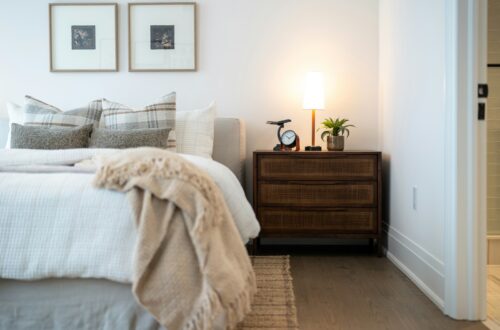
- Wall art close above the pillow end: A gallery cluster or a single large print hung 8 to 10 inches above the headboard anchors the visual space and signals “this is the bedroom side”
- Wall-mounted sconces on both sides: No nightstands needed, which saves 24 to 30 inches of floor space along each wall
- A small area rug that stops at the foot of the bed: The rug edge becomes a visual threshold between sleeping and living zones, costing nothing structural
Two L-shaped tension rods and two curtain panels can enclose the corner on both open sides when you want full privacy at night. Swing them open during the day and the corner reads as a reading nook or lounge area, especially if you layer a throw and a stack of books on the bed.

6. Loft Beds for Small Studio Apartments
Loft beds are the most space-aggressive option on this list, but also the most effective if your studio has 9-foot or higher ceilings. A standard loft bed puts the mattress at 5 to 6 feet off the floor, leaving enough clearance underneath for a sofa, a desk and chair, or a small wardrobe. You essentially create a second floor in a single-story apartment.
Budget options start at $350 for basic metal frames available on Amazon or secondhand marketplaces. Mid-range metal loft frames like the Zinus Joseph or the Max and Lily Low Loft cost $400 to $600 and carry adult weight ratings up to 250 to 300 pounds. Custom loft beds with integrated desks, shelving, and a closet rod below run $1,000 and above, but they essentially give you a private bedroom within the studio footprint.
Before buying, confirm these measurements:
- Ceiling height minus loft frame height minus mattress height (usually 10 to 12 inches) must leave at least 36 inches of clearance to sit up in bed
- Most rental studios have 8-foot ceilings, which limits loft options to lower-profile frames sitting 4 to 5 feet off the ground
- The floor area under the loft must match what you plan to put there; a full sofa needs at least 7 feet of clearance length

7. Roll Out a Trundle or Pull-Out Bed
A trundle is a second mattress on casters that stores flat under a main bed frame or a sofa bench. During the day it is completely out of sight. At night you pull it out in under 30 seconds and it becomes a proper sleep surface. This is the most compact bed-hiding solution for studios where the sleeping area needs to disappear completely during daylight hours.
The main limitation of trundles is size. Most trundles max out at a full mattress, which works for solo sleepers but is tight for two adults. Options worth considering:
- IKEA Utaker ($249): A stacking twin bed set that splits into two floor beds, useful for studios that need a guest setup
- Platform bench with pull-out trundle ($300 to $500): Sits at sofa height during the day, rolls out to twin sleeping surface at night; add throw pillows to make it read as a bench seat
- Sofa with pull-out mechanism ($350 and up): Larger than a trundle but fully concealed; most pull-out sofas convert to a full or queen mattress surface
Trundles pair best with a sofa bench setup against one wall so the daytime look is clean and the nighttime transition takes under a minute.

8. Use a Canopy Frame to Zone the Sleeping Area
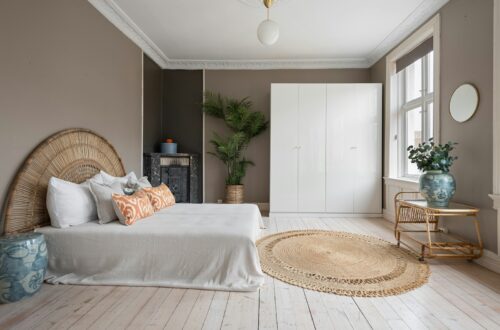
A canopy or four-poster frame creates visual separation without any physical wall. When you hang sheer white or linen fabric from a canopy frame over the bed, the sleeping area becomes a soft room-within-a-room. It signals “this is the bedroom” without closing off light or airflow.
The cheapest approach uses a simple wooden or metal four-poster frame at $150 to $400 and adds a single piece of white sheer fabric at $15 from any fabric store, draped across the top and left to fall loosely on two sides. The fabric does not need precise hemming or tailoring. Organic draping reads as intentional and adds warmth without visual weight.
Upgrades that add function to the look:
- String lights woven through the top fabric frame for warm nighttime ambiance
- A set of side panels on the two exposed sides, secured to the frame posts with curtain rings, for full nighttime privacy
- A hanging plant or macrame piece at the canopy corner to connect the sleeping zone to the rest of the apartment’s aesthetic
The canopy method works especially well in studios where the sleeping area sits against a far wall and needs to feel distinct from the sofa zone. It requires no wall anchoring, no tools, and takes under an hour to set up.

9. Try a Wall-Mounted Fold-Down Bed Frame
A wall-mounted fold-down bed frame is not the same thing as a murphy bed. Murphy beds are cabinet-concealed systems that hide the mattress inside a full wardrobe unit; they cost $800 to $3,000 and require a structural wall or a professional installer. Wall-mounted fold-down frames like the Bestar Fold-Out or the Prepac Heavy Duty cost $300 to $600 and mount to standard drywall with a basic anchor kit that most renters can install in two hours.
The mattress folds up flat against the wall and is held in place with a strap during the day, revealing the wall and floor below it for a sofa, a desk, or a console table. When folded up, most systems show a fabric-covered back panel that reads as a simple wall feature. When folded down, it functions as a normal bed frame with slats.
Key differences from a true murphy bed to understand before buying:
- The mattress is exposed on the back face when folded up, not hidden behind cabinet doors
- Maximum mattress depth is usually 10 inches; a thick hybrid or pillow-top will not fold properly
- Most standard rental leases allow it as a furniture mount, not a structural modification, so removal at move-out is straightforward
- The daytime wall space freed up is typically 20 to 30 square feet, a significant gain in a 300-square-foot studio
If your landlord allows wall anchors for mirrors and shelves, they will almost certainly allow a fold-down bed frame on the same terms.
The Takeaway
The best bed-hiding solution for your studio depends on three practical variables: how often you move, how much natural light you need to preserve, and whether your landlord allows wall anchors. Start with curtains at $50 to $80 before committing to a loft frame or fold-down unit. Layer in a better long-term solution after you have lived in the space long enough to understand how you actually use it day to day.
If you are still deciding between going murphy or going without, the comparison article on cozy studio apartment setups with murphy beds lays out the cost and layout tradeoffs side by side.
One curtain rod and two panels can transform how a 300-square-foot studio feels to live in. That is a $40 experiment worth running this weekend before you spend $600 on a loft frame.