I moved into my 480-square-foot apartment with $500, a truck borrowed from a friend, and a list of every thrift store within 15 miles. Three weekends later, every room had real furniture, real art on the walls, and a look I actually loved. This is exactly how I did it, how much each piece cost, and what to skip so you don’t waste a single dollar on your small apartment furniture thrift store haul.
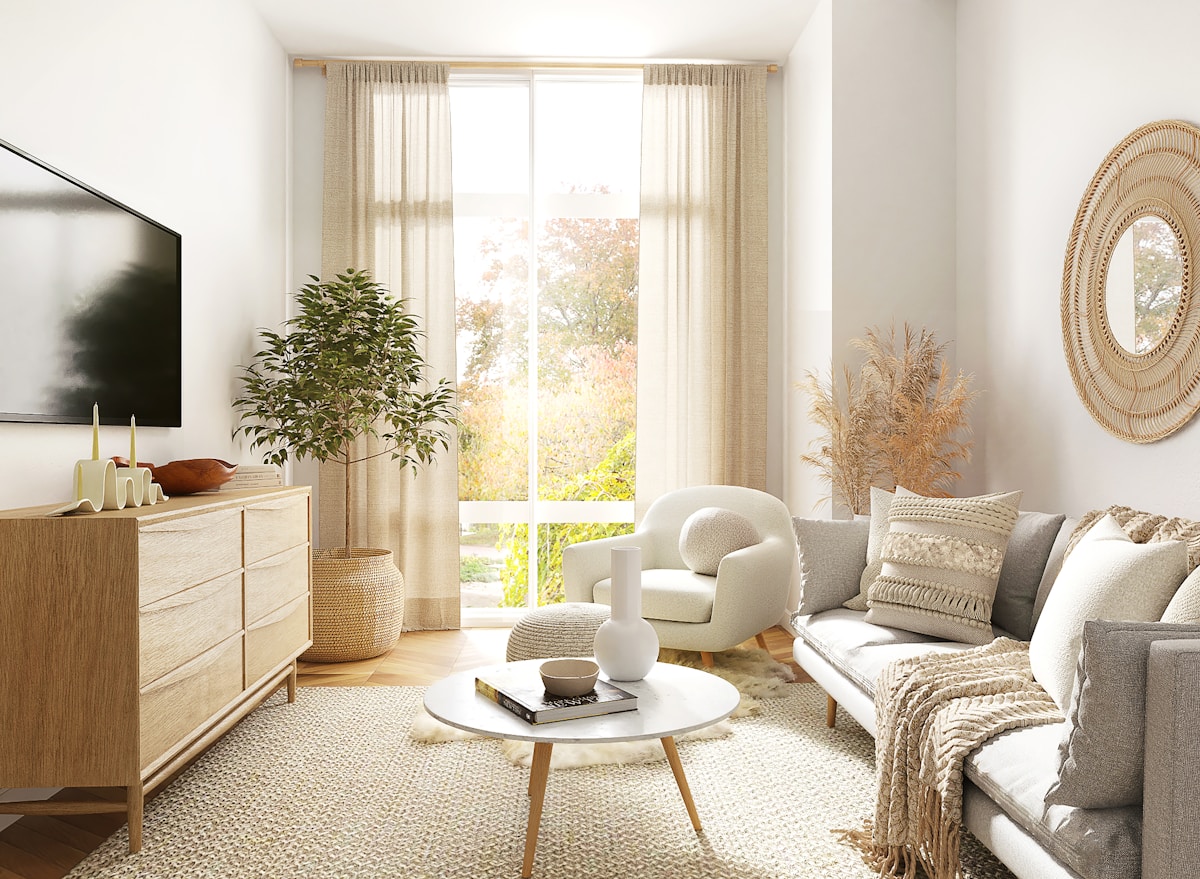
Why Thrift Stores Beat IKEA for Small Apartment Furniture
Budget furniture from big-box stores looks cheap at close range and falls apart within two years. Thrift store furniture, built in the 1970s through 1990s, used real wood, real joinery, and hardware that still works after decades. For a small apartment, solid construction matters even more: every piece has to earn its footprint.
Here is what you actually get for your money at thrift stores compared to flat-pack alternatives:
- Solid wood dressers: $20 to $60 at Goodwill vs. $150 to $250 for particle board at big-box stores
- Upholstered sofas: $40 to $120 vs. $300 to $600 for the same cushion count in new
- Bookshelves: $15 to $45 for real wood vs. $79+ for laminate veneer
- Coffee tables: $10 to $35 for solid wood vs. $80 to $200 new
- Lamps: $5 to $15 each vs. $30 to $80 at home decor chains
The math is not close. For $500, you can furnish an entire one-bedroom apartment at the thrift store. The same $500 at a budget retailer gets you maybe two pieces of furniture, and neither will last five years.
What to Look for Before You Go: The Thrift Store Checklist
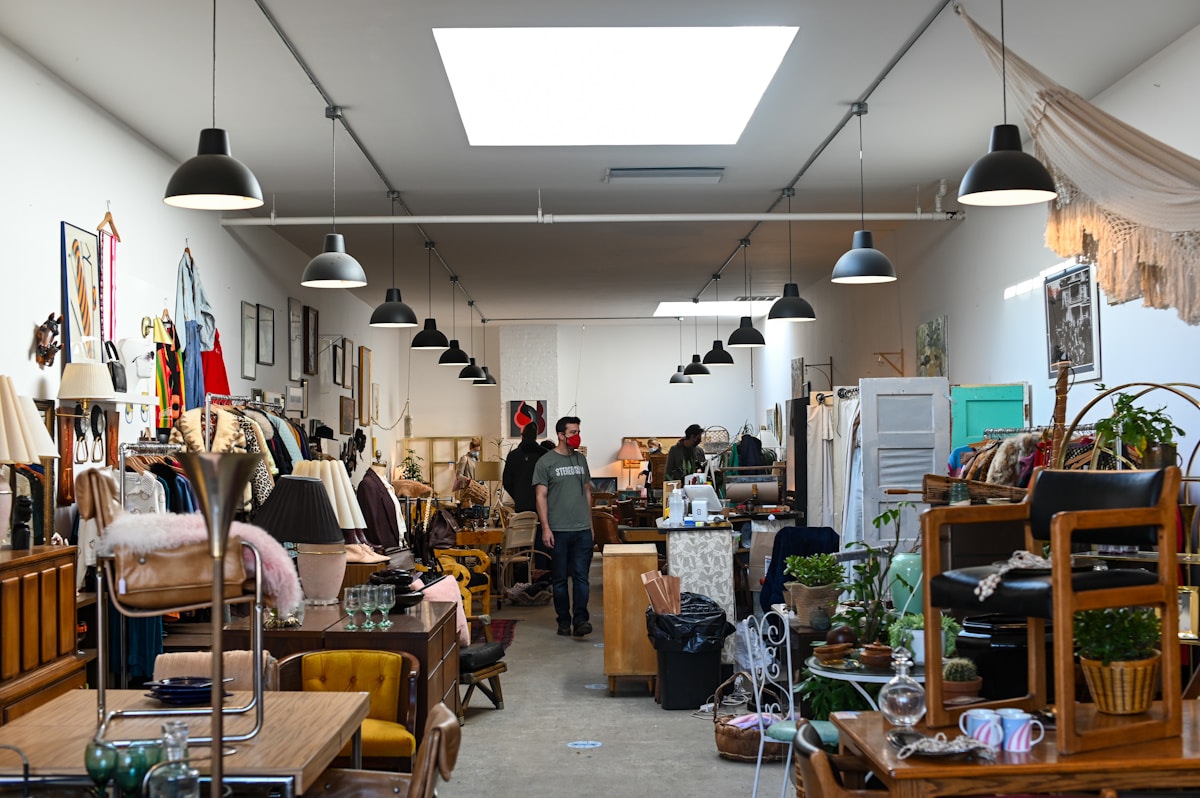
Walking into a thrift store without a plan means walking out with a lamp you didn’t need and no sofa. Measure your rooms before you go and write the numbers on your phone. Here is what to check before you buy any piece of furniture:
- Check joints: Grab a chair by the back and gently wobble it. Loose wobble means broken glue joints. Skip it unless you enjoy woodworking repairs.
- Open every drawer: Drawers should slide smoothly. Stuck drawers usually mean a warped carcass, not just humidity. Walk away.
- Smell upholstery: Press your face into a sofa cushion. A faint musty smell may air out; a strong chemical or animal smell usually doesn’t. Be honest with yourself.
- Look at legs: Furniture legs tell you how the piece was built. Solid turned wood legs on a dresser mean solid wood construction throughout. Stamped metal legs and pressed board body means the opposite.
- Check lamp cords: Frayed or cracked insulation is a fire hazard. The shade and base might be perfect but skip any lamp with damaged wiring unless you plan to rewire it.
Write your maximum price for each category before you enter. When you find a piece you love, negotiate. Most thrift store staff can knock 10 to 20 percent off, especially late in the week when weekend donation drives are coming.
The Living Room: $180 for the Whole Thing
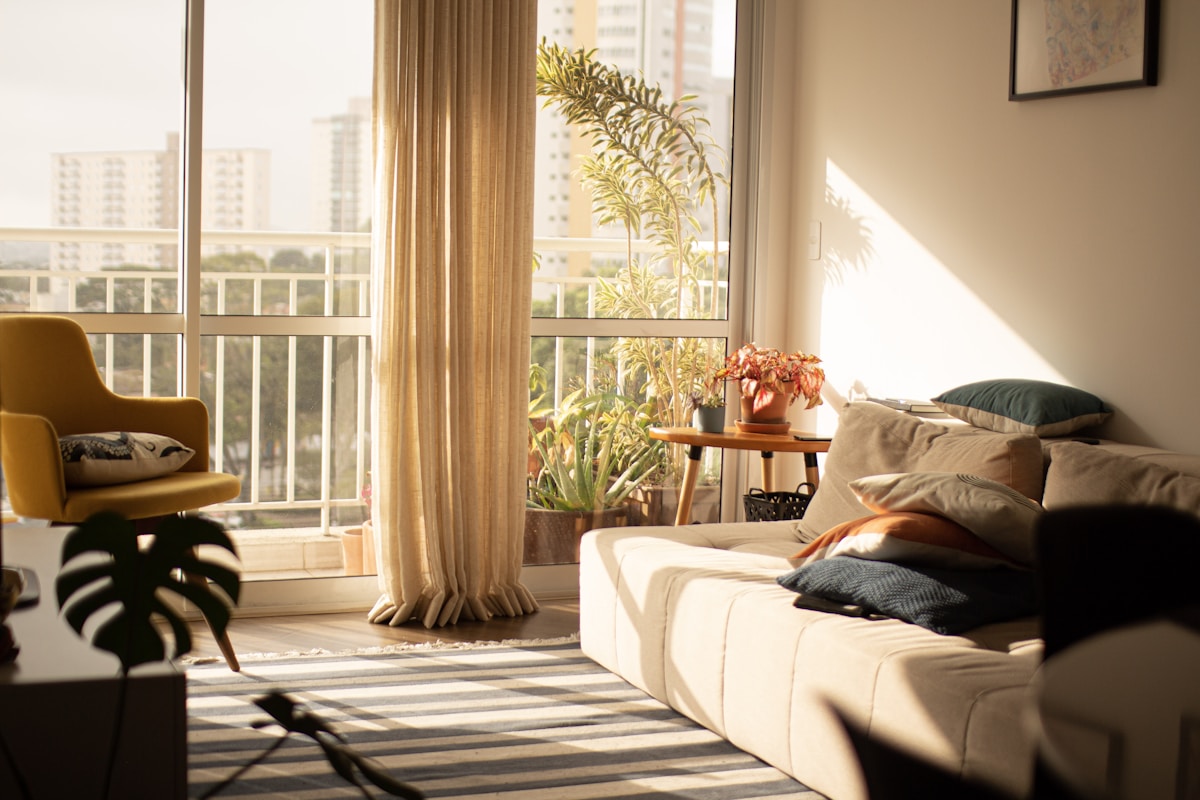
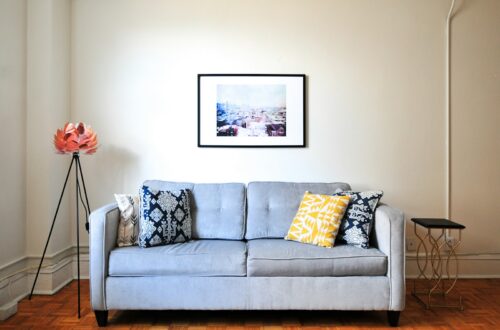
The sofa is the anchor of every small apartment living room, and it is also the single most expensive thrift store find. I spent $85 on a three-cushion linen-look sofa from a Goodwill outlet (where furniture sells by weight). It was clean, structurally solid, and exactly the shade of warm gray I needed.
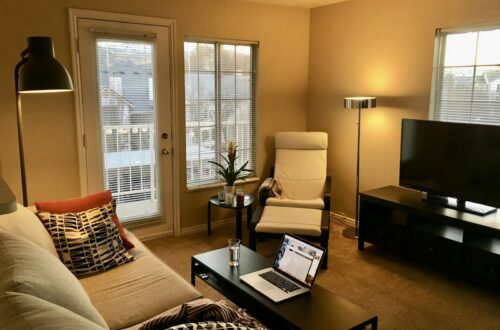
The full living room breakdown:
- Sofa: $85 (Goodwill outlet, sold by pound)
- Coffee table: $22 (solid oak, Facebook Marketplace pickup near a thrift cluster)
- Side table: $8 (thrift store, needed only a light sanding)
- Floor lamp: $12 (working bulb included)
- Throw blanket: $6
- Four throw pillows: $14 total (mix of vintage and modern)
- Two framed prints: $18 (frames only; I printed my own art at a copy shop for $3 more)
- Small rug: $15 (wool blend, no odor)
Total: $180. The room photographs beautifully, guests assume everything came from a boutique, and I can sit on the sofa without it groaning. For a related look on a tight renter budget, the boho approach works especially well, so see our guide to 21 boho small apartment decor ideas under $50 for specific product ideas that pair with thrifted anchor pieces.
The Bedroom: $95 and a Saturday Afternoon
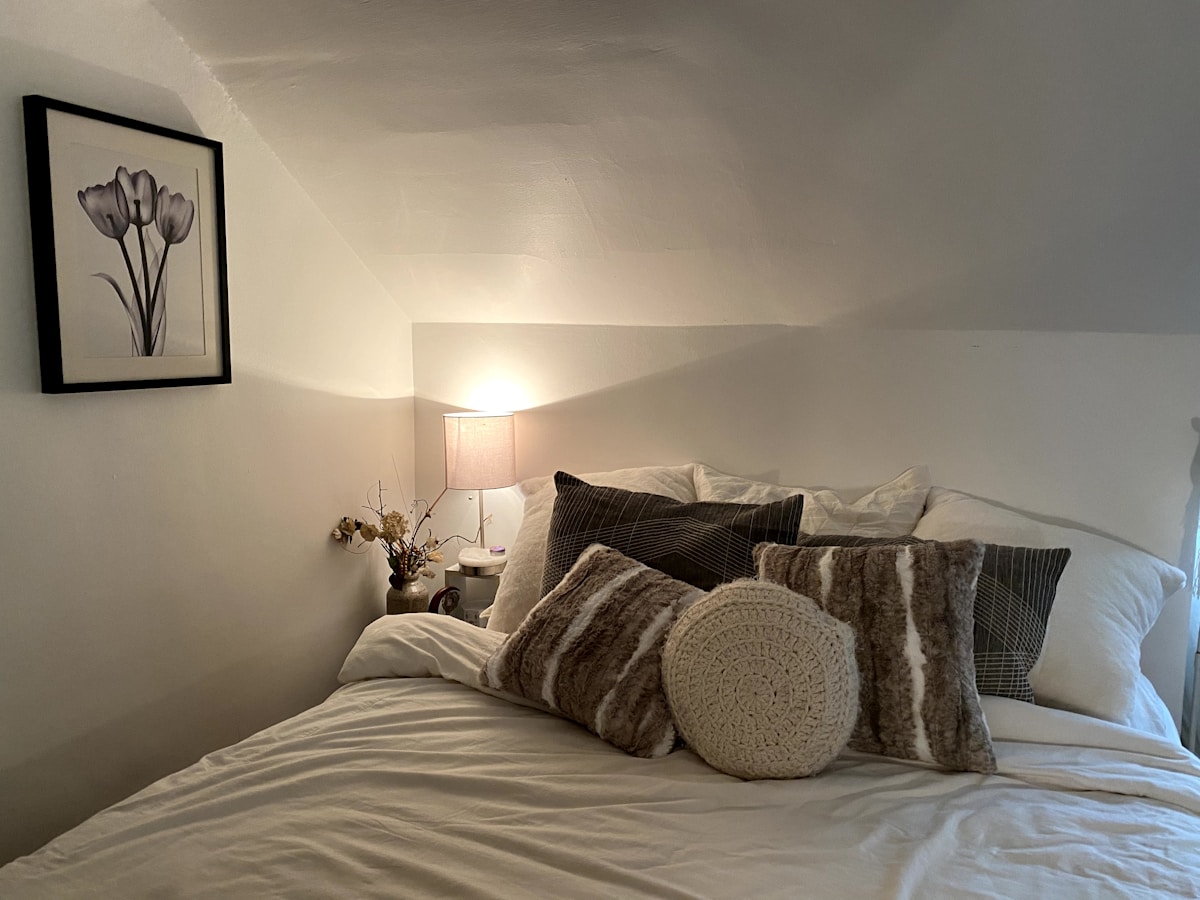
The bedroom is where thrift stores really shine. People upgrade beds constantly, which means the secondhand market is flooded with solid wood bed frames, real wood dressers, and nightstands in every style. I furnished my entire bedroom for $95.
- Full bed frame (solid maple): $40 (Facebook Marketplace, 10 minutes from a Goodwill cluster, so I combined both trips)
- Dresser (6-drawer, solid wood): $30 (Goodwill, needed only a wipe-down)
- Nightstand: $12
- Table lamp: $8 (perfect shade, working bulb)
- Mirror: $5 (leaned against wall, no hanging needed)
The biggest upgrade was painting the dresser. A $6 can of chalk paint from the craft store turned a scuffed brown dresser into a soft sage statement piece. Total bedroom cost including the paint: $101. I went $6 over my $95 target and have zero regrets.
The Bookshelf Moment: Storage That Also Looks Good
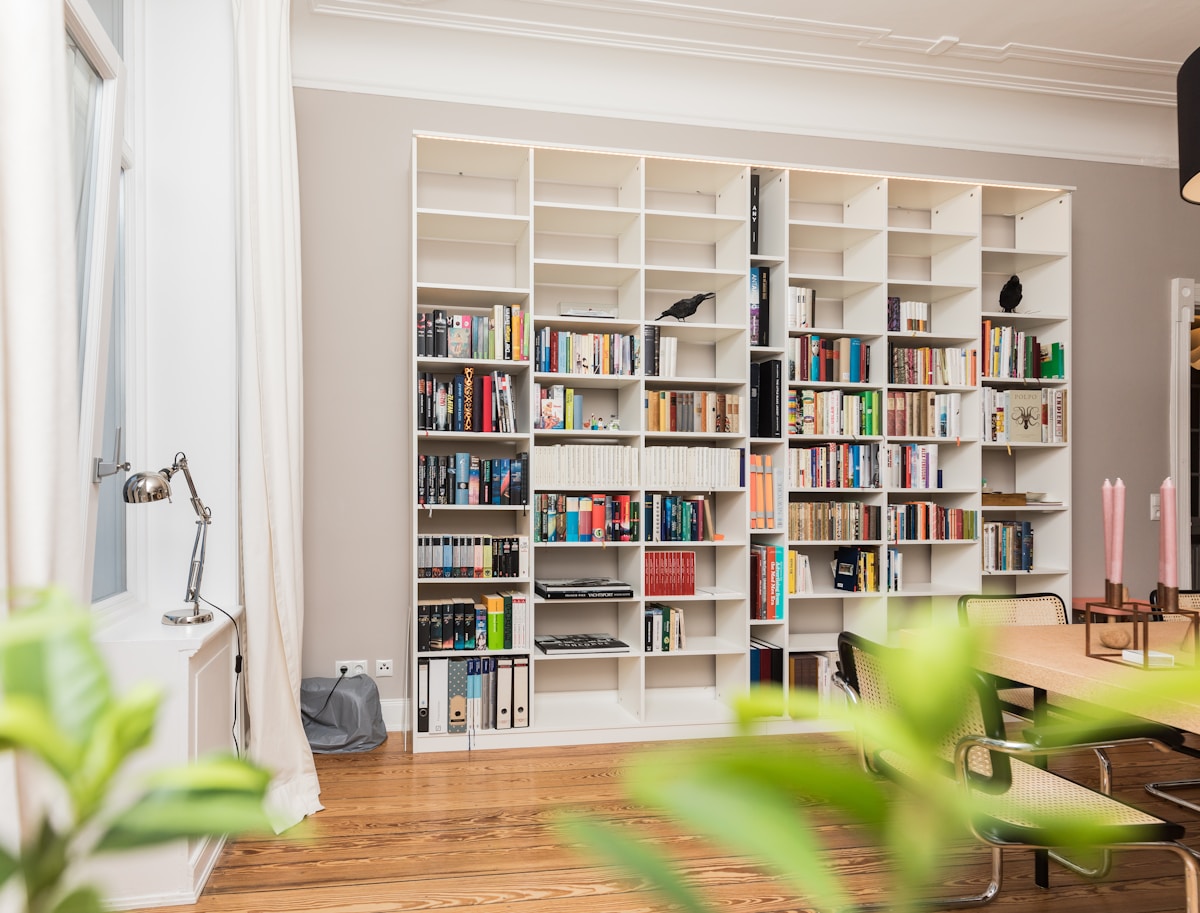
In a small apartment, a bookshelf is not just storage; it is a room divider, a display surface, and the single fastest way to make a space feel inhabited rather than staged. I found a six-shelf solid wood bookcase at a Salvation Army for $18. It had a scratch on one side panel that faces the wall.
Styling a thrifted bookshelf so it looks intentional takes about 30 minutes:
- Group books by color, not subject. Three grouped spines of the same warm tone read as decor from across the room.
- Mix vertical and horizontal stacking. Lay two or three books flat per shelf and use the stack as a riser for a small plant or candle.
- Leave 20 percent empty. Negative space on shelves signals “styled” rather than “crammed.”
- Add one object per shelf that isn’t a book: a small framed photo, a found ceramic, a plant cutting in a jar.
- Thrift the objects too. At most stores, small ceramics and frames cost under $3 each.
For more ideas on using bookshelves as both storage and style in a small space, see our post on bookshelf room dividers for studio apartment renters.
The Kitchen: Accessories That Cost Under $40
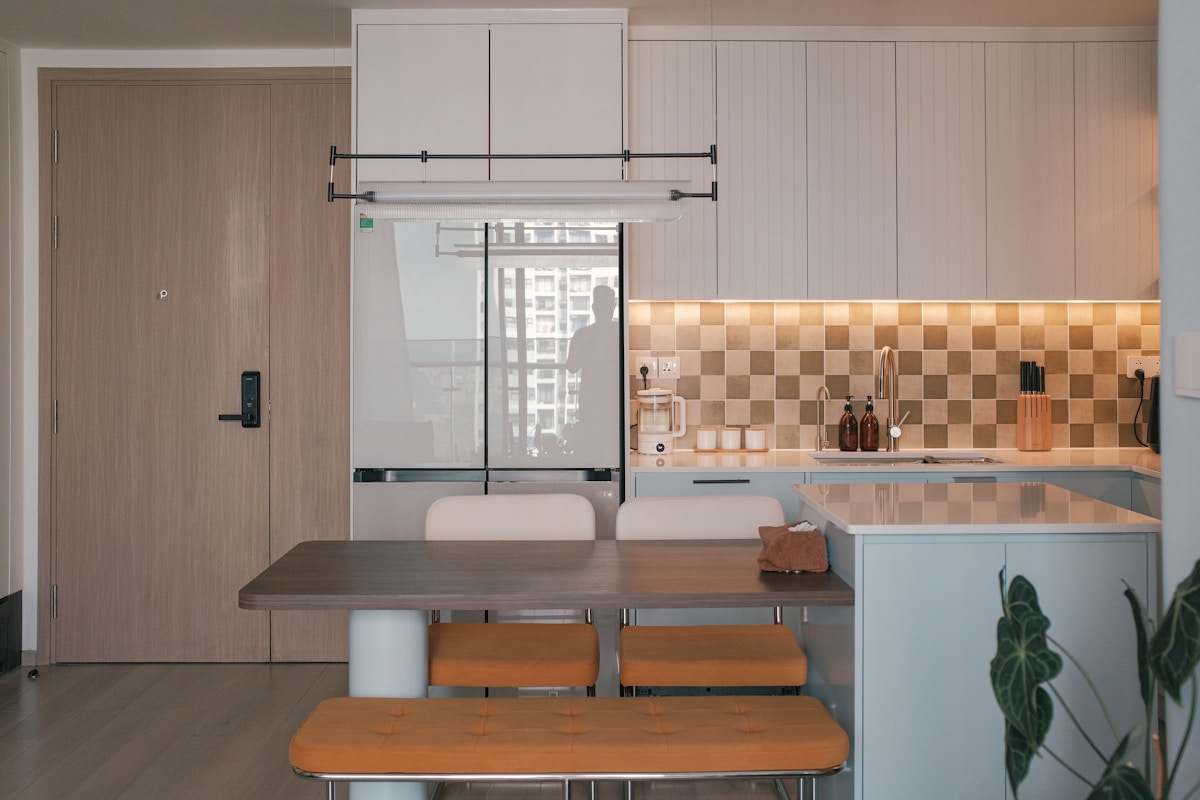
You cannot thrift a new kitchen layout, but you can absolutely thrift every accessory that makes a small apartment kitchen feel like a place you want to spend time. The rule for thrifted kitchen accessories is simple: only buy things made of glass, ceramic, or solid metal. Plastic and nonstick coatings age badly and are not worth secondhand risk.
What I found and what I paid:
- Cast iron skillet: $4 (the best kitchen find of the whole haul)
- Ceramic mixing bowls, set of three: $7
- Glass storage jars, six pieces: $9
- Wooden cutting board: $3 (needed only an oil treatment)
- Canister set (vintage aluminum): $6
- Two barstools: $16 total (metal, adjustable height)
Total: $45. The cast iron alone would cost $30 to $50 new. It was in perfect condition, just needed a 20-minute re-seasoning in the oven. Check every cast iron pan you find at thrift stores. They come up weekly and sell fast, so go early on weekdays when weekend donations have just been processed.
The Statement Piece: A Thrifted Dresser as Living Room Decor
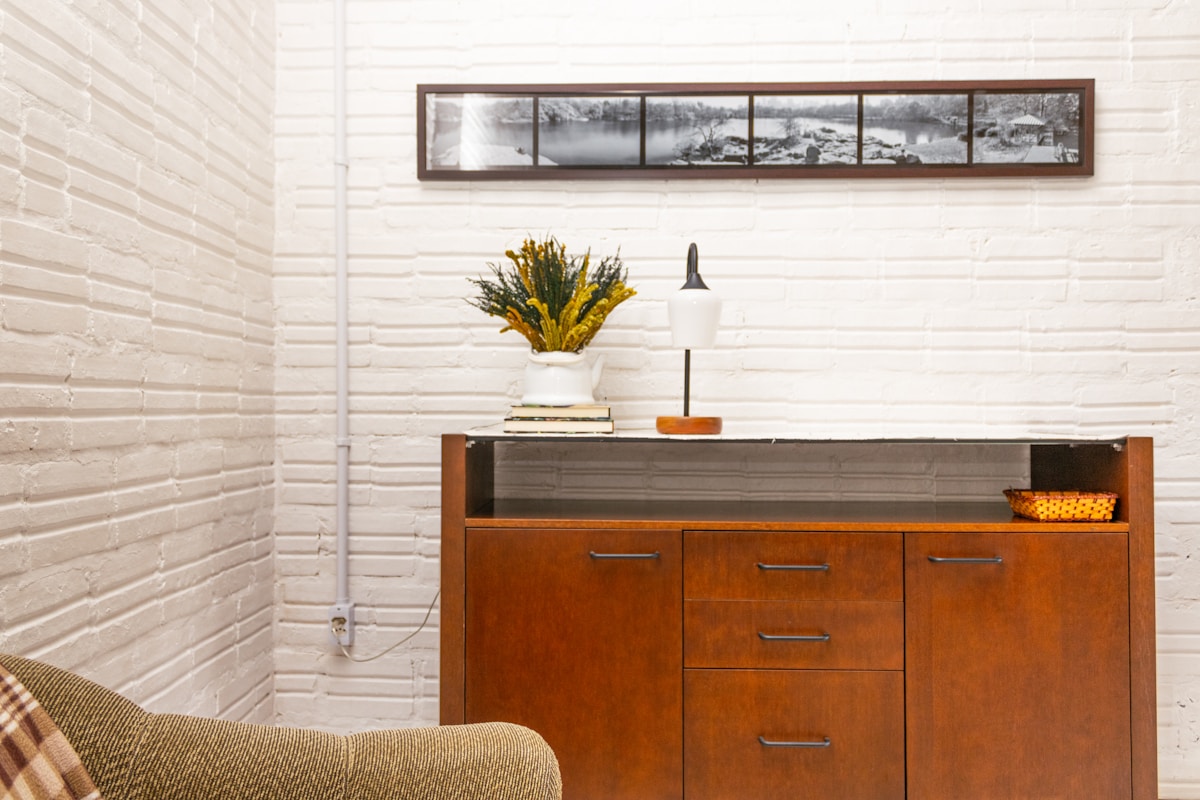
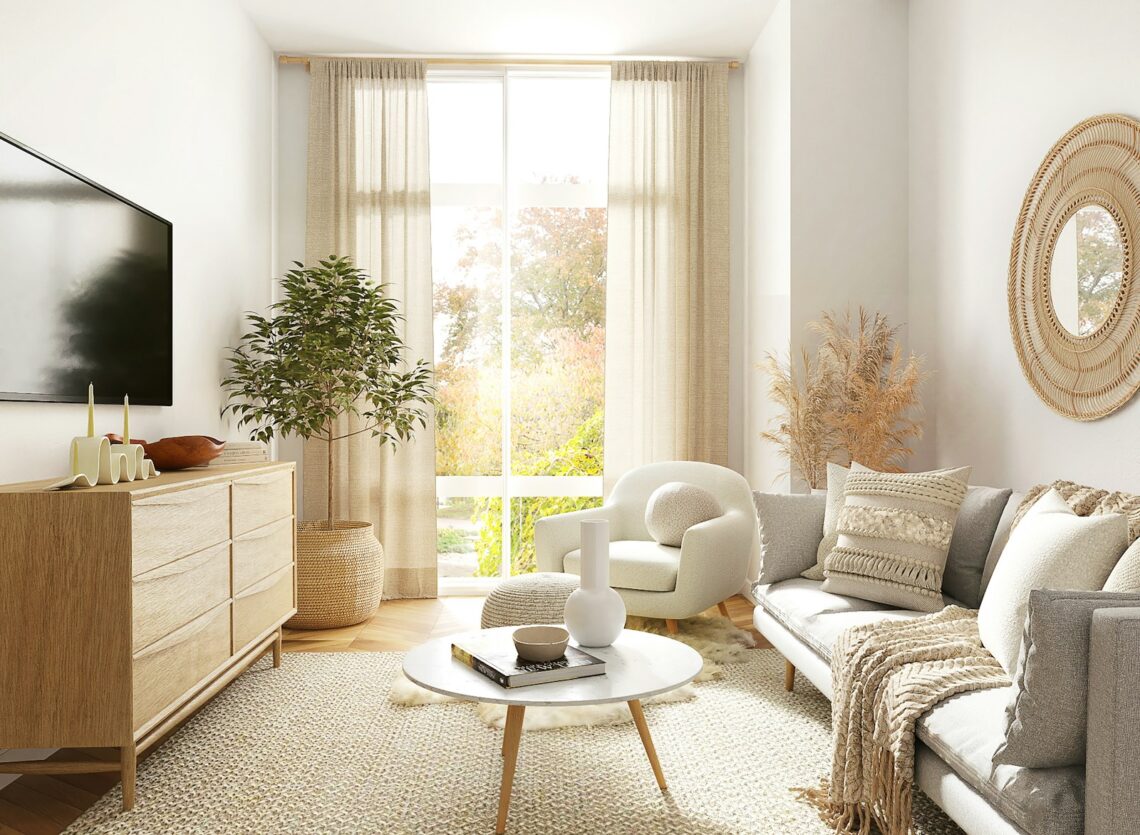
The biggest visual upgrade in my apartment came from a single thrift store find: a low, wide dresser from the 1970s in walnut-toned wood that I placed in the living room and used as a media credenza and display surface. It cost $28.
Using a dresser outside of the bedroom is one of the highest-value moves in small apartment decorating. A low dresser in the living room:
- Provides hidden storage in the drawers for remote controls, chargers, candles, and anything else you want out of sight
- Gives you a display surface at the perfect height for a lamp, plants, and small art
- Replaces the need for an entertainment unit (put your TV on top or mount above it)
- Reads as a thoughtful design choice rather than improvised furniture
I wiped it down, replaced the drawer pulls with new hardware from the hardware store ($8 for a set of eight), and that was the entire investment. The pulls cost more than the dresser. If you want a cohesive look across thrifted pieces, replacing hardware is the single highest-leverage small upgrade available. Matching pulls on mismatched furniture makes a room look intentional.
Building a Reading Corner for Under $30

Every small apartment benefits from at least one dedicated corner that is not the sofa. A reading corner signals that the apartment has zones, and zones make a space feel larger than it is. The full cost of my reading corner:
- Armchair (tweed upholstery, structurally perfect): $18
- Small side table (thrift store, painted white): $4
- Floor lamp: $7 (different from the main lamp, this one has a gooseneck for directed light)
- Basket for books and magazines: $3
Total: $32. The armchair was my favorite find of the entire haul. The tweed fabric was in perfect condition and the cushioning had not flattened. If you find upholstered chairs in good structural shape, don’t skip them because the fabric seems dated. A throw blanket draped over the back and a few modern pillows are all you need to update the look without re-upholstering.
If you love the idea of warm earthy tones throughout the apartment, pairing thrifted wood pieces with earth-toned walls creates a layered, expensive-looking result; see our guide to earth tone color palettes for small apartments for exact paint picks that complement secondhand finds.
Storage Solutions: Organized Without Spending More Than $25
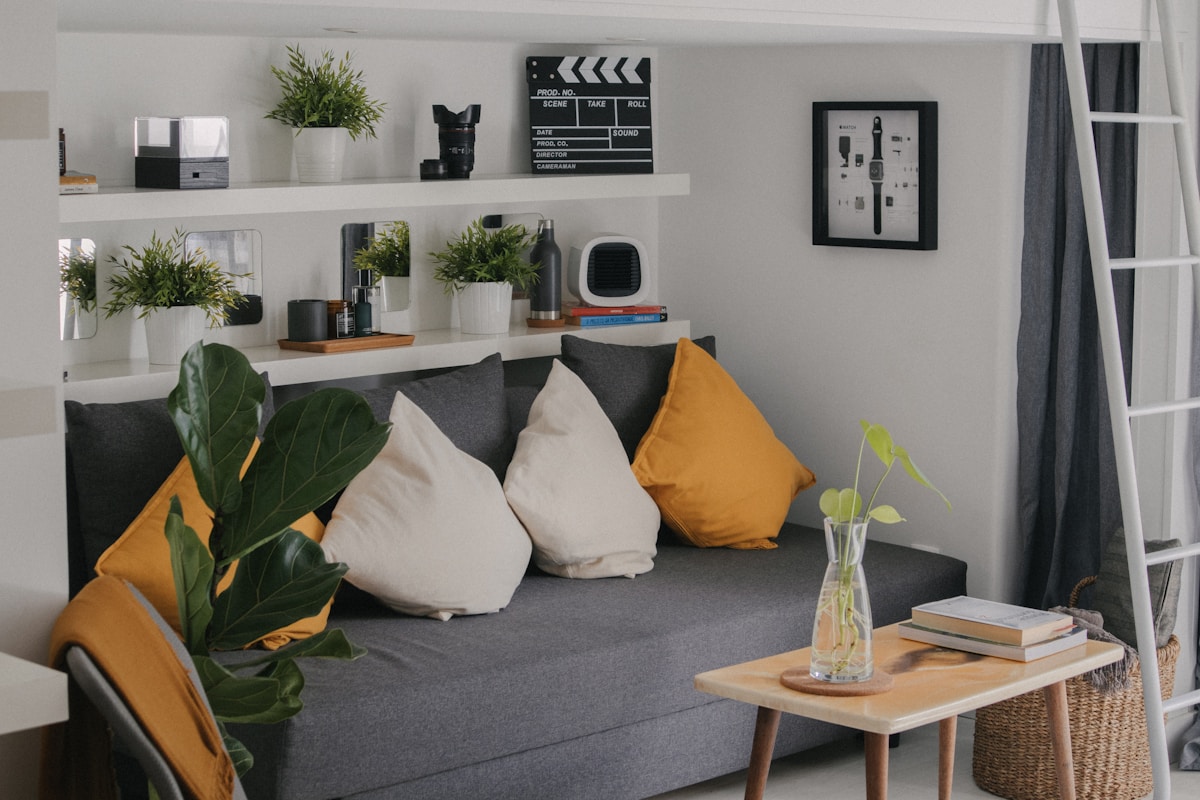
A thrifted apartment looks put-together only if storage is handled. Clutter undoes everything else. These are the specific storage finds that made the biggest difference:
- Wicker baskets, three sizes: $9 total (set the tone for the whole textile palette)
- Metal rolling cart: $12 (used in the bathroom corner as a towel and toiletry organizer)
- Over-door hooks, two sets: $4 total (existing hardware, not thrifted, but worth including)
- Wooden crate turned shelf: $2 (sanded, screwed to wall, holds plants)
Total storage haul: $27. The rolling cart is the standout. In a bathroom without a linen closet, a metal rolling cart with three tiers holds everything you would normally keep under the sink, and it rolls out of the way when not needed. I see them at thrift stores every single week for $8 to $15. They go fast, so when you see one in good shape, get it.
The Full Haul Breakdown: $487 for an Entire Apartment
Here is the complete budget breakdown across all categories:
- Living room (sofa, tables, lamp, decor): $180
- Bedroom (frame, dresser, nightstand, lamp, mirror): $101
- Bookshelf and styling objects: $36
- Kitchen accessories and barstools: $45
- Statement dresser + hardware upgrade: $36
- Reading corner: $32
- Storage and organization: $27
- Miscellaneous: extra frames, candles, one plant: $30
Total: $487. Under $500 with $13 to spare for the latte I had while waiting for a truck to free up at the Goodwill loading dock.
The keys to staying under $500 are shopping strategically over multiple weekends rather than one frantic Saturday, starting with Goodwill outlet stores where pricing is by weight, and being genuinely patient about the sofa and bed frame, the two biggest-ticket categories. Those pieces come up every week. Walk away from anything overpriced and come back the following weekend.
The Takeaway
Furnishing a small apartment from thrift stores takes three weekends and a clear shopping list, not a large budget. The payoff is real furniture built from solid materials, a look that’s uniquely yours rather than straight from a catalog page, and money left over for art prints, plants, and the hardware upgrades that pull mismatched pieces into a coherent whole. Start with the sofa because it anchors the living room and sets the palette for everything else. Work outward from there, one room at a time, and hold the line on quality over quantity: one solid wood dresser beats three particle board pieces at any price point.