First Apartment Setup Under $1000 for College Grads
You have just signed your first lease. The walls are painted that universal shade of landlord white, the floor is bare, and you have roughly $1,000 to turn four empty rooms into somewhere you actually want to live. This is the guide built specifically for first apartment essentials for college grads who are starting from zero, not inheriting a full set of furniture from a parent who is downsizing.

The $1,000 figure is tight but workable if you shop in the right order. The single biggest mistake new grads make is spending money on decor before buying the functional pieces that make day-to-day life comfortable. Get the bed, the kitchen, and a place to sit right first. Then spend whatever is left making it look good. The sections below walk you through exactly how to do that, room by room.
The $1,000 First Apartment Budget: Where Every Dollar Goes
Before you buy anything, write the budget down. This is not optional. Without a written breakdown, you will overspend on the bedroom and realize too late that you have no money left for kitchen basics or a shower curtain. Here is a realistic allocation for a first apartment under $1,000:
- Bed frame and mattress: $280 to $380. This is your single largest purchase. A Zinus or Tuft and Needle twin or full mattress runs $180 to $280 on sale, and an IKEA NEIDEN frame is $80. Do not skip the mattress. Poor sleep wrecks everything else.
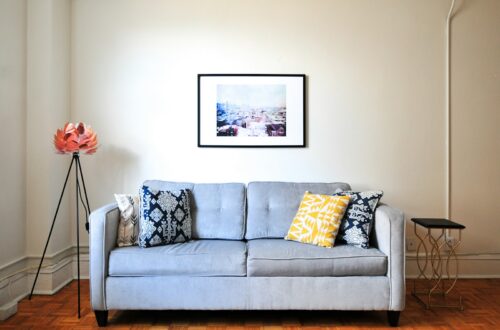
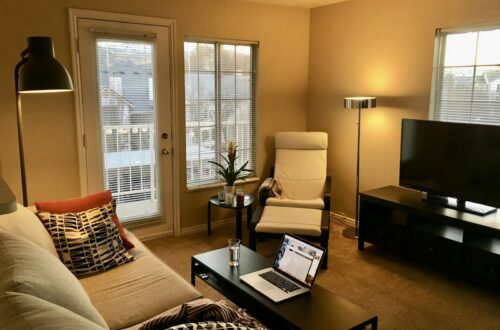
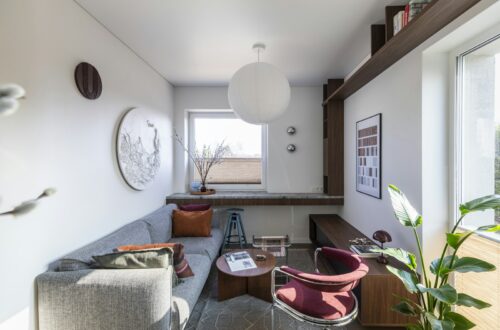
- Seating (sofa or two chairs): $80 to $150. Buy secondhand here. A Facebook Marketplace sofa in good condition costs $50 to $100 in most cities. Two thrifted armchairs can work just as well.
- Kitchen setup: $80 to $120. A chef’s knife, two pots, one skillet, a cutting board, and a basic dish set from IKEA covers most cooking needs for around $80 to $100.
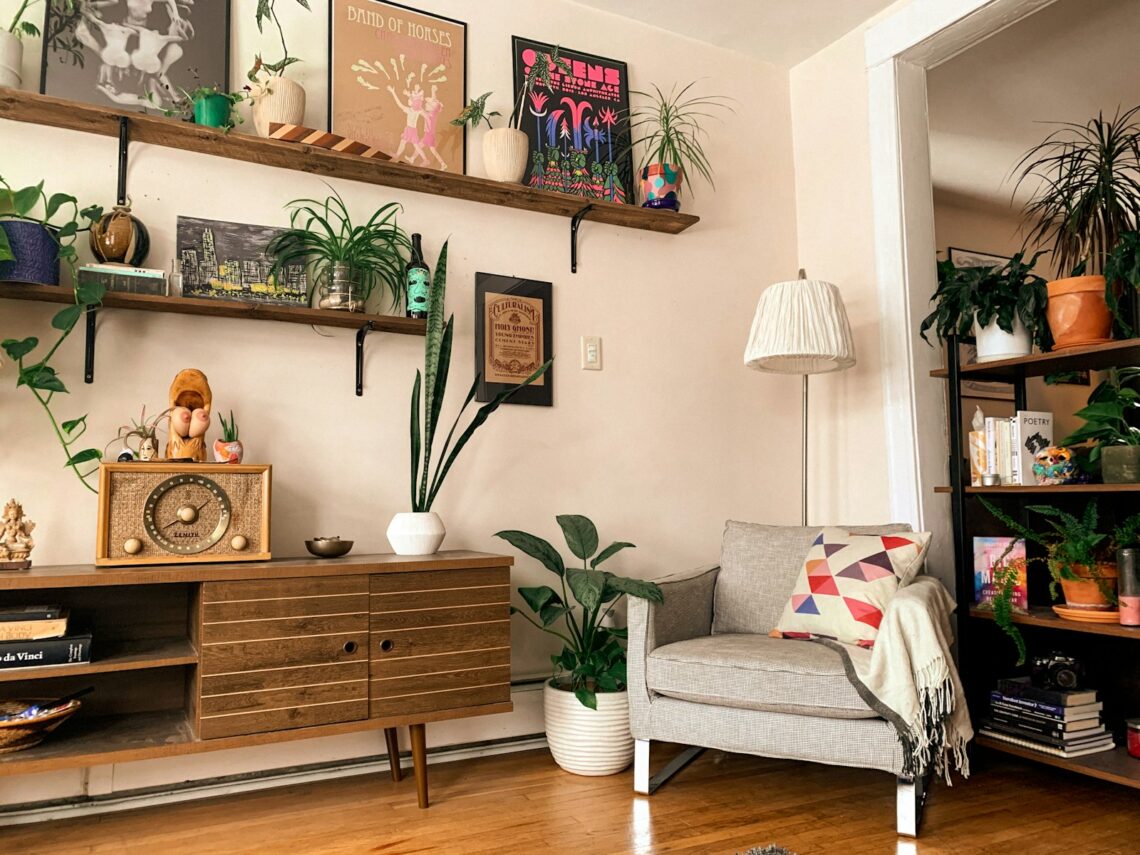
- Storage furniture: $60 to $100. A ladder shelf or wall-mounted shelves give you places to put things without buying a dresser and a bookcase and a media console separately.
- Bathroom and cleaning basics: $50 to $70. Shower curtain, bath mat, towels, toilet brush, and cleaning supplies add up fast when bought new. Stick to Target or Walmart basics here.
- Lighting: $40 to $60. Most apartments have overhead fixtures and nothing else. One floor lamp or two table lamps make the space feel warm instead of clinical.
- Decor and plants: $40 to $60. A rug, two or three plants, and some art prints go further than any amount of throw pillows.
- Buffer: $50 to $80. Something will cost more than you planned. Always keep a buffer.

Total range: $680 to $940, which leaves a real buffer. Buy furniture secondhand wherever you can and buy kitchen and bathroom supplies new where hygiene matters.
First Apartment Essentials for College Grads: Start With the Bedroom
The bedroom comes first because sleep is the non-negotiable foundation. A bad mattress costs you in productivity, mood, and health in ways that no amount of stylish decor can offset. This is the one area where spending close to the top of your budget is the right call.
For mattresses, the Zinus Green Tea Memory Foam and the Linenspa Hybrid are both consistently under $200 for a full size and hold up well for three to five years. A twin XL works if your space is very tight; a full is worth the small extra cost for most people.
For the frame, the IKEA NEIDEN is $80 and ships flat. It assembles in 30 minutes with one Allen key. A loft frame, where the bed sits high and creates a desk or storage space underneath, costs $120 to $200 and is worth considering in a very small room.

- Buy the mattress new. Buy the frame from IKEA or secondhand.
- Skip the dresser for now. Use flat storage bins under the bed and hooks on the wall for frequently worn clothes.
- Two blackout curtain panels from Amazon or IKEA ($20 to $30) make a bedroom feel finished and fix sleep quality for people whose windows face a streetlight.
- One bedside lamp is enough. A $15 clip-on LED from Amazon works as well as a $60 table lamp.
A set of flat storage bags under the bed holds out-of-season clothes and extra bedding. Hooks on the back of the door handle bags, coats, and tomorrow’s outfit. Add a dresser later when you find one secondhand for $30 to $50.
Small Kitchen Setup for College Grads: First Apartment Essentials
The kitchen is where new grads consistently overspend on stuff they do not need and underspend on the two or three things that matter most. You do not need a full knife set, a stand mixer, or a $60 non-stick pan. You need one good knife, a few versatile pots, and enough dishes to eat a meal.
Start with a chef’s knife in the $30 to $45 range. The Victorinox Fibrox 8-inch is the standard recommendation and has been for 20 years. It performs close to knives that cost five times as much. Buy it new and take care of it. Everything else in the kitchen can be cheap; the knife is the one place where quality makes a daily difference you actually feel.
- Cookware: One 10-inch skillet ($15 to $20 at TJ Maxx or Target), one 2-quart saucepan, and one 4-quart pot cover 95 percent of meals. Add a dutch oven later when your budget allows.
- Dishes: The IKEA DINERA set is $25 for a 4-piece place setting and looks clean and modern. Get two sets for $50 if you ever have guests.
- Cutting board: One large bamboo board from Amazon runs $15 to $20 and lasts for years.
- Storage: Open wall shelves above the counter hold everything visible and accessible. In a rental kitchen with limited cabinet space, this is a practical fix, not just a style choice.

Skip paper towels at first. Reusable dish cloths from Target cost $3 and handle most cleanup. Add a dish rack, vegetable peeler, can opener, and spatula and your kitchen is functional for around $80 to $100 total.
Smart Storage Solutions for a First Apartment
New grads frequently try to solve storage problems by buying more furniture, which costs money and takes up floor space. The better approach is to use walls and the backs of doors aggressively before adding any piece of furniture to the floor plan.
Floating shelves are the highest-return storage investment in a first apartment. A set of three IKEA LACK shelves costs $15 each and can go up with four screws per shelf. They hold books, plants, speakers, and anything else that would otherwise pile up on surfaces. In a studio apartment, three shelves on one wall can hold the equivalent of what a bookcase takes up in floor space.

- Over-door organizers: A $20 over-door shoe organizer from Amazon works for shoes, cleaning supplies, snacks, small tools, and toiletry overflow. Use one on the bathroom door and one inside the pantry or closet.
- KALLAX cube shelf: The IKEA KALLAX is a $70 cube organizer that doubles as a media console, a room divider in a studio, and a storage unit. It is one of the most versatile pieces IKEA makes. Add drawer inserts ($5 each) to hide clutter.
- Bed risers: Six-inch bed risers cost $15 and create enough clearance under a bed frame for flat storage bins. A set of four bins from IKEA at $10 each gives you 12 cubic feet of hidden storage for $55 total.
- Ladder shelf: A wood ladder shelf for $40 to $60 at HomeGoods or TJ Maxx leans against the wall without drilling and holds plants, books, and small decor items with a visual lightness that solid furniture does not have.
For a deeper dive into budget-friendly storage options, the small apartment thrift store haul guide covers exactly what storage pieces are worth finding secondhand versus buying new.
Building a Work-From-Home Corner on a Budget
Whether you are working remotely, freelancing, or job hunting, you need a dedicated place to sit and be productive. Trying to work from the sofa or the bed blurs the line between rest and work in ways that hurt both. Even in a small studio, a desk corner is worth carving out.
The IKEA MICKE desk at $70 is the standard starting point: 35 inches wide, a cable management hole in the back, and a small side drawer. It fits against any wall without dominating the room. A wall-mounted folding desk is even smaller and costs $40 to $60 at IKEA.

- A task light at eye level prevents eye strain better than overhead lighting. The IKEA FORSA task lamp is $20 and fully adjustable.
- Keep cables off the floor using a $10 cable management box from Amazon. It looks clean and prevents the tangled mess that makes a desk feel chaotic.
- A comfortable chair matters. Do not sit on a folding chair for eight hours a day. Look for an office chair with adjustable height on Facebook Marketplace for $20 to $40.
- A small plant on the desk (a pothos in a $3 plastic pot works perfectly) improves air quality and gives you something living to look at between tasks.
Making Your First Apartment Feel Like Home
This is the step most new grads either skip entirely or overspend on without a plan. The goal is not a perfect Pinterest apartment. The goal is a space that feels like it belongs to you. That takes very little money when you focus on the right things.
Plants are the single best return on investment in a first apartment. A $4 pothos from a hardware store grows in any light condition, tolerates irregular watering, and fills a corner with enough visual weight that you stop noticing bare walls. A snake plant, a ZZ plant, and two pothos cover most light conditions for under $25 total.

- A rug: Even a small 4×6 rug under the coffee table or beside the bed changes how a room feels. Check HomeGoods, Ruggable sales, and Facebook Marketplace. Budget $30 to $60 and treat it as high priority.
- Art from thrift stores: Framed prints at Goodwill or Salvation Army cost $2 to $5. The frames are often nicer than anything you would buy at the same price point. Replace the print inside with a poster or a downloaded print if the original art is not your taste.
- Throw blanket: An IKEA POLARVIDE throw is $6 and covers a sofa or armchair with enough softness that the whole room feels more inviting. Buy two.
- String lights: A $12 set of warm white string lights draped along a shelf or window gives a room the same warm glow that a $60 lamp does, for a fraction of the cost.
For ideas on sourcing furniture and decor on the cheap, the Facebook Marketplace guide for small apartment furniture covers what to search for, how to negotiate, and what to avoid when buying secondhand.
Bathroom Basics: What You Actually Need
The bathroom in a first apartment is often the one room people set up completely on move-in day and then never think about again, which is a mistake. A small amount of organization and a few intentional choices make a rental bathroom noticeably more pleasant to use every day.
Start with the shower curtain. It is the largest visual element in the bathroom and the one thing that sets the tone for the space. A white linen-look curtain from Target at $20 makes the room feel clean and open. Pick one you will like looking at because you will see it every morning.

- Bath mat: A $10 to $15 bath mat from Target or TJ Maxx protects the floor and adds warmth. Get two so one is always in the wash.
- Towels: Buy a set of four bath towels and four hand towels. Turkish cotton towels from TJ Maxx run $8 to $12 each and last longer than budget towels from discount stores.
- Counter organizer: Three small glass jars for cotton pads, cotton swabs, and hair ties cost $8 to $12 at Target and eliminate counter clutter immediately.
- Over-toilet shelving: A $30 over-toilet shelf from Amazon holds toilet paper backup, hand lotion, candles, and anything else the medicine cabinet cannot fit.
- Skip: Matching towel sets in novelty colors, decorative soap dishes, and anything battery-operated that requires regular replacement. These are the bathroom decor purchases that feel fun in the store and accumulate clutter at home.
Eating in Your First Apartment Without a Real Dining Room
Most first apartments either have no designated dining area or have one so small that a full dining table would block the hallway. The good news is that eating at a proper surface is less about the furniture than about the habit, and the furniture options for small spaces have improved dramatically in the past decade.
A drop-leaf table solves the dining problem for most first apartments. The IKEA GAMLEBY is $99, seats two when open, and takes up just 8 inches of wall space when folded. Pair it with two IKEA ADDE chairs at $15 each and you have a complete dining setup for under $130.

- Round tables seat more people per square foot. A 32-inch round table seats two for daily use and squeezes four for a dinner party. A 32-inch square table only seats two comfortably no matter what.
- Bar stools at the counter: If your kitchen has a counter overhang, two bar stools eliminate the need for a separate dining table entirely. Check the overhang depth first: you need at least 12 inches of clearance for knees.
- Eat at your desk: The desk is often the best-lit surface in a first apartment. Eating there is not a failure of interior design. It is just practical.
For more ideas on making a small space work for both dining and living, the guide to convertible furniture for small apartments covers fold-out tables, nesting furniture, and other pieces that earn their keep by doing double duty.
The Takeaway
Setting up a first apartment under $1,000 comes down to three things: buy the functional pieces first, buy furniture secondhand wherever hygiene is not a concern, and resist the urge to decorate before the practical basics are handled. A bed you sleep well in, a kitchen you can actually cook in, and a desk you can work at will make you happier in your first apartment than any number of throw pillows or decorative objects.
Spend the first month living in the space before making any decor decisions. You will figure out quickly which wall the morning light hits and whether the sofa is in the right spot. The apartments that feel most like home are the ones adjusted gradually, over time, based on how you actually use them.