
You signed a lease, not a front-row ticket to your upstairs neighbor’s 6 a.m. workout class. Noisy upstairs neighbors are one of the top complaints among apartment renters, and unlike homeowners, you cannot rip out the subfloor. These 11 fixes work for renters with no tools, no landlord permission, and zero desire to move.
1. Lay Down a Thick Area Rug Right Now
Impact noise, the thud of footsteps and dropped objects, travels through floors as vibrations. A dense rug breaks that vibration chain before it reaches your ceiling. The thicker and heavier the rug, the better it performs as a sound buffer. Rugs under a quarter-inch of pile make almost no difference. You want at least three-quarters of an inch of pile, ideally layered over a thick felt pad.
The felt pad matters as much as the rug itself. A one-inch felt pad under a standard area rug can cut impact noise transmission by 20 to 30 percent compared to hardwood floors alone. IKEA’s STOENSE collection runs around $80 for an 8×10 and hits that thickness threshold. For maximum absorption, look for wool rugs, which are naturally denser than synthetics.
- Minimum pile: three-quarters of an inch
- Add a quarter-inch to half-inch felt pad underneath
- Cover as much floor area as your budget allows
- Layering two thinner rugs on top of each other also works
- Budget pick: IKEA STOENSE or HAMPEN ($60 to $120 range)
If your apartment is mostly hardwood or tile, prioritizing a rug in your bedroom first pays the biggest dividends for sleep quality.

2. Stack Your Bookshelves Against the Ceiling
Every square foot of mass between you and the noise source helps. A fully loaded bookshelf pressed against a wall acts as an acoustic buffer, scattering and absorbing sound waves before they reach your ears. Ceiling-height shelving is especially useful in apartments where the upstairs unit shares a floor with your living space directly above.
Books are the cheapest acoustic panels you will ever find. A six-foot bookshelf stuffed with paperbacks and hardcovers will outperform a decorative shelf with a few objects every time. The key is density. Sparse shelves with lots of open space allow sound to bounce straight through. Fill them.
- Push shelves flush against the ceiling for maximum mass
- Pack them densely with books, not decorative items
- Heavy items on top shelves lower the center of gravity (safer)
- BILLY bookcases from IKEA stack well and go floor to ceiling
- Mix with fabric storage boxes to add soft absorption
In studio apartments, a full bookshelf can also serve as a room divider, pulling double duty on noise and layout at the same time.

3. Hang Heavy Curtains to Absorb Sound Waves
Sound-blocking curtains add mass to your walls and ceiling, reducing echo and softening incoming noise. NICETOWN and MOONEN both make thermal blackout curtains with dense woven liners that perform double duty: they block light and absorb a meaningful portion of sound waves. You do not need a window to hang them.
Renters often hang curtain panels along interior walls on a ceiling-mounted track to create a soft, sound-absorbing surface. A single layer of thermal curtains will not eliminate footstep noise, but a double layer hung floor to ceiling can noticeably reduce the harshness and echo of impact sounds. The key is using floor-to-ceiling length and keeping them closed or stacked densely rather than spread thin.
- Look for curtains labeled “thermal” or “soundproofing” with a dense liner
- Hang from ceiling to floor for maximum coverage
- Layer two panels per window track for double absorption
- Ceiling-mounted tracks let you cover any wall, not just windows
- NICETOWN 84-inch blackout panels run about $30 to $45 per pair
Velvet curtains absorb even more than synthetic polyester. If you already have curtains, adding a separate thermal liner panel behind them is a cheap upgrade.

4. Run a White Noise Machine Every Night
White noise does not block sound. It masks it. When your brain hears a consistent background hum at 50 to 65 decibels, sudden noises above that level seem less jarring because the contrast is reduced. A white noise machine in your bedroom can make a meaningful difference in how disruptive those midnight footsteps actually feel.
The Lectrofan Classic and the Marpac Dohm are two of the most recommended options. The Lectrofan produces a digital white noise signal and has precise volume control. The Dohm uses a mechanical fan motor to generate a natural “whoosh” that many people find easier to sleep through. Either one set to 55 decibels works. A regular box fan on low also works if you already own one.
- Lectrofan Classic: around $50, digital, 20 sound options
- Marpac Dohm: around $45, mechanical, natural fan sound
- Place it close to your bed, not across the room
- Set the volume to match or slightly exceed your usual ambient noise
- Brown noise (deeper than white) is often preferred for footstep masking
Free options: Spotify and YouTube have 8-hour white noise playlists. A smart speaker like an Echo Dot can play brown noise on command every night before bed.

5. Rearrange Your Furniture as a Sound Shield
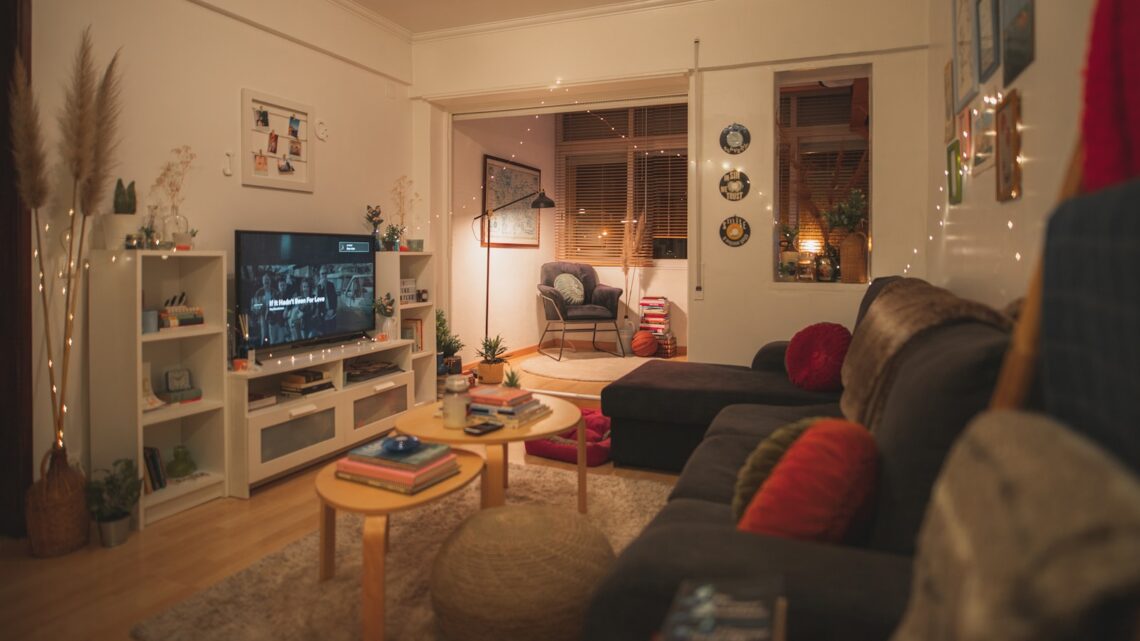
Soft furniture absorbs sound waves that hard surfaces reflect. By positioning sofas, armchairs, and upholstered pieces strategically, you can reduce the number of reflective surfaces in your apartment and soften the overall acoustic experience. Think of your furniture layout as acoustic architecture.
If your bedroom sits directly below your neighbor’s most active area (usually their living room), moving your bed to the corner farthest from that zone can make a tangible difference. In living rooms, pushing a large sectional or sofa toward the noisier side of the room adds soft mass between you and the source.
- Move your bed to the farthest corner from the noisy overhead area
- Position tall wardrobes and dressers along the shared ceiling boundary
- Use upholstered ottomans and poufs as additional soft mass
- Replace glass coffee tables with wood or fabric-upholstered tops
- Wall-to-wall furniture arrangement leaves less open air for sound to bounce around in

6. Try Acoustic Panels You Can Remove When You Leave
Acoustic foam panels and fabric-wrapped sound tiles are renter-friendly because many of them mount with Command strips or adhesive tabs, leaving no damage on move-out. They absorb sound within a room, reducing echo and harshness, which makes noise feel less sharp even if it does not reduce the decibel level significantly.
The most effective placement for ceiling noise is on your own ceiling in the areas that seem loudest. Cloud panel kits from brands like Acoustic Panels USA or even basic foam wedge tiles from Amazon in the $25 to $60 range can soften the room noticeably. Felt wall tiles are another option that also double as decor.
- Cloud panels target ceiling noise directly
- Foam wedge tiles: $25 to $60 for a 12-pack on Amazon
- Felt wall tiles are renter-friendly and stylish
- Focus on bedroom ceiling first
- Do not cover air vents or smoke detectors
These panels will not stop impact noise from footsteps. What they do is reduce the reverb and harshness that makes the noise feel more intrusive than it actually is.
7. Use Anti-Vibration Pads Under Furniture Legs
Vibration transfers through floors and up through your furniture into the room. Rubber anti-vibration pads placed under the legs of your bed frame, couch feet, and desk legs interrupt that transfer path. These are the same pads sold for washing machines to stop them from rattling, and they work on the same principle.
A set of four rubber furniture pads costs around $8 to $15 on Amazon. Slip them under your bed legs before you go to sleep tonight. You will notice a reduction in the way footstep vibrations travel from the floor into your mattress. Combine this with a rug and a white noise machine and you have a solid three-layer defense system for your bedroom.
- Anti-vibration rubber pads: $8 to $15 per set of four
- Place under bed frame legs first
- Also works under couches and desk legs
- Cork pads are another natural option at similar price points
- Look in the appliance aisle at hardware stores

8. Build a Quiet Focus Zone in Your Apartment
Not every room in your apartment will receive the same amount of noise from upstairs. Walk around during a noisy period and map which areas are loudest. Then turn the quietest zone into your work or rest sanctuary, using soft furnishings, plants, and warm lighting to make it feel intentional rather than like a fallback.
Floor cushions, a thick rug, blackout curtains, and a plant shelf can transform an ignored corner into a genuinely calming retreat. If you work from home, setting up your desk in the quieter zone removes the worst friction points of the noise problem. You are not just coping, you are designing around the issue.
- Map your apartment for quiet zones during peak noise times
- Layer the quietest corner with soft furnishings and plants
- Set up your work-from-home station in the quietest spot
- Use a white noise speaker in this zone for added masking
- Warm lamp lighting signals calm to your nervous system

9. Have the Conversation With Your Noisy Upstairs Neighbor
Most upstairs noise is accidental. Your neighbor almost certainly does not know how loud their footsteps sound below. Before filing any complaint with management, one honest conversation resolves about half of all noise disputes, according to tenant advocacy groups. The key is timing and framing.
Knock during a quiet moment, not immediately after a noisy incident when both parties are likely frustrated. Lead with curiosity rather than accusation. A script that works: “Hey, I wanted to mention that sound travels really easily between floors in this building. Sometimes I can hear movement in the mornings. Is there anything easy for you to do, like adding a rug, that might help?” Most people respond well to this framing because it gives them a concrete action and does not blame them personally.
- Time the conversation for a calm moment, not right after the noise
- Frame it as a building acoustics issue, not a personal criticism
- Suggest a specific fix like a rug so they have an action to take
- If you are nervous, leave a friendly note first to open the door
- Bring a small gesture like a baked good if you are comfortable with that
If you live in a building where thin walls are already a known issue, check out the full guide to noise solutions for thin-wall apartments for additional renter-specific strategies.
10. Know What to Ask Your Landlord
Landlords have an obligation to provide habitable living conditions. Excessive noise that meaningfully disrupts your sleep or ability to use your home may qualify as a habitability issue depending on your local tenant laws. Before going down that road, start with a less adversarial approach and simply ask your landlord to mediate.
Request information about whether the unit above has carpet or hardwood. Many buildings have lease clauses requiring upstairs tenants to cover a certain percentage of their floor with rugs. Ask if such a clause exists and whether it is being enforced. A formal written request to the landlord creates a paper trail that matters if things escalate.
- Ask whether the lease requires the upstairs unit to have floor coverings
- Request mediation in writing so there is a record
- Check local tenant laws for “quiet enjoyment” rights
- Many cities have tenant hotlines that offer free advice
- Document incidents with dates and times before escalating
For renters setting up a new apartment on a budget, the guide to furnishing a first apartment under $1,000 covers how to prioritize rug and soft-furnishing purchases that also help with acoustics.
11. Invest in Good Earplugs and Focus Headphones
When all structural interventions fall short, personal gear bridges the gap. Modern earplugs have improved dramatically. Loop Quiet earplugs reduce noise by up to 27 decibels and are comfortable enough to sleep in. Bose Sleepbuds are designed specifically for sleep, playing calming sounds directly into your ears rather than relying on passive noise blocking alone.
For daytime focus, active noise-canceling headphones from Sony, Bose, or Apple’s AirPods Pro handle most of the impact-noise spectrum. Pair them with a focus sound app like Brain.fm or a brown noise playlist and you create a reliable bubble of concentration even during peak noise hours.
- Loop Quiet earplugs: around $25, washable, 27 dB reduction
- Bose Sleepbuds II: around $250, designed for overnight use
- Sony WH-1000XM5 headphones: best ANC for daytime work
- Brain.fm: AI-generated focus music, $7 per month
- Spotify has free brown noise and white noise playlists
Couples sharing a small apartment with noise stress can also benefit from having individual sound gear so each person can manage their tolerance independently. The guide on studio apartment living for couples covers how to carve out individual space when you share every room.

The Takeaway
Dealing with small apartment noisy upstairs neighbors does not require renovation, confrontation, or a new lease. Start with the cheapest interventions first: a thick rug with felt pad, a white noise machine, and rubber furniture pads. These three alone, combined, can transform your acoustic experience for under $150 total. Layer in bookshelves, curtains, and acoustic panels as your budget allows. Have the neighbor conversation when the moment is right. And if you need to file a formal complaint, do it with documentation and a specific ask so your landlord knows exactly what action to take.
The goal is not silence. It is livability. Small apartments in dense buildings will always carry some sound through the structure. The question is whether you can reduce it enough to sleep well, focus well, and actually enjoy the space you are paying for. With the right combination of soft furnishings and masking tools, the answer is almost always yes.